English
  日本語
日本語  한국어
한국어  français
  Deutsch
  Español
  русский
  العربية


Oct
Learn More
13

If you’re designing a new product or looking to source replacement parts, chances are you’ve spec’d aluminum. It’s lightweight, strong, won’t rust, and is one of the easiest metals to machine. From smartphone cases to aircraft brackets, custom aluminum machined parts are everywhere.
But if you’re unfamiliar with CNC machining, you probably have questions: How much does this actually cost? What’s the difference between 6061 and 7075? Is machining better than forging? And how can you get reliable aluminum machining part quotes without migraine-inducing back and forth?
This guide is geared towards buyers, engineers, and hobbyists who want straightforward answers. We’ll cover the basics of aluminum alloy CNC machining parts, what affects price, and how to work with a aluminum machining parts manufacturer to get high quality components on time and on budget.
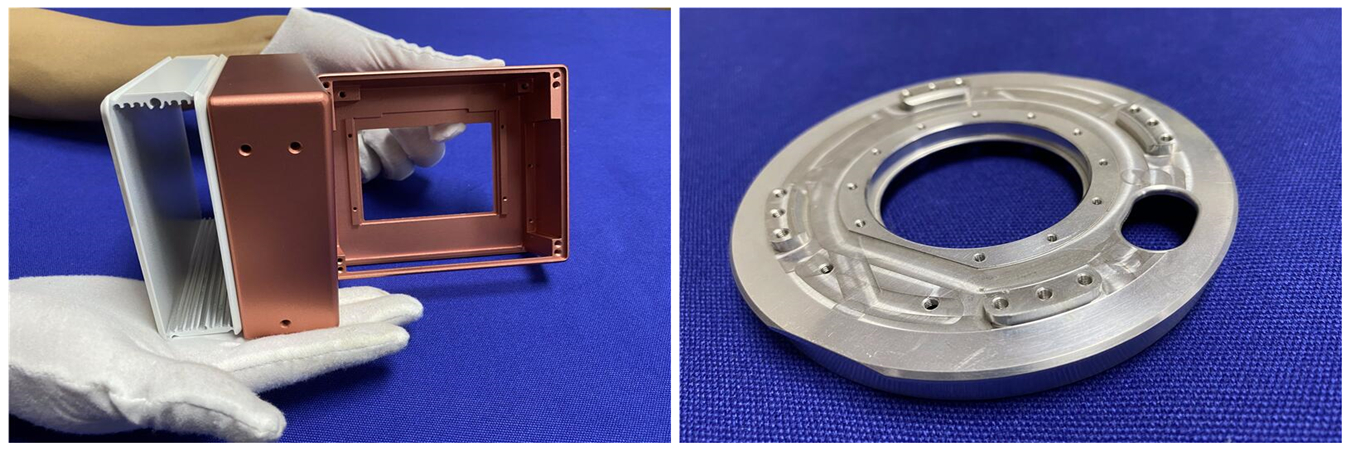
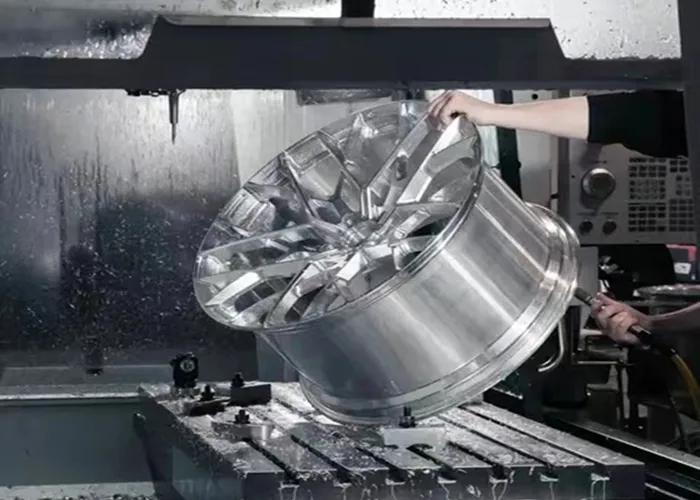
CNC (Computer Numerical Control) machining is when we use special computer-controlled tools to “cut the fat” from a solid block of aluminum and create the exact part you need. Imagine a robot carving machine that just knows what you want in 3D, every time! The two main processes we use for custom aluminum CNC machining are…
CNC Milling: To create complex 3D shapes, pockets, angled holes, and flat surfaces on parts.
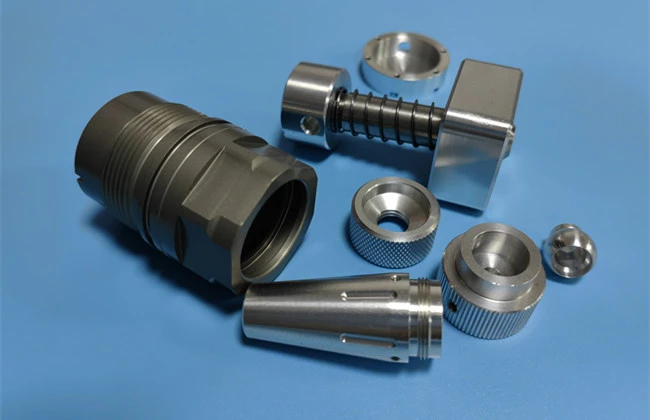
CNC Turning: To make round parts like shafts, sleeves, bushings, and spacers.
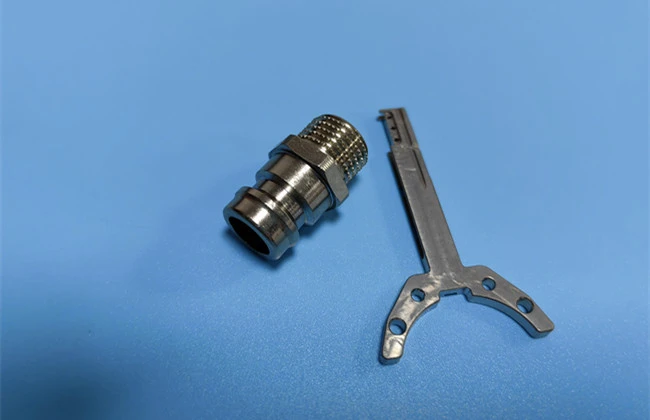
Swiss-type Machining: For making smaller, long, detailed parts (for electronics, medical). With tolerances of up to ±0.005 mm, we’re talking thinner than a human hair!
Not all aluminum is the same. Here are the three you will encounter most often when ordering precision machined aluminum parts:
| Alloy | Nickname | Strength | Machinability | Corrosion Resistance | Best For |
| 6061 | The Workhorse | Good | Excellent | Very Good | General parts, brackets, housings, prototypes |
| 7075 | The Strong One | Very High | Good | Good | Aerospace, high-stress components, racing parts |
| 2024 | The Tough One | High | Good | Fair | Aircraft structures, military hardware |
6061 is the most common choice for aluminum precision machining parts. It is strong enough for most jobs, machines beautifully (which keeps costs down), and takes anodizing well. If you are unsure what to pick, start with 6061.
This is the #1 question we get. The honest answer: it depends on a few key factors. But here is an easy breakdown of the main drivers of aluminum machining part quotes:
Part Complexity: A simple flat plate with holes costs less than a part that has deep pockets, thin walls, or tight tolerances. The more complex the part, the more machining time required to program and cut.
Quantity: A large part of the cost for a machined part is the ‘setup’—i.e. getting the machine ready. Setting up to make 1 part is almost as much effort as setting up to make 100 parts, so the per-part price drops significantly with higher quantities.
Material Choice: 6061 aluminum is standard and costs less; 7075 costs more because the raw material costs more and the material tends to be a little harder on the tools.
Finishing: Do you need anodizing? Polishing? These additional secondary processes add to the price.
Tolerances: The more ‘standard’ sizes of tolerances (say ±0.1 mm) are the cheapest to cut. If you need very precise sizing (±0.01 mm or even tighter), it will increase costs as more care and inspection are required.
Quick tip: To get good aluminum machining part quotes, send a clear 3D model (STEP or IGES files are best) and let us know the quantity and finish you want.
Learn more about our aluminum precision machining services →
That’s a great question. Forging (hammering then pressing hot metal into shape) and CNC (computer numerically controlled) machining are different processes with different results.
Forging: Aligns the metal’s grain structure. This can make the part stronger done in a specific direction. Good for parts that take heavy impacts (shock loading) like suspension components. However, it means expensive molds (dies), so it is only cost effective for huge volumes (tens of thousands of parts).
CNC Machining: Starts from a solid block of aluminum. This has properties already, so does not change the grain structure, except to remove excess. However, it can yield much more complex shapes and tighter accuracy. There is no minimum quantity – you can machine one or a million.
Verdict: In most applications CNC machined custom aluminum parts are plenty strong. The forging is overkill unless making parts for extreme loads, and at very high volume. For 99% of projects, aluminum alloy CNC machining parts for far smarter.
You might be thinking about getting your own machine. Here’s a quick reality check.
Entry-level hobby machine - $3,000 - $10,000. Good for learning on, but struggles on production and tight tolerances on aluminum.
Professional VMC (Vertical Machining Center) - $50,000 - $150,000+. This is what a job shop uses. Fast, accurate and reliable.
Multi-axis or Swiss machines - $150,000 - $500,000+. Used on ultra-precision parts and complexity.
Then add tooling and software, rent, and a skilled operator (salary). The maths usually points to outsourcing, to an aluminium machining parts supplier, unless you are doing very high, long-term volume.
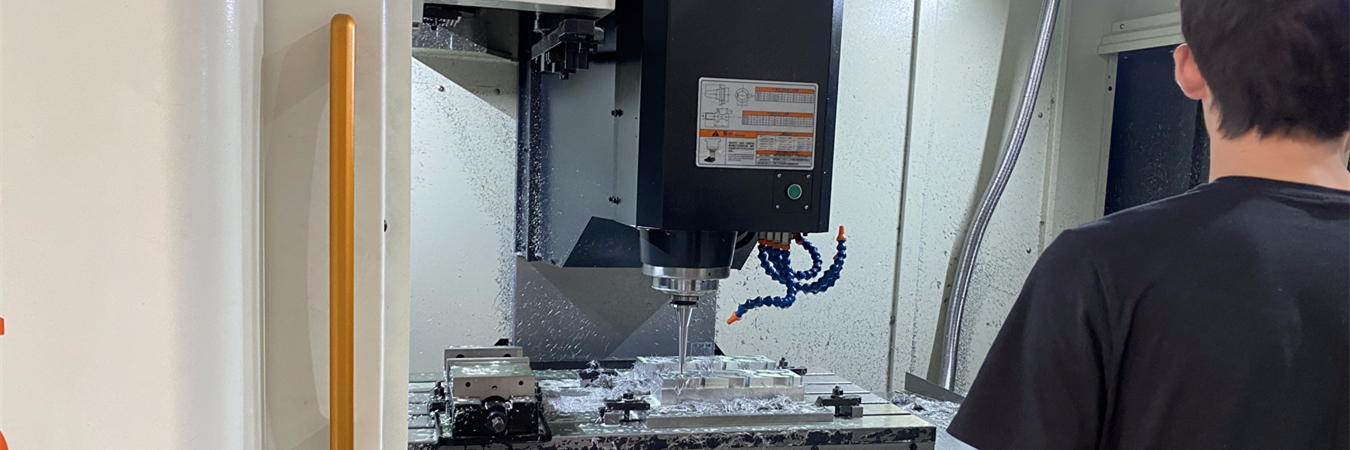
Before you send files off to a aluminum machining parts manufacturer consider a few basics:
Avoid super-thin walls: Difficult to machine, walls often warp from machining and/or inhibit molten aluminum from filling quads. 0.5mm (0.02”) is a good target at minimums.
Common hole sizes: Drill sizes 0.501”, 0.563” etc. is common tooling. Fewer costly, customized drill bits.
Internal corners: A milling cutter is round--no true square corner. Design for that and note if you need a physically square corner for that feature (EDM, etc. required).
When you’re ready for some alunimum machining part quotes from a supplier like Falcon CNC Swiss, here’s what to have:
CAD File: 3D .STEP or .igs files are great.
Drawings (Optional but Helps): Especially for tight tolerances and or surface finishes. PDF is good.
Quantity: Parts per order? (Prototype=1-10, Low Volume=10-100, Production=100+)
Material: What alloy? (“6061-T6”)
Finish: Any indicated? (“Clear anodize”)
A quality aluminum machining parts supplier will:
Review your design and offer suggestions! (that’s DFM).
Material will be certified.
Parts will be machined from quality, alloy-certified material.
Thorough inspection of parts (CMM, micrometer, test gauges).
Delivery with inspection report if requested.
That’s us! We are an ISO certfied aluminum machining parts manufacturer, with over 15 years in the business machining all manner of parts from simple brackets to complex aerospace parts.
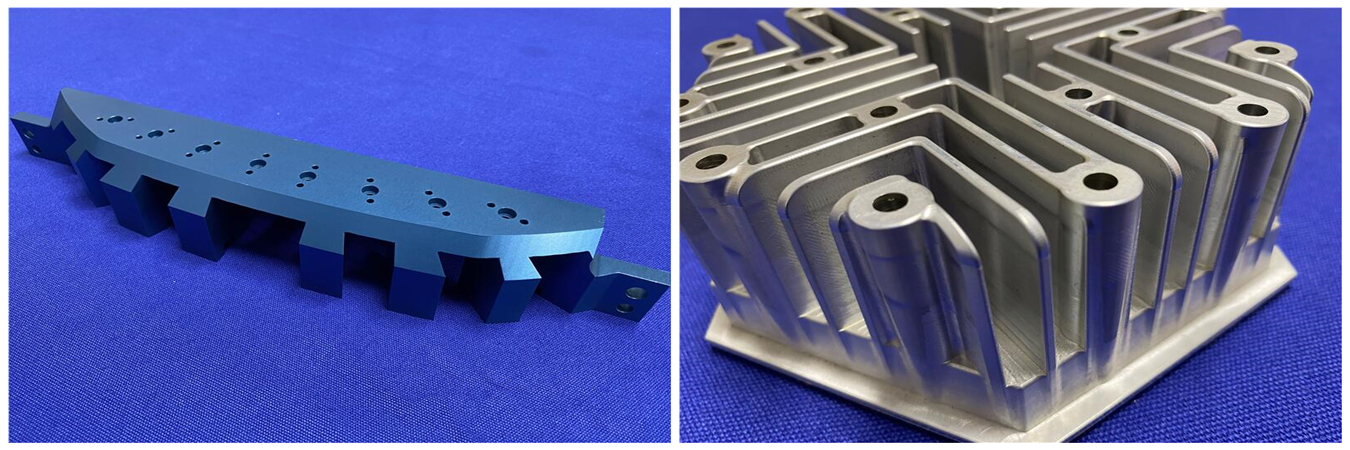
So who would rely on us for their precious machine aluminum parts? Here’s why they stay with us:
“Real” engineering: We aren’t just buttonpressers. We’ll review your design to optimize it for manufacturability while balancing those pesky costs. We understand what you need.
Fancy machines: We have upper-end CNC Mills and lathes, and Swiss-type (Citizen, Star, Tsugami). Simple or crazy-complex, we can do it all.
One-stop-shop: Need to get your parts machined and then anodized and assembled? Don’t worry, we can handle it.
Flexible volumes: Need a prototype of 5 parts? A production run of 50,000? One stop-shopping with our factory.
Delivery and communication: We send our customs aluminum machined parts to clients in the USA and Europe, with clear communication.
learn about our CNC capabilities →
Getting your own custom aluminum machined parts? Don’t stress. Just understand a little about alloys and costs, and partner wisely with your manufacturer. Whether you need aluminum precision machining parts for your robotic hand or automotive prototype, it makes all the difference to have the right partner.
Are you ready? We are. Get in touch with us for a fast, clear quote for your designed parts. Just send us your drawings and we’ll do the rest.