English
  日本語
日本語  한국어
한국어  français
  Deutsch
  Español
  русский
  العربية


Mar
Learn More
08

While many fasteners, such as screws and bolts, can be purchased at standard specs and dimensions, many applications require non-standard sizes, materials, tolerances, or coatings of a fastener. In these situations, custom fasteners become necessary.
Many procurement professionals as well as engineers believe that all custom fasteners require high minimum order quantities or that they be difficult to procure with greater than average precision. However, at Falcon CNC Swiss we are constantly proving these assumptions to be false. Thanks to our Swiss screw machining services, we’re able to manufacture custom fasteners with superior repeatability and precision, and with significantly reduced lead times.
This guide will provide you with information regarding material selection, coating possibilities, applications that are best served by custom fasteners, and detailed examples of how precision manufacturing methods like Swiss turning produce custom fasteners that outperform standard fasteners.
The correct fastener for a mechanical assembly is vital. Any issues with the chosen fastener can result in premature loosening, galvanic corrosion, fatigue failure, or a catastrophic joint separation, all of which can impact the overall quality of the product you are trying to achieve. The importance of getting custom precision fasteners right cannot be overstated in relation to the overall success or failure of your product.
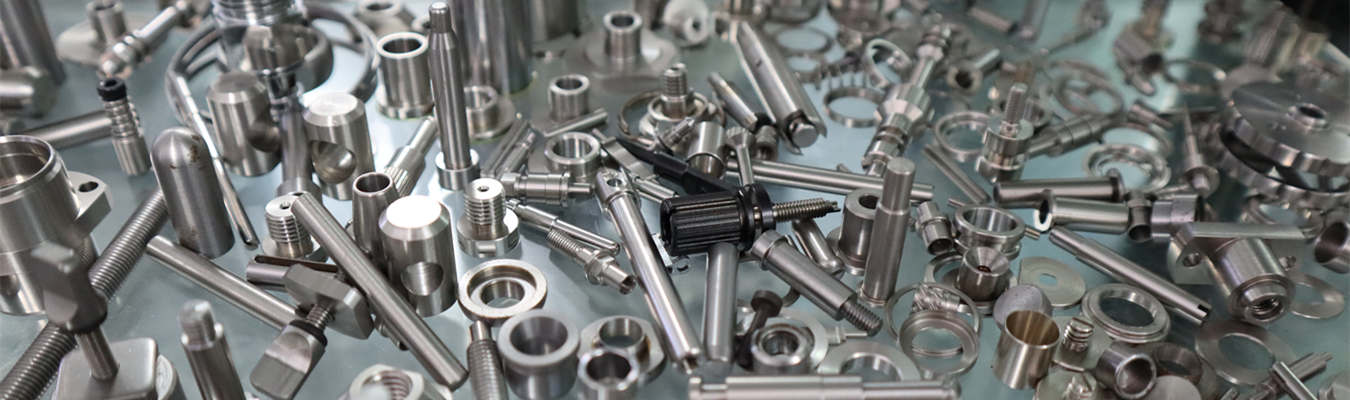
Choosing the right material for your custom bolts directly affects strength, corrosion resistance, weight, and cost. Here is a comparison of the most common materials used in custom fastener manufacturing:
Custom fasteners are mostly made from stainless steel. They are strong, reasonably priced, and have excellent resistance to rust and corrosion. Most general-purpose industries use custom bolts made of stainless steel in the following grades: 303, 304, 304L, 316L, and 17-4 PH. 316L is also an excellent choice for use outdoors in marine or chemical applications because it can withstand salt exposure.
Custom titanium fasteners are the solution when the need for weight reduction is necessary. The weight of the custom titanium bolts is about 45% of that of steel. In addition to being lighter than steel, they also have superior corrosion resistance and biocompatibility.
Titanium fasteners have gained popularity in the fields of aerospace, medical device manufacturing, robotics, marine hardware, and high performance automotive applications.
Common grades of titanium used for fasteners include, commercially pure (Grade 2) and titanium 6/4 (Grade 5). Grade 2 has excellent formability and corrosion resistance, while Grade 5 has much greater strength than either Grade 5 or Grade 8 steel and is better suited for structural or load bearing applications.
Manufacturers experienced in titanium machining should be sought to develop non-standard metric hardware. Titanium has low thermal conductivity and tends to work harden, so special parameters must be used for cutting and high-rigidity cutting equipment must be used. Swiss CNC lathe technology is ideally suited for producing small diameter custom titanium fasteners to tight tolerances because of its guide bushing support and high-pressure coolant.
For applications where extreme corrosion resistance is not required and cost is a primary consideration, custom carbon steel bolts provide excellent strength at a lower price point. Grades such as 12L14, 1144, and 4140 are common choices. Carbon steel fasteners can be heat-treated to achieve high tensile strengths (Grade 8.8, 10.9, or 12.9). This makes them ideal for construction equipment, heavy machinery, automotive chassis components, and structural applications.
Custom brass bolts are an excellent choice when electrical conductivity or decorative appearance matters. Brass also offers good corrosion resistance and natural lubricity, which prevents galling during installation. Applications include electrical terminals, plumbing fixtures, marine hardware, and decorative trim.
For extreme environments involving high temperatures, high loads, or aggressive chemicals, custom alloy bolts made from specialty materials such as Inconel, Monel, or Hastelloy are required. These superalloys maintain their strength at high temperatures and resist corrosion in chemical processing and aerospace applications. Explore Falcon custom bolts and nuts manufacturing.
| Material | Weight | Corrosion Resistance | Strength | Cost | Best Applications |
| Stainless Steel (303/304/316) | Medium | High | Medium-High | Medium | Industrial, marine, medical, food processing |
| Titanium (Grade 2/5) | Low | Very High | Very High (Grade 5) | Very High | Aerospace, medical implants, robotics, marine |
| Carbon Steel | Medium-High | Low | High (heat-treated) | Low | Construction, heavy machinery, automotive |
| Brass | High | Good | Medium | Medium | Electrical, plumbing, decorative |
| Alloy (Inconel/Hastelloy) | High | Very High | Very High (at high temp) | Very High | Chemical processing, aerospace, oil and gas |
The properties of raw materials are just one aspect of the whole picture. The use of surface coatings will protect against corrosion, reduce friction, and enhance the appearance of a product.
Custom zinc plated bolts are among the most economical and common finishes. Zinc plating provides sacrificial corrosion protection—the zinc corrodes first, protecting the underlying steel. Yellow, clear, and black passivation options are available, adding an extra layer of corrosion resistance and color.
Powder coated custom bolts offer superior corrosion protection and are available in virtually any color. The thick, durable coating is ideal for outdoor applications where long-term aesthetic appearance matters, such as architectural hardware, agricultural equipment, and outdoor furniture.
Custom chrome bolts deliver a brilliant, mirror-like finish that is both highly corrosion-resistant and decorative. Chrome plating is often specified for automotive, motorcycle, and marine hardware where appearance is as important as protection.
For the most severe corrosive environments, zinc-chrome flake coatings such as Dacromet and Ruspert are very effective in resisting salt spray – Dacromet can last for over 720 hours in a salt spray environment and Ruspert can last in excess of 1,000 hours in a salt spray environment. Dacromet is commonly used on automotive chassis bolts, solar panel mounting screws and bolts used in heavy-duty infrastructure. Ruspert is a premium 3-layer composite coating system and is the preferred product for coastal and chemically aggressive environments.
| Coating Type | Salt Spray Resistance | Appearance | Best Applications |
| Zinc Plating | Moderate (72–120+ hours) | Yellow, clear, or black passivation | General industrial, indoor applications |
| Powder Coating | High (500+ hours) | Any color, thick matte or gloss | Outdoor equipment, architectural, agricultural |
| Chrome Plating | High | Mirror-like bright finish | Automotive, motorcycle, marine (decorative) |
| Dacromet (Zinc-Chrome) | Very High (720+ hours) | Silver-gray matte | Automotive chassis, solar mounting, heavy-duty outdoor |
| Ruspert (Premium) | Market-Leading (1000+ hours) | Dark silver-gray, uniform | Coastal infrastructure, chemically aggressive environments |
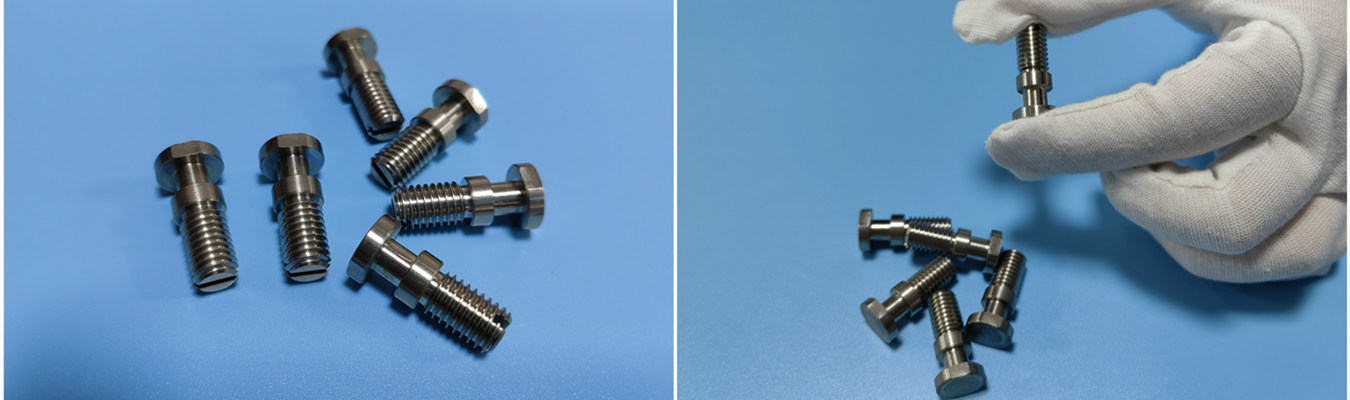
Off-the-shelf fasteners work for generic assemblies. But when your product operates in extreme conditions or demands optimized performance, custom fasteners are not optional—they are required.
Custom fasteners are a major part of the automotive industry. Automotive components include custom automotive fasteners such as bolts, which are used for engine components, transmissions, suspensions, brake calipers or chassis mounting points. These fasteners must be able to withstand extreme vibration, very high temperatures and high cyclic loads while providing a clamp force for thousands of hours. Many automotive fasteners are made with a Dacromet or zinc-chrome flake coating and have passed a rigorous salt spray testing for protection from road salts and moisture.
Seawater is extremely aggressive. Even 316 stainless steel can struggle over time in marine environments. Custom marine hardware bolts are widely used in seawater pipelines, offshore platforms, desalination systems, boat hardware, and dock construction. Titanium bolts—especially Grade 2—are often the preferred choice for subsea applications because they resist corrosion almost completely, even after years of continuous saltwater exposure.
Bridges, buildings, wind turbines, and heavy machinery all require construction fasteners capable of resisting loosening due to vibration while also maintaining structural integrity. Heavy-duty coatings are often applied to high-strength carbon steel custom bolts for construction in order to protect them from environmental corrosion. The common grades of construction bolts used are Grade 8.8, 10.9, and 12.9; however, custom lengths and thread configurations are available for specific structural connections.
When manufacturing high-strength fasteners, precision in the manufacturing process is critical; even small differences in dimensionality can severely impact how well load is distributed through the bolted joint. A custom fastener manufacturer can provide quality assurance and control systems that allow them to ensure that the clamp load is evenly distributed across critical structural connections.
The electronics industry requires miniature fasteners with fine threads, tight tolerances, and often non-magnetic or conductive properties. Precision electronic fasteners are used in laptops, smartphones, cameras, and RF connectors. These fasteners are typically small diameters—often M1 through M3—and require Swiss CNC machining to achieve consistent thread forms and head geometries. Custom finishes such as nickel or silver plating provide conductivity and corrosion resistance.
The medical industry demands biocompatibility, cleanliness, and absolute reliability. Medical device fasteners are used in surgical instruments, orthopaedic implants, dental devices, and diagnostic equipment. Materials are strictly controlled, and fasteners must meet ISO 13485 quality standards. Titanium and specific stainless grades (such as 316L and 17-4 PH) are standard, with passivation as the typical finish to remove free iron and enhance corrosion resistance.
Robotics applications demand lightweight, high-strength fasteners that can withstand millions of motion cycles without loosening or fatigue failure. Robotics fasteners are used in articulated arms, grippers, actuation systems, and sensor mounts. Titanium fasteners are increasingly specified for robotics because of their high strength-to-weight ratio and fatigue resistance—properties that directly improve robot speed and payload capacity.
Automation systems operate for long periods (months or years) without interruption from a shut down. Fasteners are required for automation equipment to remain in place while exposed to shock from mechanical shock and vibration, as well as to maintain a constant clamping force during thermal cycling. Fasteners made from custom alloy steels that contain thread-locking features (such as nylon patch or deformed-thread locks) are standard. In the case of hygienic automation applications (food processing and pharmaceuticals) fasteners fabricated from smooth-surface stainless steel with no crevice for bacterial growth must be utilized.
| Application Industry | Typical Materials | Key Requirements | Recommended Coatings |
| Automotive | Carbon steel, stainless steel | Vibration resistance, high strength | Dacromet, zinc plating, black oxide |
| Marine | Titanium (Grade 2/5), 316 stainless | Extreme corrosion resistance | Passivation, natural (uncoated) |
| Construction | Carbon steel (Grade 8.8/10.9/12.9) | High strength, structural integrity | Hot-dip galvanizing, Dacromet |
| Electronics | Brass, stainless steel, titanium | Miniature, fine threads, conductivity | Nickel plating, silver plating |
| Medical | Titanium (Grade 5/23), 316L stainless | Biocompatibility, cleanliness | Passivation |
| Robotics | Titanium (Grade 5), alloy steel | Lightweight, fatigue resistance | Anodizing, passivation |
| Automation | Stainless steel, alloy steel | Creep resistance, anti-loosening | PTFE coating, zinc plating |
Producing custom bolts and custom screws demands equipment capable of holding tight tolerances on small diameters, producing accurate thread forms, and achieving consistent quality across production runs. Swiss screw machining meets these demands better than any alternative method.
Unlike conventional lathes where the workpiece is held in a fixed chuck, a Swiss CNC lathe guides the bar stock through a guide bushing positioned just millimeters from the cutting tool. This unique design stabilizes the workpiece directly at the point of cutting, virtually eliminating deflection and chatter. As a result, Swiss machines produce small-diameter fasteners with exceptional concentricity, straightness, and surface finish.
Thread quality to perfection: Your Swiss machinery supplies threads of extreme accuracy. Typically, a single-point thread (made-to-order), a thread formed by rolling or a located thread (made by a specialty tool), will result in a consistent internal and external shape of the thread on all threads throughout the entire length of each section of your fasteners (even on very long fasteners).
Machining of hard materials: The use of high-pressure coolant systems in Swiss machinery allows machining of difficult materials, such as titanium, stainless and alloy steels, with long tool life due to reduced heat build-up at the cutting edge. Furthermore, the cutting process utilizes fastener grade materials to prevent work-hardening during machining, increasing tool life of the tools.
One-piece manufacturing process: Swiss machinery has been developed to perform all machining functions required for turning, milling, drilling and threading of a single fastener. This means that the entire fastener is machined through a single operation without secondary handling, which also reduces lead times and prevents issues from stacking tolerances.
Hundreds of thousands of identical parts: Swiss machines can operate unattended for hours and produce hundreds or thousands of identical components from one run of material. Therefore, they are excellent for the production of both low volume prototype parts and high volume fasteners.
Precise tolerances: Swiss machining will routinely achieve ±0.0002 inch (±0.005mm) or better tolerances for fastener applications that are critical in nature (e.g., for medical devices or aerospace products).
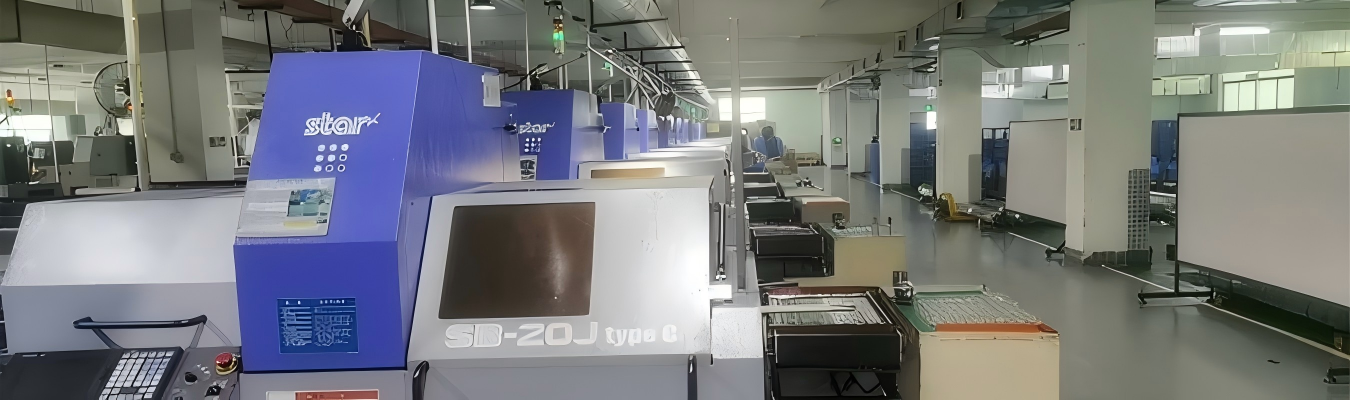
At Falcon CNC Swiss, our Swiss screw machining services are specifically configured for producing high-precision custom fasteners. We are an experienced custom fastener manufacturer, offering custom screws, custom bolts, and custom-made fasteners for clients across medical, aerospace, robotics, and industrial markets.
Swiss-type CNC lathes (Citizen, Star, Tsugami): Ideal for small-diameter fasteners from M1 to M20 with precise thread control
Multi-axis turning with live tooling: Drill cross holes, mill flats, and produce complex head geometries in a single setup
In-house finishing: Passivation, bead blasting, anodizing, polishing, and secondary operations all under one roof
ISO-certified quality systems (ISO 9001:2015, ISO 13485): Full inspection with CMM and first article reports
Engineering DFM support: Our engineers review your design before quoting and suggest cost-saving changes to material, geometry, or tolerances
Whether you need custom titanium bolts for a surgical instrument, custom stainless steel bolts for marine hardware, or custom alloy bolts for an aerospace assembly, we deliver precision fasteners with full traceability and documented quality.
Customized bolts and fasteners require more than just machining; they also require expertise in material and coatings, as well as a supplier who understands the specific requirements of your application — be it for marine corrosion resistance or medical biocompatibility.
At Falcon CNC Swiss, we combine advanced Swiss-type CNC machines with engineering-based DFM support and rigorous quality control to create custom stainless steel bolts, custom titanium fasteners, and customised hardware that meet your precise specifications. From initial design all the way through to final delivery, we are committed to bringing your custom fastener ideas into reality.
Upload your CAD file for a free DFM analysis and quote
Explore our Swiss screw machining services for precision turning and multi-axis capabilities
Contact our engineering team to discuss your specific bolt and fastener requirements
A: We manufacture custom bolts in stainless steel (303, 304, 316, 17-4 PH), titanium (Grade 2, Grade 5, Grade 23), carbon steel (12L14, 1144, 4140, with heat treatment available), brass, alloy superalloys (Inconel, Monel), and engineering plastics (PEEK, Delrin).
A: Prototypes typically ship within 5 to 10 business days, depending on complexity and material availability. Production lead times depend on quantity and are confirmed at quoting. Rush services are available for urgent projects.
A: Yes. We manufacture medical device fasteners and custom titanium fasteners that meet ISO 13485 quality standards. We provide full material certifications, passivation finishing, and inspection documentation. Our Swiss-type lathes achieve the tight tolerances and fine surface finishes that implantable and surgical devices require.
A: Every production run begins with a first article inspection (FAI) against your engineering drawing. We use CMM, optical comparators, and thread inspection equipment to verify critical dimensions. For high-volume runs, we implement in-process SPC (Statistical Process Control) to detect trends before parts go out of spec. Full inspection reports are available upon request.
A: Swiss CNC lathes are designed specifically for small, precise parts. The guide bushing supports the workpiece very close to the cutting tool, eliminating deflection and chatter. This allows us to produce fasteners with tighter tolerances, better surface finishes, and more consistent thread forms than conventional turning centers. The single-setup capability also means faster lead times and less handling.
A: Yes. All finishing is managed in-house. We provide anodizing (clear, black, custom colors), bead blasting, passivation for stainless steel and titanium, polishing, zinc plating, powder coating, and Dacromet or Ruspert zinc-chrome flake coatings.