English
  日本語
日本語  한국어
한국어  français
  Deutsch
  Español
  русский
  العربية
Apr
Learn More
25

Choosing the correct material for CNC turning affects production efficiency, surface finish quality, and the life of the tool. Brass and aluminum are two of the most specified metals with differing machinability. Engineers and purchasing professionals trying to create high precision parts must understand how machining brass vs aluminum behaves on a Swiss machining platform is critical.
At Falcon CNC Swiss, we provide high-tolerance Swiss machining and CNC turning of complex mission-critical components. Our many decades of experience in producing custom brass turning in addition to producing large quantities of aluminum allows us to provide superior repeatability from our sophisticated Swiss-style lathes. This engineering guide will look into cutting parameters, tool wear behaviour, chip control methods and the advantages of Swiss machining for turning brass and for turning aluminum alloys using a lathe.
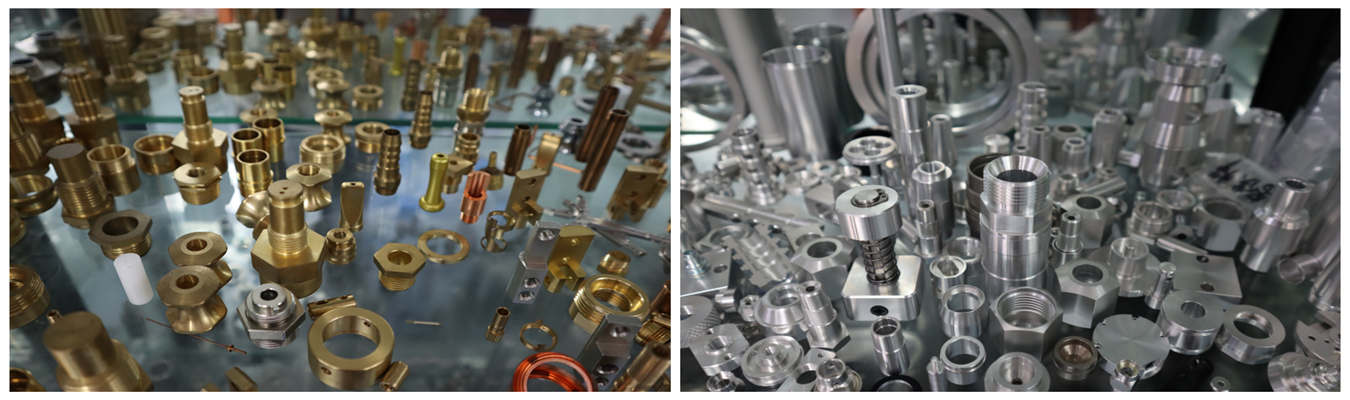
First, we need to compare the internal properties that will affect how well the material can be machined. For example, brass usually contains lead. This acts as a lubricant and chip breaker when machining. However, the softer aluminum alloys (6061, 7075) will often develop built-up edge (BUE) on them if they are not machined correctly.
| Property | Brass (C36000) | Aluminum (6061-T6) |
| Hardness (HB) | 80-90 | 95 |
| Tensile Strength (MPa) | 340-450 | 290-310 |
| Thermal Conductivity (W/mK) | 120 | 167 |
| Modulus of Elasticity (GPa) | 97 | 68.9 |
| Chip Form | Small, fractured chips | Long, stringy chips |
| Machinability Rating | 100% (excellent) | 70-80% (good) |
| Surface Finish Potential | <0.4 µm Ra | 0.8-1.6 µm Ra |
Since brass is very easy to machine, it is well-suited for CNC turning brass parts with precise tolerances and mirror-like finishes. In comparison, aluminum is light and has good strength but requires sharp tools and a correctly adjusted coolant to keep from forming burrs (the building up of edges).
When researching how to cut brass, a frequently searched phrase is brass cutting speed. When cutting brass with a lathe, free machining brass uses high speed feeds due to both its low friction and its good heat dissipation properties. For a rigid Swiss machining center such as Falcon CNC Swiss utilizing carbide tooling, the recommended spindle speeds when performing cnc brass turning operations on material forms less than one inch in diameter are typically between 600 and 1,200 SFM (Surface Feet per Minute). For example, when CNC turning brass parts with diameter(s) less than 1 inch using a spindle speed of 8,000 RPM you will achieve tool life of over 100,000 pieces.
For aluminum (6061), a balance must be struck; however the typical cutting speed for aluminum is between 800 and 1,500 SFM. Because of the gummy nature of aluminum, the setup for cutting brass generally require more speed than the setup for cutting aluminum. Therefore, in order to avoid chatter resulting from cutting brass at excessive speeds, on the same machining center for cutting brass, we typically reduce our feed rate by 10 to 15% when working with aluminum.
| Material | Cutting Speed (SFM) | Feed Rate (IPR) | Depth of Cut (in) | Coolant |
| Brass C36000 | 800 – 1200 | 0.003 – 0.008 | 0.020 – 0.080 | Optional / Mist |
| Aluminum 6061 | 900 – 1500 | 0.002 – 0.006 | 0.015 – 0.060 | Flood coolant required |
The state-of-the-art brass turning machines at Falcon CNC Swiss have high-torque spindles and polymer vibration dampening bases, making them capable of meeting these specifications. When producing custom brass tuning parts for which surface finish is important (i.e., hydraulic fittings), we suggest that you use polished insert geometries and operate to the high side of your machine's speed range.
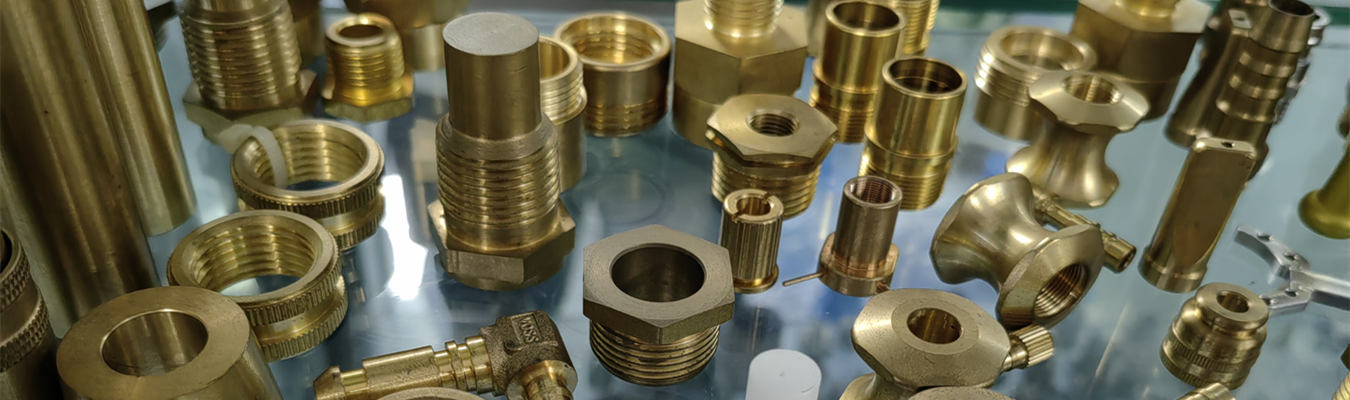
Tools for machining brass on a lathe wear very little. The zinc and lead found in brass can serve as solid lubricants which help to reduce flank wear and eliminate cratering. Aluminum, on the other hand, has a great deal of ductility and creates micro-welds on the cutting edges of the tools and produces built-up edges (BUE). The BUE will not only degrade surface quality (finish) but also impact the dimen...
When Falcon CNC Swiss machines aluminum components with precision, they utilize DLC-coated tools and use high-pressure coolant systems. However, brass operations typically produce tool life per edge 30 to 50 percent longer than aluminum when run under the same conditions. As a result, the cost of manufacturing parts from CFRP will be much lower than parts made from fiberglass or other composite materials.
Design engineers should keep in mind that specifying CNC brass parts will ultimately save on tooling cost and help eliminate the need for secondary deburring operations if you have a design that contains thousands of small, high precision parts (e.g., connectors, valve cores).
Upload your drawings or specifications today. Our engineering team will provide a competitive quote and manufacturing recommendations within 24 hours.
Request a Quote → Get expert guidance on machining processes, materials, and surface finishes.
The close tolerances and small distances between the guide bushing and tooling make chip evacuation from Swiss-type machining one of the biggest challenges. In fact, brass has an advantage because it creates small individual chips when machined, allowing for either fully dry or nearly dry machining. Many of our brass parts that are machinined be CNC turning use very little coolant and therefore have lower fluid costs and a lower environmental impact.
On the other hand, when machining aluminum, long, stringy chips can wrap around the tools and the guide bushing. This can lead to broken tools or surface defects. Therefore, Falcon CNC Swiss uses special chip breaking geome¬tries and high pressure coolant (1,000 PSI) applied directly to the cutting zone. In addition to that, all our Swiss CNC machining centers also have synchronized chip conveyors that help remove swarf created when machining aluminum.
While many machine shops use air blast only for turning brass between lathe systems, we recommend using a light oil mist for custom brass turning with complicated geometry during multi-axis operations to help improve the surface finish of those parts.
At Falcon CNC Swiss, our name reflects our dedication to Swiss machining excellence. We operate a fleet of Citizen and Tsugami Swiss-type CNC lathes capable of machining diameters from 0.5 mm to 32 mm with tolerances as tight as ±0.0002 inches. Our precision machining process integrates live tooling, back-working, and polygon turning—allowing complete production of complex parts in a single cycle.
Explore our foundational capabilities:
Precision CNC Machining Service – Multi-axis turning, milling, and finishing for brass, aluminum, and exotic alloys.
Swiss Machining Services – Specialized Swiss-type turning for complex, high-volume components.
Brass & Copper Machining – In-depth expertise in custom brass turning and copper alloys.
CNC Turning Machining – Advanced turning capabilities for both prototyping and production runs.
One of the most common services we offer is custom brass turning, as brass is used more often than aluminum because of brass's great electrical conductivity, corrosion resistance, and attractive gold color; therefore it is often requested by customers for many applications including plumbing fittings, electrical connectors, and pneumatic control valves. When a customer requests a brass cnc quote from us, we inform them that the predictable chip formation of brass allows machining at much higher speeds without the risk of bird nesting.
Although aluminum, due to its low density, is typically used in applications that require low weight regardless of cost such as auto sensors, drone parts, aircraft brackets etc., our swiss-style machining centers, will allow us to achieve hole diameters as small as 0.3 millimeters in aluminum with a straightness tolerance of .0005 when drilled 1 inch straight along the length of tube.
An example of a typical project we do, is cncuing brass high pressure hydraulic manifold bodies with internal threads and an overall finish to an rms of 16. We cncu all these parts in less than 90 seconds per part including secondary operations such as deburring. In addition, we use 100% thread inspection for all our threaded aluminum and brass fasteners during CNC turning.
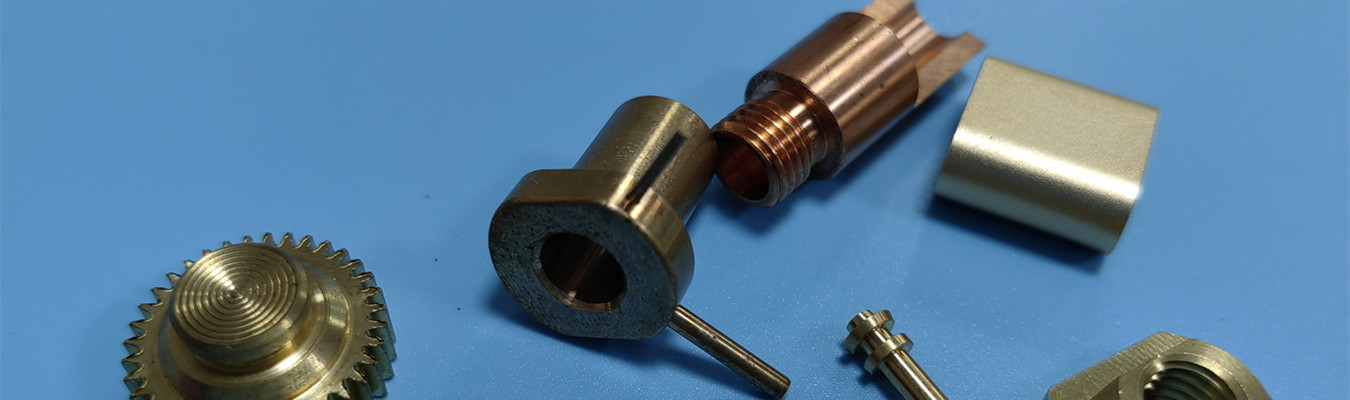
When engineers create products that will be machined from brass using a lathe — particularly those that provide excellent Swiss-type guide support — they should consider the following points:
Use of Insert/High Positive Rake: Inserts with a high positive rake can create less cutting force and therefore generate less heat, thus reducing burr (burr) and/or defects due to melting.
Avoid Full Radius Cutoffs: Due to brass being such a low melting point material you will be likely to experience burr formation in your cutoffs. You should also be using a true sharp edge, 35º insert when making your cutoff operation.
Control feed-out speed for the insertion of the tool at both ends of the brass lathe with a sub-spindle; If you are going to have any scratches you will need to make sure the feed out speed is consistent throughout.
These methods are routine for Falcon CNC Swiss: Recently they achieved a final result of 8 RMS without polishing their 50,000 sensor housings by running the last pass at .004 IPR and 1,000 SFM!
We received an inquiry from a manufacturer of medical devices requesting 100,000 identical couplers. The client's preferred material was aluminum 6061; however, during validation testing of the process for machining both materials (brass and aluminum) it was determined that using brass resulted in 35% faster cycles as well as eliminated a secondary operation (tumbling) needed to remove burrs or parting line flash from the aluminum part. In transitioning to custom brass turning, the customer was able to save $.27 per part and also decreased their lead time by two weeks.
This demonstrates that while both cnc machines for brass and aluminum have similar specifications, the precision of the finished product in a production environment on a machine tool will produce better results out of brass than out of aluminum when speed of production and surface finish are key. However, Falcon CNC Swiss is unbiased—we can produce quality parts out of either material—we will guide our clients based on their functional requirements!
Choose brass if: You need excellent machinability, minimal tool wear, fine surface detail, high conductivity, or corrosion resistance. Brass cutting speed advantages shorten cycle times, making cnc turning brass parts cost-effective even for complex designs.
Choose aluminum if: Part weight is critical, anodizing is required, or thermal dissipation is a priority. Aluminum works well with Swiss machining when coolant and chip management are optimized.
Every brass and alum components created at Falcon CNC Swiss will follow our ISO 9001:2015 certified quality system when produced. We offer custom brass turning service fo both prototype and mass produced items. Our CNC brass turning machines are calibrated every day to ensure consistent results, and we will review your CAD model with our engineers to make certain that it can be manufactured.
Let us apply our precision CNC machining experience to your CNC turned Swiss machined project as well as using material specific strategies.
Call Falcon CNC Swiss today to request a design for manufacturability review and a competitive quote for either brass turning or aluminum components.
This engineering guide was written by the technical team at Falcon CNC Swiss, a leader in Swiss machining and custom brass turning for global industries.