English
  日本語
日本語  한국어
한국어  français
  Deutsch
  Español
  русский
  العربية

Apr
Learn More
17

Aluminum is another one of the 21st century’s key engineering materials. Its low density with strong strength-to-weight ratio, corrosion resistance, and excellent machinability make it an ideal candidate for industries that require a lightweight yet strong material with high precision.
From aerospace housing to robotic frame, and high-end consumer electronics; product designers turn to precision aluminum CNC machining for high-tech components with complex geometries and exact tolerances.
As more and more product designs evolve, traditional 3-axis machining is not always enough; now engineers have access to advanced 5 axis aluminium CNC machining for the production of complex components with less setups, more accuracy and a superior surface finish.
Here’s how precision aluminium machining works, when 5-axis is necessary and how to find a reliable manufacturing supplier like Falcon CNC Swiss.
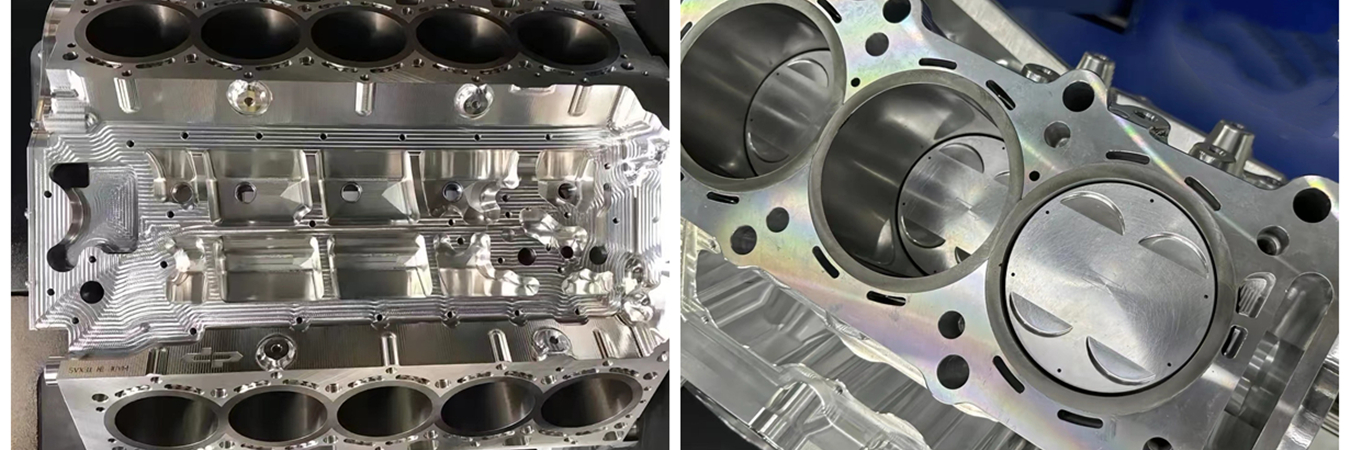
Precision aluminum CNC machining refers to computer-controlled manufacturing processes that remove material from aluminum stock to create highly accurate components with tight tolerances and smooth finishes.
It is commonly used for producing:
• Aerospace structural parts
• Lightweight electronic housings
• Medical equipment components
• Robotics frames
• Automotive performance parts
Compared with conventional machining, CNC technology ensures:
✔ Digital accuracy
✔ Repeatable production
✔ Complex geometry capability
✔ Reduced human error
✔ Faster production cycles
Professional machining centers can achieve tolerances as tight as ±0.005 mm depending on part geometry and material grade.
Aluminum has a unique combination of mechanical and production benefits that make it one of the most machinable of all industrial metals.
Material Advantages
| Property | Manufacturing Advantage |
| Lightweight | Reduces overall product weight |
| High strength-to-weight ratio | Ideal for aerospace & robotics |
| Excellent machinability | Faster cutting speeds & tool life |
| Corrosion resistance | Longer service lifespan |
| Thermal conductivity | Ideal for heat dissipation parts |
| Recyclability | Sustainable production |
These characteristics make aluminum the ideal material for the production of high-performance aluminum machined parts.
Standard CNC milling machines move the tool through three linear axes: X, Y, Z. Great for simple shapes, but…:
• Deep hollows
• Undercuts
• Objects with angles
• Shapes that need following contours
• Inner corners that are spaced close
All these require several setups, a situation that can leave you with problems of misalignment and added time. Traditionally these are the territory of 5-axis aluminum CNC machining.
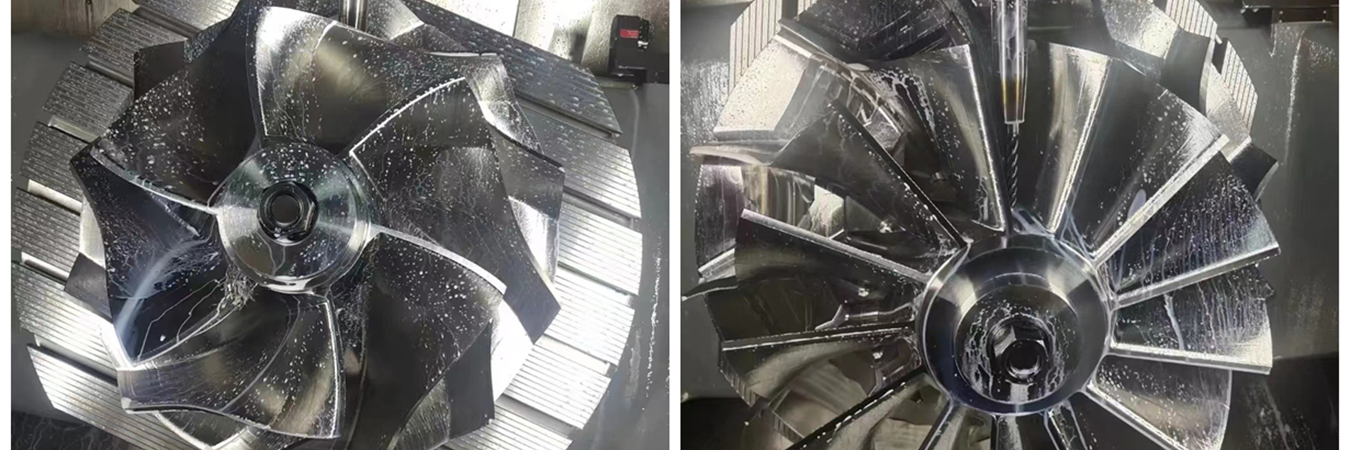
5 axis aluminum CNC machining takes the standard linear movements and adds two rotational axes, giving tools the capability of approaching the workpiece almost from any angle.
Motion Capabilities
| Axis | Movement Direction |
| X | Left to right |
| Y | Front to back |
| Z | Up and down |
| A | Rotation around X axis |
| B | Rotation around Y axis |
This multi-directional control allows for uninterrupted machining of complex surfaces without needing to reposition the part.
Greater accuracy
Having fewer separate setups in order to machine an entire part reduces the chance of errors in how parts are aligned with one another and also maintains the intended geometry.
Complexity
Good for where you need to cut contours, turbine shaped flutes, or curves that have more of an organic appearance.
Surface finish
More smooth w/o visual effects of tool ‘steps’ due to cutting on a continuous tool path.
Speeding up production
A large number of surfaces can be cut simultaneously, so overall lead-time may be reduced.
Longer tool life
The tool angles can be set to cut in a way that reduces vibration, extending tool life.
While this process can remove material more quickly, 5-axis aluminum CNC machining tends to lend itself to aerospace, defense, robotics and medical applications. Learn more about our aluminum CNC machining capabilities →
Aerospace
Lightweight brackets, structural supports, UAV frames, avionics housings
Robotics and Automation
Multi-joint structures, precision motion components, sensor housings
Automotive Performance
Turbo housings, suspension components, lightweight chassis parts
Medical Devices
Imaging equipment frames, surgical instrument components, diagnostic device housings
Other industries that depend on tightly-toleranced CNC machining of aluminum components.
| Feature | 3-Axis Machining | 5-Axis Machining |
| Setup Count | Multiple | Single |
| Geometric Complexity | Moderate | Very High |
| Surface Finish | Standard | Superior |
| Production Speed | Slower | Faster |
| Cost per Part | Lower (simple parts) | Better for complex parts |
| Precision Stability | Moderate | Excellent |
For simple parts, 3-axis machining is economical. For complex designs, 5 axis aluminum CNC machining significantly improves efficiency and quality.
Normal tolerances are of paramount importance in high precision parts.
Precision measurement techniques such as:
Coordinate measuring machines (CMM)
Optical measuring equipment
Roughness gages
Hardness testing
Chemical analysis.
Genuine suppliers will enforce full inspection procedures as part of their production methods for machined parts of aluminum.
Consider the Following Key Aspects
1. Equipment Capability
Multi-axis machining centers and modern automation.
2. Engineering Expertise
Helping to optimize a design for manufactability.
3. Quality Certifications
Full-fledged ISO system and traceability.
4. Production Capacity
Prototype to mass production flexibility.
5. Global Service
Expediting across borders.
“A good machining partner should be an engineering collaborator, not just a parts supplier.”
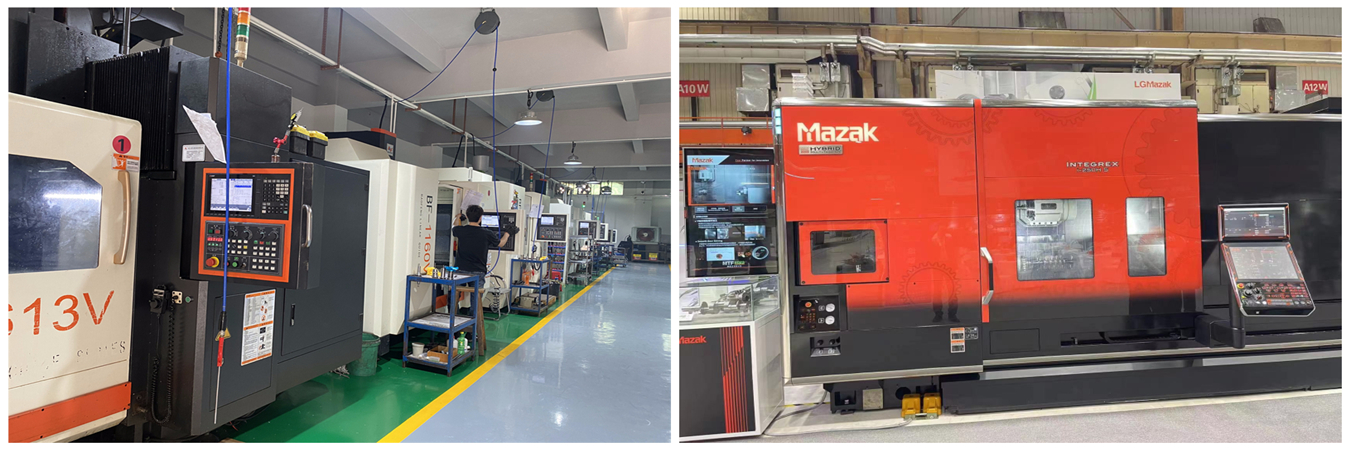
Falcon CNC Swiss enlists OEM buyers from all over the globe for their high-tolerance, complex aluminum parts.
Why they’re cool?Aluminum parts delivered to global OEM makers to very fine tolerances and complex geometries. Core traits:
✔ Multi-axis machining centers
✔ Expertise helps fine-diameter features extend throughout
✔ Aerospace requirements
✔ Reproduce over long-term and stable
✔ To global standards of quality
Their engineering team specializes in precision aluminum CNC machining for industries where accuracy and reliability are mission-critical. For complex structural parts and high-tolerance projects, their dedicated precision aluminum machining services provide global buyers with consistent quality and engineering support.
| Factor | Cost Impact |
| Material grade | Higher-strength alloys cost more |
| Geometry complexity | Multi-surface parts require longer machining time |
| Tolerance requirements | Tighter tolerances increase inspection cost |
| Surface finishing | Anodizing and coatings add process steps |
| Order quantity | Larger volumes reduce unit cost |
Complex parts benefit most from 5 axis aluminum CNC machining solution, where reduced setups offset machining costs.
• AI-assisted toolpath optimization
• Smart factories featuring real-time monitoring
• Hybrid additive and subtractive manufacturing
• Advanced lightweight alloy development
• Sustainable aluminum recycling systems
These innovations continue to redefine the frontiers of CNC machining of aluminum details.
As industries increasingly require lighter, stronger and more intricate components, the adoption of more advanced machining technologies is becoming imperative.
Precision aluminum CNC machining guarantees dimensional accuracy, high surface quality and an even flow of production for critical applications.
5-axis aluminum CNC machining materials are used for geometrically complex parts demanding high accuracy and effectiveness.
Falcon CNC Swiss is an experienced global production partner whose professional engineers and sophisticated equipment earn the trust of manufacturers.
If your project requires high-precision aluminum parts, come to the expert team to ensure the best performance, shortest lead times and the most reliable manufacturing in the long run.
Need your complex aluminum parts machined? Contact Us Today!
Yes, complex
• CAD/CAM programming
• Engineers with specific skillsets
• Long path planning
• Other machine and toolpath calibration
But as a best practice, seasoned manufacturers look to automation and simulate software to mitigate risk and create less volatile process
Certainly or yes.
Why manufacturers convert to 5 axis
• Shorter production times
• Fewer setups
• Better accuracy
• Better surface finishes
• Parts machined from one operation
Though the equipment costs more, the payback in productivity and part quality give enough ROI.
Despite many upsides, downsides include
• Equipment cost
• Programming complexity
• Longer training
• Higher operator training cycles
Thus, most manufacturers only apply 5 axis equipment where selective.