English
  日本語
日本語  한국어
한국어  français
  Deutsch
  Español
  русский
  العربية

Jun
Learn More
15

Stainless steel dowel pins are widely used in precision assemblies where accurate alignment, repeatability, and corrosion resistance are critical. From industrial machinery to medical devices and aerospace components, stainless dowel pins play an essential role in maintaining positional accuracy between mating parts.
This article provides a complete overview of stainless dowel pins, including common material grades such as 303, 304, 316, and 416 stainless steel dowel pins, hardened options, and how precision dowel pins stainless steel components are manufactured using advanced Swiss machining processes.
Stainless dowel pins are cylindrical fastening and locating components designed to align parts during assembly. Unlike standard fasteners, dowel pins are not intended to clamp parts together but to ensure precise positioning and repeatable assembly.
Key functions of stainless steel dowel pins include:
Accurate alignment of components
Load distribution across assemblies
Resistance to shear and vibration
Long-term dimensional stability
Because of their tight tolerance requirements, precision dowel pins stainless steel are commonly produced using CNC turning or Swiss machining. Learn how Swiss machining services support high-precision pin manufacturing.
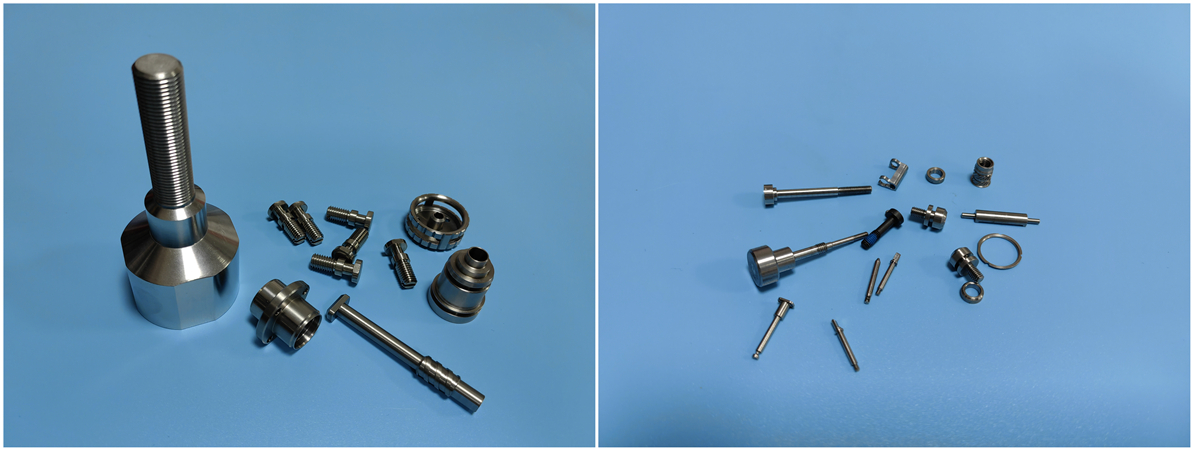
Choosing the right material is critical for performance, durability, and environmental resistance. Below are the most commonly used grades of stainless steel dowel pins.
303 stainless steel dowel pins are known for excellent machinability. This grade contains added sulfur, which improves cutting performance and surface finish.
Typical applications:
Precision assemblies requiring tight tolerances
High-volume production of small dowel pins
Applications where corrosion exposure is moderate
303 stainless is often selected when manufacturing efficiency and dimensional consistency are priorities.
304 stainless steel dowel pins offer a strong balance between corrosion resistance and mechanical strength. This is one of the most widely used stainless grades.
Key advantages:
Good corrosion resistance
Suitable for general industrial environments
Reliable mechanical performance
304 stainless dowel pins are commonly used in automation equipment, fixtures, and mechanical assemblies.
316 stainless steel dowel pins provide superior corrosion resistance compared to 304, especially in harsh or chemically aggressive environments.
Common uses include:
Medical devices and surgical equipment
Marine and offshore applications
Food processing and chemical equipment
When corrosion resistance is critical, 316 stainless steel is often the preferred choice for precision dowel pins.
416 stainless steel dowel pins are a martensitic stainless steel known for higher hardness and strength.
Characteristics:
Can be heat treated for increased hardness
Better wear resistance than austenitic grades
Moderate corrosion resistance
416 stainless is suitable for dowel pins subjected to mechanical stress and wear.
Hardened stainless steel dowel pins are heat-treated to improve strength, wear resistance, and load capacity. These pins are ideal for applications involving repeated assembly, vibration, or high shear forces.
Hardened pins are frequently used in:
Tooling and fixtures
Precision mechanical assemblies
High-cycle industrial applications
Producing hardened dowel pins requires careful control of machining and heat treatment to maintain tight tolerances.
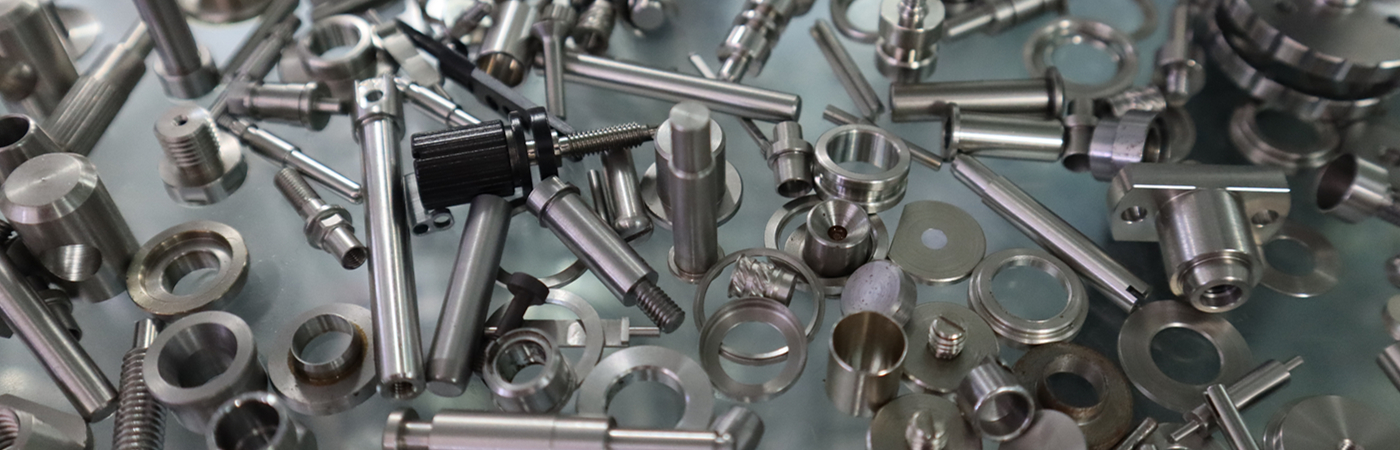
Manufacturing precision dowel pins stainless steel requires advanced machining methods capable of achieving micron-level tolerances and consistent surface finishes.
Key production techniques include:
Swiss turning for small-diameter pins
CNC turning for larger dowel pins
Centerless grinding for diameter accuracy
Secondary finishing and inspection
Swiss machining is particularly well-suited for producing stainless steel dowel pins due to its ability to maintain concentricity, straightness, and surface quality.
Discover how Swiss machining services enable consistent production of precision dowel pins.
Stainless dowel pins are used across many industries, including:
Medical devices and surgical instruments
Industrial automation and robotics
Aerospace and defense assemblies
Precision fixtures and tooling
For applications requiring custom diameters, lengths, or tolerances, manufacturers often rely on custom-machined pins rather than off-the-shelf components.
Explore custom precision pins and shaftsfor demanding applications.
Swiss machining offers several advantages when producing stainless steel dowel pins:
Excellent control of tight tolerances
High repeatability for volume production
Superior surface finishes
Reduced material waste
These benefits make Swiss machining the preferred method for manufacturing precision dowel pins stainless steel, especially in medical, aerospace, and high-precision industrial sectors.
From 303 and 304 stainless steel dowel pins to corrosion-resistant 316 stainless steel dowel pins and hardened stainless steel dowel pins, selecting the right material and manufacturing process is essential for performance and reliability.
By leveraging advanced Swiss machining and precision CNC processes, manufacturers can produce stainless steel dowel pins that meet strict dimensional and quality requirements across a wide range of industries.
For custom, high-precision applications, partnering with an experienced Swiss machining supplier ensures consistent quality, repeatability, and long-term performance.