English
  日本語
日本語  한국어
한국어  français
  Deutsch
  Español
  русский
  العربية

Aug
Learn More
19

In the realm of ultra-precision manufacturing, where tolerances are measured in microns and part geometries grow increasingly complex, the selection of raw material is not merely a preliminary step—it is a foundational engineering decision that dictates success. At Falcon CNC Swiss, we approach every project with this core principle: even the most sophisticated CNC Swiss screw machine cannot compensate for a poorly chosen material.
Swiss-type lathes, the workhorses behind intricate screw machined parts and small parts machine screws, excel due to their unique guide bushing technology. This setup provides unparalleled support, allowing for exceptional accuracy on long, slender components. However, this very advantage makes the machine’s interaction with the material more sensitive. The material must cooperate, forming clean chips, resisting deflection, and maintaining stability under cutting forces.
This guide is crafted from our frontline experience as screw machine parts manufacturers. We will move beyond generic data sheets and delve into the practical machining behaviors of key materials, empowering you to make informed choices that optimize cost, performance, and manufacturability for your next project of precision screw machine parts.
Brass: The Unrivaled Leader for Machinability and Efficiency
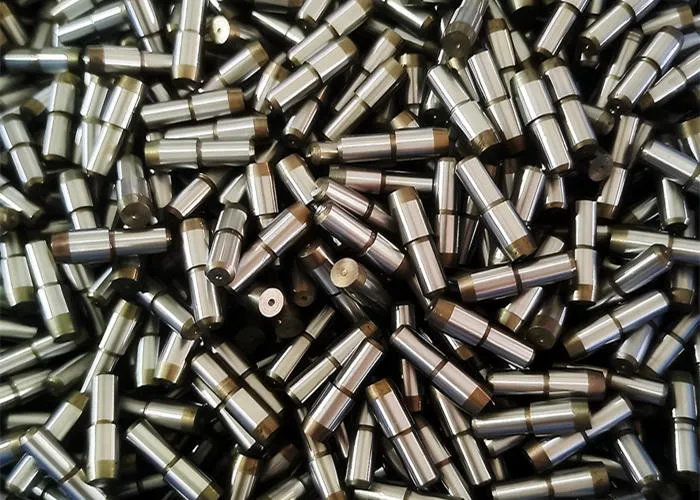
When engineers and screw machine parts manufacturers discuss optimal materials for high-volume production, brass consistently tops the list, especially for brass screw machine products.
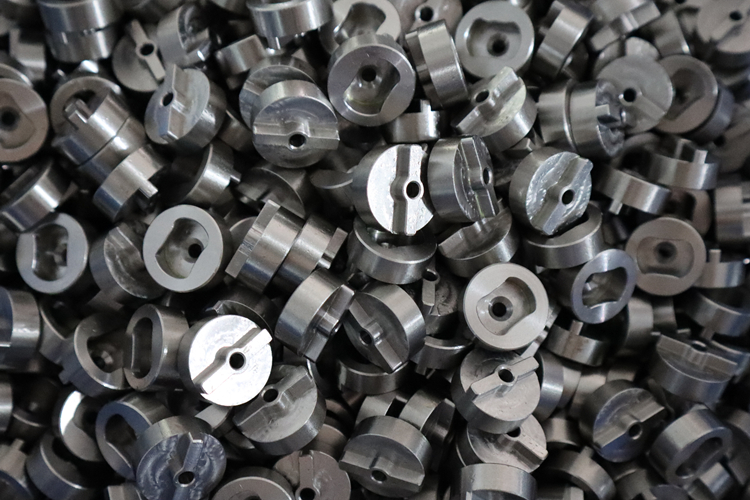
From a machining standpoint, free-cutting brass (notably alloy C36000) is in a class of its own. Its machinability rating is the benchmark against which all other metals are measured. This translates directly to tangible benefits on the shop floor:
High-Speed Production: Brass permits significantly higher cutting speeds and feed rates than most metals. This reduces cycle times, lowers cost per part, and increases overall equipment effectiveness—a critical factor for projects involving millions of small parts machine screws.
Predictable Chip Formation: Perhaps its most prized attribute in Swiss machining is its ability to form small, broken chips. Long, stringy chips are the enemy of precision in a Swiss lathe, as they can wrap around tools or the workpiece, causing downtime and potential quality issues. Brass’s granular chips evacuate cleanly, ensuring uninterrupted operation.
Inherent Lubricity & Finish: Brass possesses a natural lubricity that reduces cutting tool wear and often yields a superb, ready-to-use surface finish directly off the machine, minimizing or eliminating secondary finishing for many brass screw machine parts.
C36000 (Free-Cutting Brass): The default choice. Ideal for electrical connectors, plumbing fittings, precision gears, and decorative components where excellent finish and dimensional stability are paramount.
C26000 (Cartridge Brass): Offers good corrosion resistance and formability. Commonly used in automotive, ammunition, and hardware applications.
Design Insight: If your design involves complex features, tight tolerances, and high-volume runs, specifying C360 brass is one of the most effective ways to guarantee manufacturability and cost-efficiency. For a deeper conversation on how we leverage brass in high-volume production, explore our dedicated Swiss machining services.
Aluminum: The Strategic Choice for Weight-Critical Applications
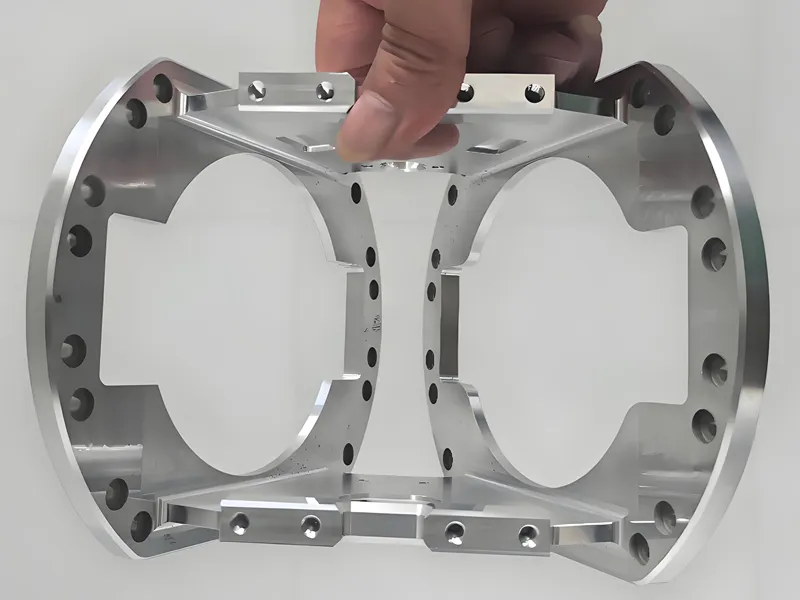
For industries where every gram matters—aerospace, drones, advanced robotics, and portable electronics—aluminum alloys provide an exceptional strength-to-weight ratio, making them ideal for many swiss machined parts.

Machinability of Key Alloys: While not as effortless as brass, alloys like 6061 and 7075 offer very good machinability. With proper tooling and coolant, they can be processed efficiently to achieve the fine finishes required for components like aerospace fasteners or sensor housings.
Thermal Management: Aluminum’s high thermal conductivity makes it the material of choice for heat sinks and other thermal management components that benefit from the complex geometries achievable with Swiss turning.
Post-Processing Flexibility: Aluminum anodizes beautifully, allowing for added corrosion resistance, color coding, and improved surface hardness.
6061-T6: The versatile general-purpose alloy. It provides an excellent balance of strength, machinability, weldability, and corrosion resistance. It’s often our recommendation for prototypes and a wide range of commercial cnc swiss screw machine parts.
7075-T6: Known as the “aircraft alloy.” It offers significantly higher strength than 6061 but is slightly more challenging to machine and less corrosion resistant. It is the go-to material for high-stress structural components.
2024-T3: Another high-strength aerospace alloy with excellent fatigue resistance. It typically requires anodizing or painting for corrosion protection.
Engineering Note: Aluminum can be “gummy,” leading to built-up edge on cutting tools. Success hinges on using sharp, polished tools, high-pressure coolant, and optimized parameters—a standard part of our process at Falcon CNC Swiss for all precision screw machine parts.
When your swiss machined parts must survive corrosive chemicals, constant sterilization, high stress, or extreme temperatures, stainless steel is the non-negotiable choice.
The Challenge of Work Hardening: Many stainless steels have a tendency to work-harden rapidly during machining. This means if the cutting tool rubs instead of shears cleanly, the material becomes harder at the point of contact, accelerating tool wear and potentially affecting tolerance.
Chip Control: Unlike brass, stainless steel can produce long, tough chips. Managing this requires precise tool geometry and chip-breaking techniques integral to advanced Swiss machining services.
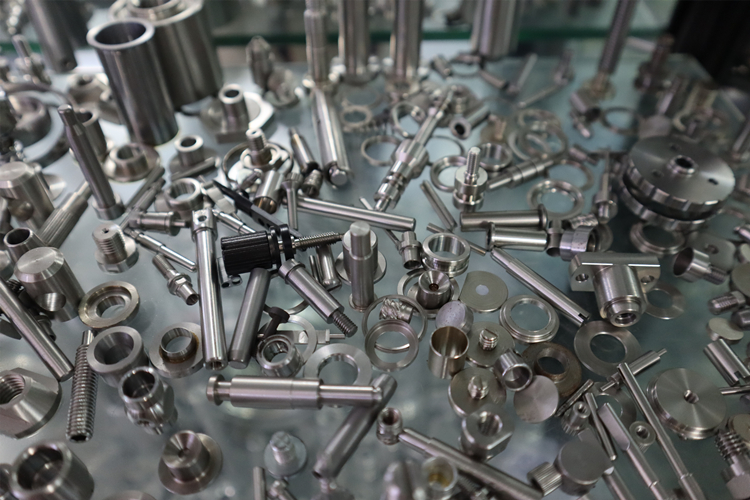
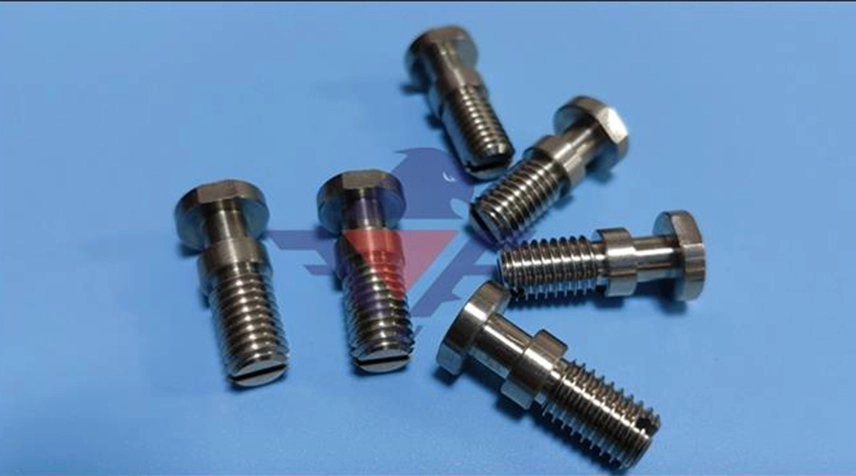
303 Stainless Steel: This is the “free-machining” stainless. The addition of sulfur improves chip breaking and overall machinability dramatically. For any screw machined parts requiring stainless properties, 303 should be your first inquiry. It offers good general corrosion resistance suitable for most industrial and consumer applications.
304 Stainless Steel: The most common stainless alloy. It has superior corrosion resistance to 303 but is more difficult to machine due to its toughness and work-hardening tendency. It’s chosen when machining difficulty is a secondary concern to maximum corrosion resistance.
316 Stainless Steel: Contains molybdenum, granting it superior resistance to chlorides and acids. Essential for marine, chemical processing, and high-grade medical applications. Its machinability is similar to 304.
17-4 PH (Precipitation Hardening): A versatile alloy that can be machined in a “solution treated” state and later heat-treated to achieve very high strength. Crucial for aerospace, military, and high-performance industrial components.
Engineering Plastics (PEEK, Acetal/Delrin, UHMW): Selected for electrical insulation, low friction, chemical resistance, or weight reduction. Swiss machining produces exceptionally precise plastic parts, but requires strategies to manage heat dissipation and the material’s lower rigidity.
Titanium (Grade 5, Ti-6Al-4V): Celebrated for its exceptional strength-to-weight ratio and biocompatibility. It is challenging to machine due to poor thermal conductivity (heat concentrates at the cutting edge) and galling tendencies. It demands low speeds, high feed rates, rigid tooling, and expert process design—a specialty within our Swiss machining services for medical and aerospace clients.
High-Temperature Alloys (Inconel, Hastelloy): Used in the most demanding environments like jet engines and downhole drilling. These materials are notoriously difficult to machine, requiring extensive experience, specialized tooling, and meticulous parameter control.
Material & Alloy | Best Suited For | Machinability (1-10) | Key Swiss Machining Consideration | Typical Part Examples |
Brass (C36000) | High-volume, cost-sensitive, excellent-finish parts | 10 | Ideal chip formation allows for maximized speeds/feeds. | Electrical connectors, valve bodies, brass screw machine products. |
Aluminum (6061-T6) | Lightweight structural & prototype components | 8 | Prevent gumminess with sharp tools and high coolant pressure. | Sensor housings, aerospace brackets, actuator parts. |
Stainless Steel (303) | Corrosion-resistant parts where manufacturability is key | 7 | The default choice for machined stainless screw machine parts. | Surgical instrument components, food processing fittings, shafts. |
Stainless Steel (316) | Maximum corrosion resistance in harsh environments | 5 | Expect lower machining speeds and higher tool wear than 303. | Marine hardware, chemical implantable devices, pharmaceutical parts. |
Titanium (Grade 5) | Maximum strength-to-weight & biocompatibility | 4 | Rigid setup, sharp tools, and perfect parameters are non-negotiable. | Orthopedic implants, aerospace fasteners, racing components. |
PEEK | High-performance plastic for insulation & wear | 6 | Manage heat and clamping force to avoid distortion and melting. | Insulating bushings, semiconductor wafer carriers, bearing pads. |
The most insightful material selection is only fully realized when paired with a manufacturer that possesses the corresponding depth of process knowledge. At Falcon CNC Swiss, our engineering partnership involves:
Early-Stage Consultative DFM (Design for Manufacturability): We review your material choice in the context of your part geometry, flagging potential issues like thin walls in hard materials or difficult-to-machine features.
Process Optimization for the Specific Material: We select tool geometries (rake angles, coatings), coolant delivery strategies, and speeds/feeds specifically tailored to the alloy at hand, whether it’s free-cutting brass or stubborn Inconel.
Proactive Quality Assurance: We implement in-process monitoring and SPC (Statistical Process Control) to ensure that the inherent challenges of any material do not compromise the legendary precision of Swiss-made cnc swiss screw machine parts.
This integrated approach is what transforms a good design into a reliably, efficiently produced masterpiece. It is the cornerstone of the value we provide through our comprehensive Swiss machining services.
Selecting the optimal material for Swiss machining is a multifaceted decision that balances functional requirements (strength, corrosion resistance, weight) with production realities (machinability, cost, lead time). There is rarely one “perfect” answer, but there is always a best answer for your specific application, volume, and performance criteria.
By understanding why brass is the champion of high-speed production, how aluminum balances lightness and strength, and when to specify 303 over 316 stainless, you equip yourself to make smarter, more cost-effective design and sourcing decisions. For screw machine parts manufacturers and engineers alike, this knowledge is power.
Ultimately, the advanced capabilities of a CNC Swiss screw machine are a potent tool. The material is the canvas. And the expertise of the machining partner is the skilled hand that brings them together. Success lies in harmonizing all three.
Ready to engineer the optimal material solution for your precision components? Connect with our engineering team to discuss your project, or delve deeper into our technical capabilities on our main Swiss machining services page.