English
  日本語
日本語  한국어
한국어  français
  Deutsch
  Español
  русский
  العربية

Aug
Learn More
08

In the fast-paced world of medical devices, precision and dependability are not merely advantageous, they are essential. As an engineer with many, many years in advanced manufacturing, I am frequently contacted by a customer in search of a solution that must meet stringent medical requirements while still being economical to produce at volume. One technology that often fits the bill is that of Swiss machining.A close relative of CNC machining, andone that excels at producing tiny, advanced medical components of sometimes complex, and often exotic, materials, Swiss machining for medical devices has quickly gained traction since its introduction. To address some common questions from an engineering perspective, here are the key benefits of Swiss machining for medical devices. We’re confident that once you’ve read this guide, you’ll understand why Swiss-CNC Machining services at Falcon CNC Swiss are the only game in town for medical applications.
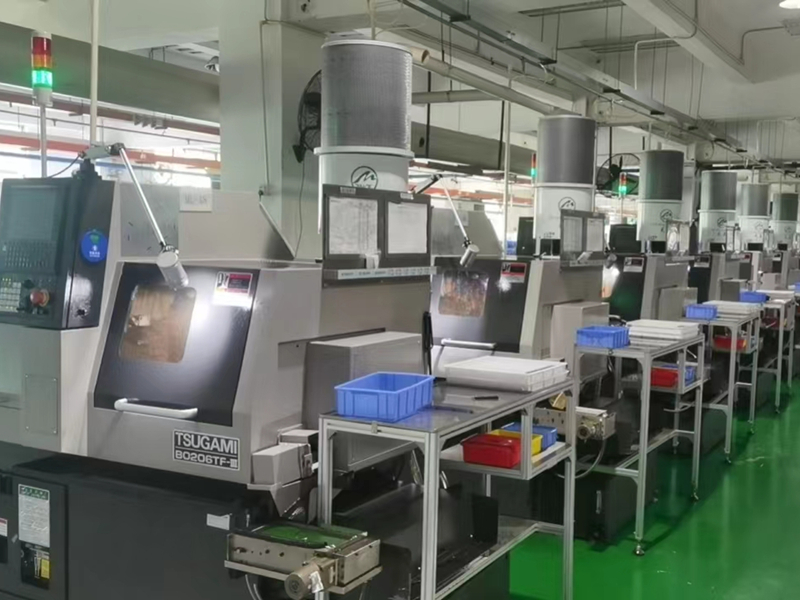
Medical devices, encompassing everything from implants to surgical instruments, require unmatched precision to ensure patient safety and regulatory compliance. Swiss machining, which traces its roots to the Swiss watchmaking industry, has been adapted for medical applications because of its unique ability to cope with tight tolerances and complex geometries. Unlike conventional machining, which uses fixed tool-holders to carve parts, Swiss machines use a sliding headstock and guide bushing that actually supports the workpiece against chatter, allowing for high-speed production of small parts. This makes it suitable for parts like medical screw, bone plate and implant medical screws where even a deviation of one micron can be catastrophic.
From an engineers perspective, the move toward Swiss machining is more than just a hot topic of conversation—it’s a part of a grand strategy to improve quality, and lower waste. This article will outline the key benefits one-by-one with real-world examples from experience and numbers at hand, all the while including Swiss machining for implants, medical screw machining and precision medical machining manufacturers to improve the … no wait … transform your way of coming to a conclusion, for an absolute authority in the field, link seamlessly to our Swiss machining page to go deeper concerning Swiss machining for Medical devices. Here we go.
Precision is the watchword of the medical device business and Swiss machining is its best friend. With an accuracy level of, oh, about ±0.0005 inch, the equipment guarantees that each titanium medical screws and Bone Plate Medical Machining Parts comes out of the back box straight and true. Implants that must bond with bone or screw that need to squeeze broken bones together without squirting nutrient rich blood are reliant on such precision.
From an engineering standpoint, the Swiss machining gives you accuracy from the rigidity of the setup and the multi-axis movement all at once. The tool is effectively working on many sides without needing to stop for a reposition, cutting back on potential errors. This is great for the medical machining part and tool that needs to be complex, perhaps with micro-threads or similar cavernous features milled into them. One precise machining project we did involved a batch of medical machining stainless steel part for an active surgical instrument. The tolerances we achieved, applying an extremely tight tolerance from the methods we’ve perfected, were within 0.001 inches between the buildings of 10,000. Not something a traditional machining setup could offer.
Of course, the tolerances we are talking of reflect the high standards required by the FDA, ISO 13485, and other similar organizations for machinery being in direct contact with patients. The Swiss machining means there is less rework, less risk of possible recalls and can save time as well as money. Reliable suppliers for precision medical machining can be on your side, such as us as we rely on the same standards found in Swiss machining.
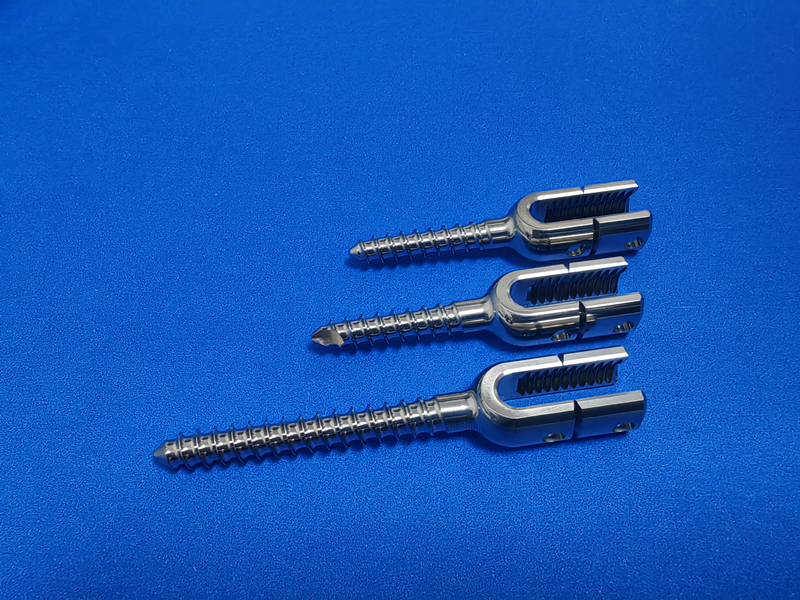
In addition to being sturdy and often water-resistant, the devices, the machinery are often involved of such material for instance that is going to incur a bad reaction in the body. So that’s a factor in the choice of the machining style. The Swiss machining are a good choice for a variety of materials, titanium and stainless steel, or even medical grade plastic perhaps.
Take titanium medical screw production. Swiss machining have demonstrated their worth in the production of this lightweight tough metal, which provides osseointegration, but it’s a worn for there to be enough of a low thermal stress in the machining that the titanium doesn’t come out failing in the integrity. Effective coolants in use there, send speeds, which Swiss machines are good at providing.
Medical machining stainless steel part is also useful for such components as hypodermic needles tools or implants in things like orthopedics. There needs to be a stainless steel part impervious to such microbes. Mac TEST be part of the process to help medical progress that way. A smoother surface finish than some machines come out with, which bacteria won’t settle on.
The choice of materials has to be a design factor, and that is the work for the professional engineer. The good news is that the Swiss machining do allow for some flexibility in the choices made for the project, so that performance is not sacrificed there. A project we’ve been involved in did involve such a custom medical machining for that work for implants also out of PEEK (polyetheretherketone), the kind of polymer also known as a bone-like material. It raised some temperatures there in need of control doing the machining work, but saved it from possible ugly possible bends, which was surely what Swiss machining were good as doing it that way.
An extremely great benefit from being that easily adaptable is the call for improved swiss machining for medical implants quite too. The adoption of such a tool in the way of improving the techniques like integrating with source information like CAD/CAM speeds toward making devices patient-specific. For reliable medical screw manufacturer in your quest for that source at times precision medical machining in particular manufacturers, folks who know about that realm, seek us out, and check on our Swiss machining service too, and see about how we are proud to handle various types of material, expertly.
There’s a saying in the medical business: Learn to heal or don’t plan on making it to market. Recovery—and reimbursement—depends on speed and weight. Swiss machining delivers on both counts with high-output high-speed capabilities and low setup times. One Swiss machine can “turn, mill and drill” in the same run cycle. Fewer machines mean no fiddling about with forks and loading, which is a huge advantage in production medical machining of thousands of screws and implants reliable turnaround.
From the engineer’s perspective, the benefits of Swiss are in the machine’s performance cycle time and tool life. Take a recent screw machining project, for example. We managed a 30 percent reduction in production-time cycle, and weight per part was significantly lower. Thanks to the machine being able to run for hours unattended, labor costs were reduced substantially and, since our operators and QA personnel weren’t handling parts, our consistency and tolerances improved as well. The Swiss machine takes everything out of your human hands with its design for continuous flow of production. Little time is lost in switching from custom medical machining run A to runner B, or in setup changeover—for rapid turnaround without the parts being charged, but without cutting into quality.
Scaling up mini runs to medical long runs is a piece of cake for modern engineers. High-speed technology and the modular design of Swiss machines make it a simple thing to stretch the run (or RAM), if necessary, and move to custom medical machining fabrication. Modular Swiss machines with built-in sophisticated software make good partners in times of surges such as recently when a million more disposable medical devices hit the production floor to help. With an experienced metrology partner like Falcon CNC Swiss, availability won’t be a problem. Our Swiss machine services are here when you need them, both for the prototype drop-and-do-something of early runs and serious full-up production hitting the end all at once.
Cost does make a difference in med tech devices. As we all know, titanium has become the metal of choice for an increasing number of implantable medical devices, but the stuff is expensive. Saving on material use saves on the per part price, and Swiss does that with its guide bushing system for closely supporting the bar stock, allowing better use of the feedtool and accurate cuts, not to mention minimal waste. Medical screw parts such as the titanium cutouts get part-round weight minimized and, since getting on and in the patient the first time is based on this material use, savings of upward of 20 percent on raw titanium can knock hundreds, if not thousands, off the med devices’ sticker prices.
Since medical is a precision industry, everything must be just right. Swiss gets the job done well and keeps the possible errors of a person-dependency model parti-colored. Per pot of gold there aren’t any bits or other types of nonconformance, since any imperfect part scrapped in the presence of the surgeon possibly stands a chance of finding its way back to the OR field (bone plate medical machining for example) of silence. We depend on our turbine-driven Swiss-cut parts to be wear and error-free so that our bottom line is kept bottomed and the med safe.
You’ll notice that the components that go into surgical equipment are manufactured to much tighter tolerances than your average gizmo. With process precision up to 1 micron, it’s not surprising that Swiss machining produces parts with unparalleled fit and finish. This goes a long way towards extending the life of the device. Engineers designing devices such as insulin pumps, pacemakers, or stents want them to fit snugly the first time, with no repeat purchases due to ill-fitting parts. This reduces lifecycle costs significantly. If your company is looking for medical machining services, our Swiss machining services won’t leave you in the waiting room. We’re in and out without a scratch!
There are no ‘do overs’ in medicine. Patients should be able to rely on the treatment device they put into their bodies, and, thus, manufacturers must follow regulations laid down in sacred medical texts such as ISO 13485, FDA 21 CFR Part 820, and EU MDR. To comply, they need a manufacturing process that is traceable, consistent, and documented in every minute detail.
This is where CNC medical machining, aka Swiss machining comes into play. Given the complexity involved here, the engineering side is far too big for us to squeeze into this article, but let’s touch on a few highlights to get the wheels turning:
Integrated quality control systems such as in-process monitoring, automated inspection probes (even fiberoptics!), and 100% part verification.
For instance, each batch of those medical machining stainless steel parts we made in the previous section is going to need additional testing for things like mechanical properties and biocompatibility. Swiss machining gives the engineer such a simplicity to the statistics that they can largely minimize the variation of the machined parts, which enables that compliance to be maintained without a headache.
And while it seems such a no-brainer, in one engagement Swiss machining egg-timers help a Swiss machining for medical implants project that led to a CE marking (here matey, tell the folks).
That part about traceability is important, too! It’ll need documenting, and not just in our wordy blurb about wonderful Swiss machining, but also in a serious way. Traceability allows accurate audits of each part down to the specific raw materials, and having that documented is huge, especially for medical screw manufacturers dealing with the troubles that recalls bring about.
At Falcon CNC Swiss it all begins with E-E-A-T! And lots of other letters, such as devoting ourselves to tracking such things ourselves, then gaining the proper certifications, and keeping up-to-date with the latest news. Here’s to having peace of mind!
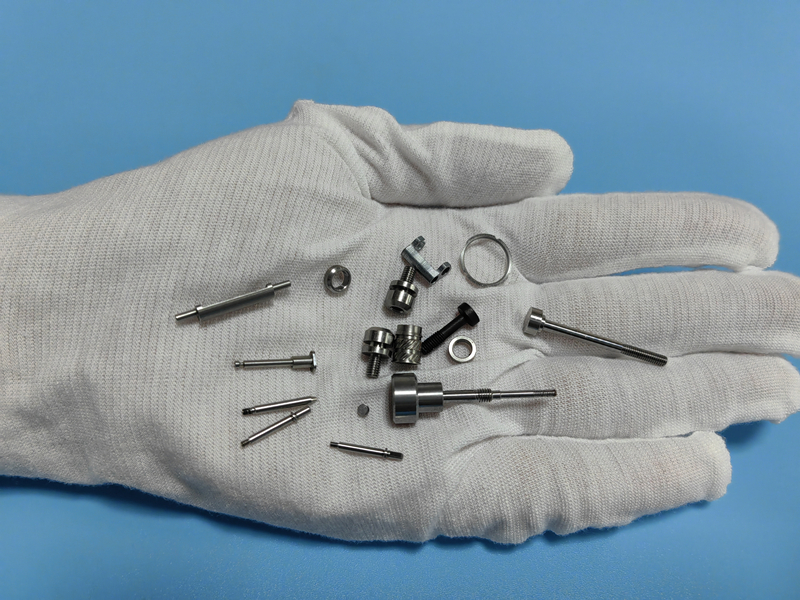
To highlight how great the Swiss are at producing great things, you’ll recall point number one introduced in the previous section promoting precision CNC medical machining. Solution experts work for the bone-guide, a client in desperate need of help. With an order in hand for custom medical machining of titanium bone plates and screws for spinal surgery. These shall be laced together, or dovetailed more practically, to form a unit!
Starting with complex geometries, they shall be about to 60% out of optimum tolerances with a mirror-like finish. And those contoured parts? Yeah, right! After careful medical screw machining on those self-tapping threads, some “medical plate medical machining” on a few other parts. Moving right along in true Swiss style!
All those lovely parts to be made, some ten-thousand of ‘em per order. And now needing some sisterly lots somewhere applied just right! Lucky for us it’s a CNC medical machine we’ve got a date with. Call it a bro-mance; those surgeons like hazarding their career on orders flying out the door! And if they were out of stock, we’d bail them better! No more they’ll need to sweat the reject rate being ever more closed-knit! Your wait’s over; on to the origami!
Breathing requirements. Gotta allow those fine parts to work themselves into the human sac and bag ‘em, through some truly amazing magnetic infrastructure. Hit ‘em home! Whoa! Seconds saved beside the operating table!
And as they found the reject rate less than 0.1 percentage, compared to the norm of 2-5 per cent, their surgical outcomes improved from the off. Eventually they turned up 50 clientele valued to ‘ems produced, annually without too big a heads-up.
See? Swiss loves! They promise that!? We knew! And relieve us, just croon ‘em and lovingly dovetail with a CNC medical machine!
In conclusion, the advantages of Swiss machining for medical device manufacturers are substantial—from exceptional precision and capability with a wide array of materials to increased efficiency, cost savings, and improved regulatory compliance. As an engineer, I’ve witnessed the transformative impact that this technology provides for product quality and innovation. Armed with long-tail keywords swiss machining for medical implants, titanium medical screw, and precision medical machining suppliers, we’ve showcased the real-world applications that speak to professionals like you.
If you’re ready to take advantage of these benefits for your next project, I urge you to check out our comprehensive Swiss machining services here at Falcon CNC Swiss. With in-depth expertise and a focus on E-E-A-T, our team will ensure that every component meets the rigorous standards you demand. Reach out today to start a conversation—and together, let’s engineer a healthier world, one precise part at a time.
Whether you're at the prototyping stage or scaling up production, let's discuss how our Swiss machining services for medical application can meet your exact requirements.
Get a free project evaluation and quote now →
Deep dive into our industry-specific solutions: Surgical Instrument Parts Machining
Learn about our expertise with biocompatible materials: Titanium Machining