English
  日本語
日本語  한국어
한국어  français
  Deutsch
  Español
  русский
  العربية

Jun
Learn More
07

In the world of high-performance manufacturing, few materials command as much respect as titanium. Its remarkable strength-to-weight ratio, exceptional corrosion resistance, and biocompatibility make it the material of choice for critical components in aerospace, medical implants, defense, and high-end automotive engineering. However, for every engineer and procurement specialist who specifies titanium machined parts, there comes a moment of truth: Can titanium actually be CNC machined without breaking the bank—or the tools?
The answer is yes, but it requires a deep understanding of the material's personality. Unlike aluminum or steel, titanium fights back. It retains heat, work-hardens, and can destroy tooling if approached with a standard machining strategy. This is why selecting the right partner for titanium cnc machining parts is as critical as the design itself.
At Falcon CNC Swiss, our engineering team has spent over two decades mastering this reactive metal. This guide provides the technical insights you need to successfully design and source titanium machining parts, whether you are developing a prototype or scaling to full production.
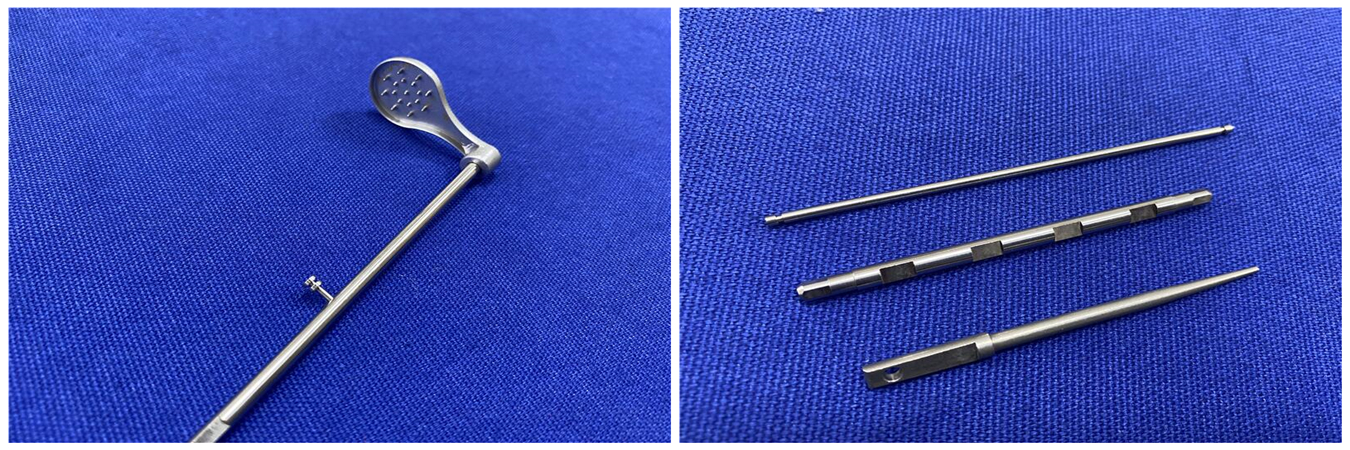
Before diving into solutions, an engineer must understand the enemy. Titanium poor reputation in machine shops comes down to three physical properties that create a perfect storm of difficulty.
Low Thermal Conductivity (The Heat Trap)
Unlike aluminum, which acts as a heat sink, titanium is an insulator. During cutting, up to 80% of the heat generated stays concentrated on the cutting edge of the tool rather than being carried away by the chips. This thermal load softens the tool material, leading to rapid flank wear and plastic deformation.
High Chemical Reactivity (The Welding Effect)
At the elevated temperatures created during machining, titanium becomes chemically reactive. It has a tendency to weld itself to the tool cutting edge, forming a Built-Up Edge (BUE). This alters the tool geometry, increases cutting forces, and results in a poor surface finish on your precision cnc machining service components.
Work Hardening (The Moving Target)
Titanium work-hardens rapidly. If a tool rubs against the material instead of taking a clean, aggressive cut, it creates a hardened surface layer that is even more difficult to machine on the subsequent pass. This is why hesitant machining is the enemy of titanium.
Yes, absolutely. However, it requires machines with high rigidity, such as our Citizen and Tsugami Swiss-type lathes, combined with specific strategies. The industry standard alloy, Grade 5 (Ti-6Al-4V), is machined daily to produce critical titanium cnc machining part for aerospace and medical applications. The key is respecting its limits—using lower speeds but higher feed rates to ensure the tool is cutting, not rubbing.
You cannot machine titanium with standard tooling. Successful operations require:
Micro-grain carbide tools: To withstand the high pressures.
Specialized coatings: TiAlN (Titanium Aluminum Nitride) acts as a thermal barrier, protecting the tool from the intense heat.
High-pressure coolant systems: At least 1,000 PSI is recommended to blast chips away and cool the cutting zone.
Compared to materials like 6061 aluminum or 303 stainless steel, titanium is not easily machinable. It is considered a difficult-to-machine material. Machining titanium typically requires:
Slower cutting speeds: To control heat generation.
Consistent chip load: To prevent work hardening.
Aggressive coolant flow: To manage thermal stress.
This lower machinability rating is why the cost for titanium machined parts is higher than for other metals. However, the performance benefits in the final application almost always justify the investment.
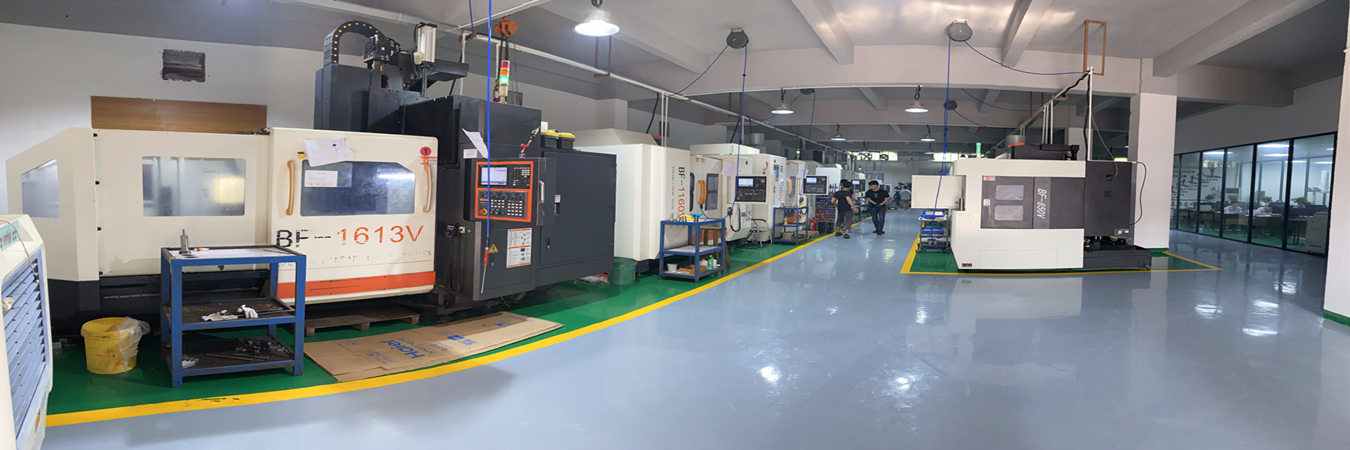
Given the complexities of machining this alloy, many North American and European OEMs are turning to specialized suppliers for china titanium cnc machining. This is not just about cost savings; it is about accessing concentrated expertise and advanced equipment.
Sourcing titanium machining parts from China, when done with a qualified partner like Falcon CNC Swiss, offers distinct benefits:
Concentrated Expertise: Manufacturing hubs like Guangdong (Dongguan, Shenzhen) are dense with precision engineers who have experience running thousands of titanium jobs.
Advanced Equipment: Top-tier suppliers invest in 5-axis milling and Swiss-type lathes specifically to handle the rigidity and precision titanium requires.
Vertical Integration: Having heat treatment, surface finishing (like passivation and anodizing), and inspection in-house reduces lead times and ensures quality control.
When you search for a titanium machining parts manufacturer, you are not just looking for a shop with a CNC machine. You are looking for a partner with a documented process for managing heat, deflection, and tool wear. As noted in industry sourcing guides, the best suppliers offer Design for Manufacturability (DFM) feedback within 24 hours and provide full material certification.
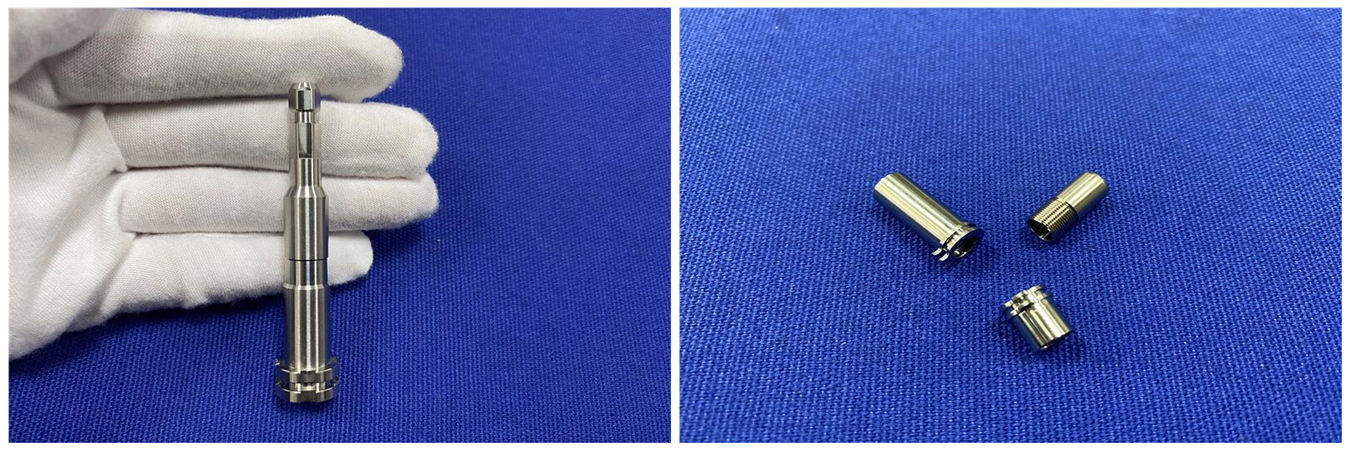
Our custom titanium machining service is built on the engineering principles outlined above. We don not just cut metal, but engineer solutions for the most challenging applications.
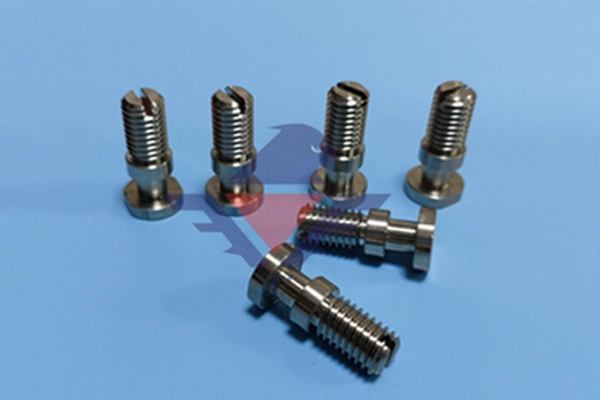
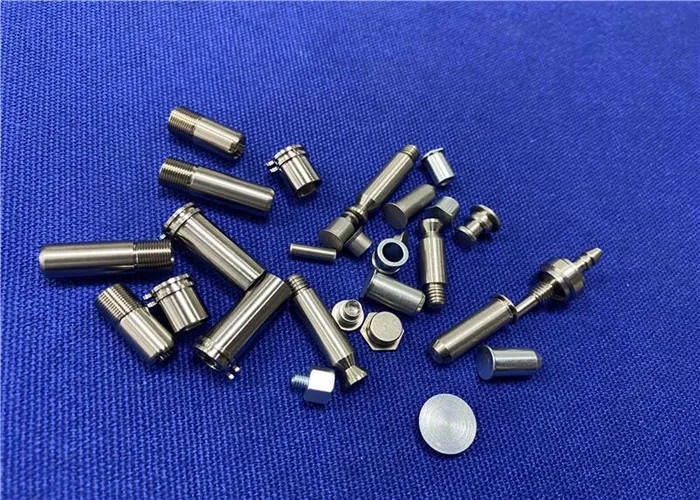
Swiss-Type Machining: Ideal for small-diameter, long, and complex titanium machining parts like bone screws, dental implants, and miniature aerospace pins. The guide bushing support minimizes deflection caused by titanium's springy nature (low modulus of elasticity)
Multi-Axis Milling and Turning: For complex geometries like surgical instrument components and aerospace housings.
Wire EDM: For features requiring critical tolerances and burr-free finishes.
Medical: Orthopedic screws, spinal implants, surgical drills.
Aerospace: Fasteners, structural brackets, RF shielding housings.
Industrial: High-pressure fluid fittings, heat exchanger components.
20+ Years of Experience: We have refined toolpaths and parameters specifically for Grade 2, Grade 5, and Grade 23 titanium.
Rigorous Quality Control: We provide 100% dimensional inspection, material certifications, and process traceability.
DFM Collaboration: Our engineers review your model to ensure the part is optimized for manufacturing, suggesting adjustments that can reduce tool wear and lower your overall cost.
Titanium machining is a discipline of precision and control. By understanding its tendency to trap heat and work harden, engineers can design parts that leverage its incredible strength without falling into manufacturing pitfalls.
Whether you need a single prototype or high-volume production of titanium cnc machining parts, success lies in partnering with a manufacturer that treats titanium with the respect it demands. At Falcon CNC Swiss, our engineering-led approach ensures that your most critical components are manufactured to the highest standards of precision and integrity.
Ready to discuss your next project? Contact our engineering team for a DFM review and a competitive quote on your titanium components.