English
  日本語
日本語  한국어
한국어  français
  Deutsch
  Español
  русский
  العربية

Apr
Learn More
25

By: Falcon CNC Swiss | May 23, 2026
As North America aerospace manufacturing, industry automation, and reshoring investments continue to grow across all sectors of business, a renewed growth cycle is beginning within the U.S. precision fastener marketplace. According to recent industry data, the demand for aerospace bolts and screws, cold forming machines, and small screw fasteners used in robotics, electronic devices, and advanced production processes is also on the increase.
Additionally, OEMs and fastener manufacturers face unprecedented customer pressure to provide tighter tolerances, traceable materials, and scalable manufacturing capacities for customized fastener solutions such as bolts, nuts, threaded components, and engineered fastening assemblies.
The manufacture and supply chain processes for CNC made and OE supplied precision fasteners will therefore have to be redesigned and developed.
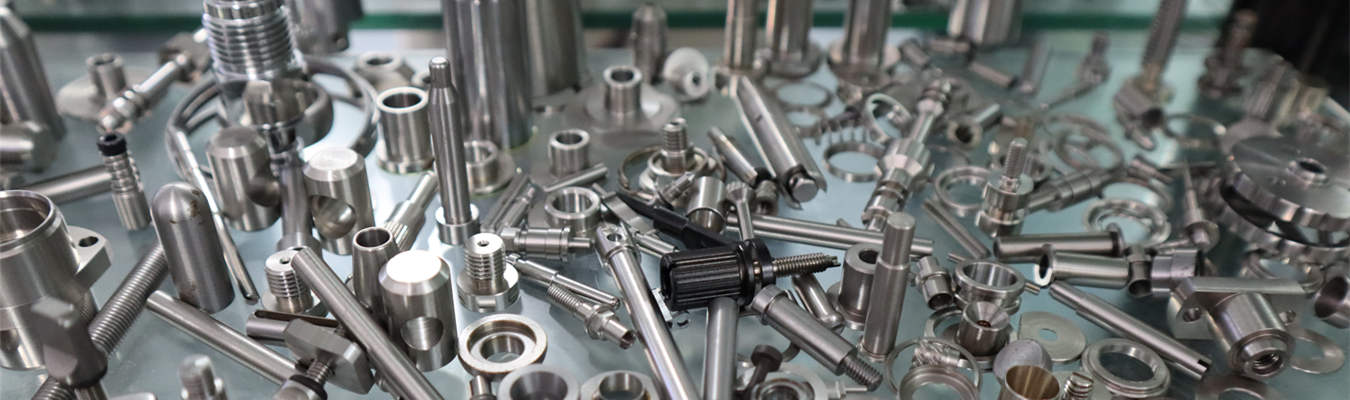
Several manufacturing and market reports issued during the last week indicate an increase in demand for aerospace fasteners and precise engineered fastening systems within the US over the next ten years. One of the best indicators is a recent study predicting the continued expansion of both aerospace fasteners and industrial fasteners.
The driving factors include:
Increased aircraft and defense production
Expansion of industrial robotics and AI infrastructure
Miniaturization in medical and electronics devices
Reshoring of U.S. manufacturing capacity
Demand for lightweight and high-strength assemblies
A recent report on cold forging machinery also emphasized that manufacturers are shifting toward precision-oriented, high-value fastener production rather than commodity hardware.
This transition is particularly important for industries requiring:
Tight-thread tolerance
Corrosion-resistant materials
Complex geometries
High repeatability in large-volume production
These requirements are accelerating the adoption of advanced CNC machining and Swiss-type turning technologies in fastener manufacturing.
Modern industrial systems increasingly rely on specialized fastening components rather than standard off-the-shelf hardware.
In aerospace applications, even small dimensional inconsistencies in bolts or nuts can affect:
Structural integrity
Fatigue resistance
Assembly alignment
Vibration performance
Maintenance intervals
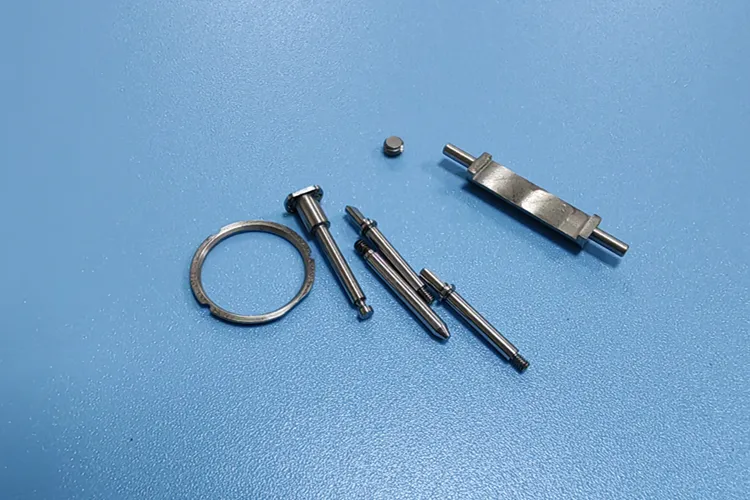
The robotics and automated assembly system industry requires tiny, thread-cutting components that have a measurement precision of at least 1 micron. In fact, a recent analysis of the market for miniature screws revealed that the demand for them is increasing from manufacturers of electronics, sensors and medical equipment.
With the continued automation of production lines, precision fasteners have transitioned from being treated as commodity-like low value items to now being treated as engineered performance parts, which are being incorporated into manufacturers' overall product reliability strategy.
This places OEM supplier capability ahead of unit price when assessing current and future fastener suppliers.
Traditional bolt and nut manufacturing often relies heavily on cold heading and mass stamping processes optimized for standardized parts.
While efficient for commodity fasteners, those methods can struggle when customers require:
Non-standard thread profiles
Tight concentricity
Specialty alloys
Secondary machining
Precision surface finishes
Low-defect aerospace compliance
Modern CNC machining provides a different approach.
Using multi-axis turning centers and Swiss-type CNC systems, manufacturers can achieve:
Superior dimensional consistency
Complex geometries in one setup
Better thread accuracy
Reduced secondary operations
Improved traceability
For high-performance industries, this approach significantly improves repeatability and quality control.
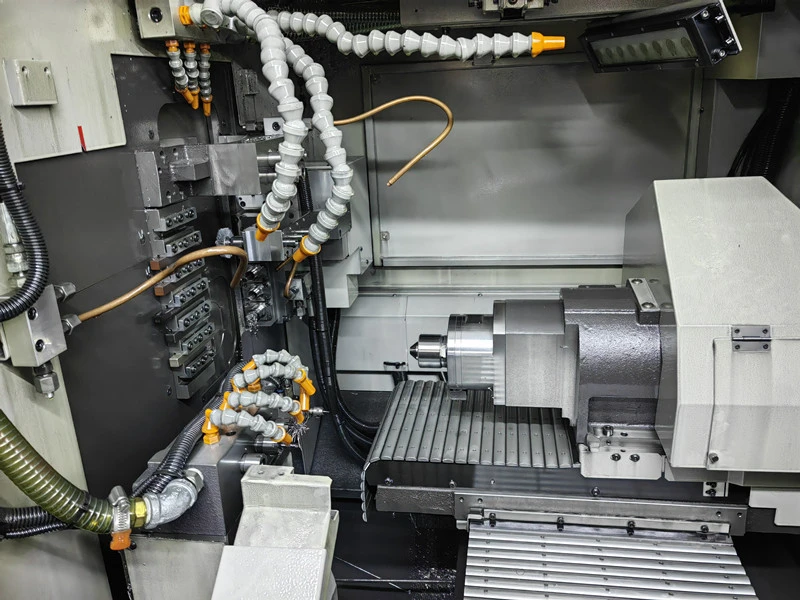
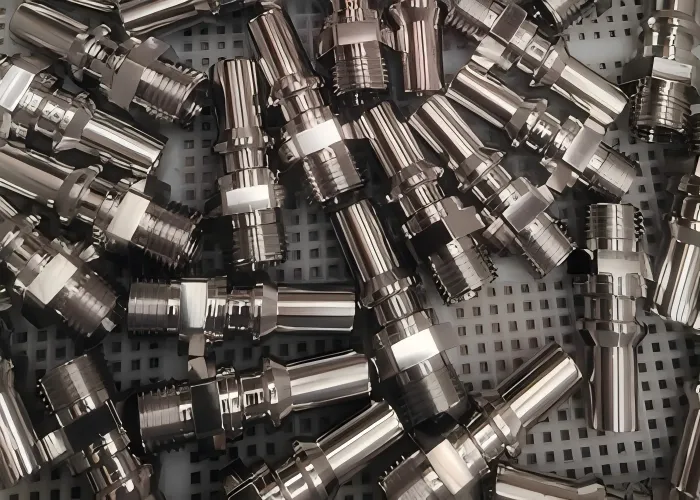
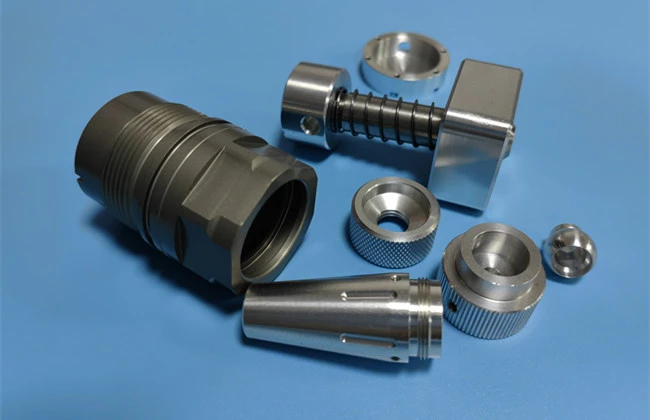
At Falcon CNC Swiss, our precision custom bolts and nuts manufacturing capabilities support tight-tolerance threaded components for aerospace, electronics, industrial automation, and high-volume OEM applications.
In projects involving miniature threaded parts or high-strength alloy fasteners, Swiss machining also enables stable long-cycle production with reduced vibration and improved surface integrity.
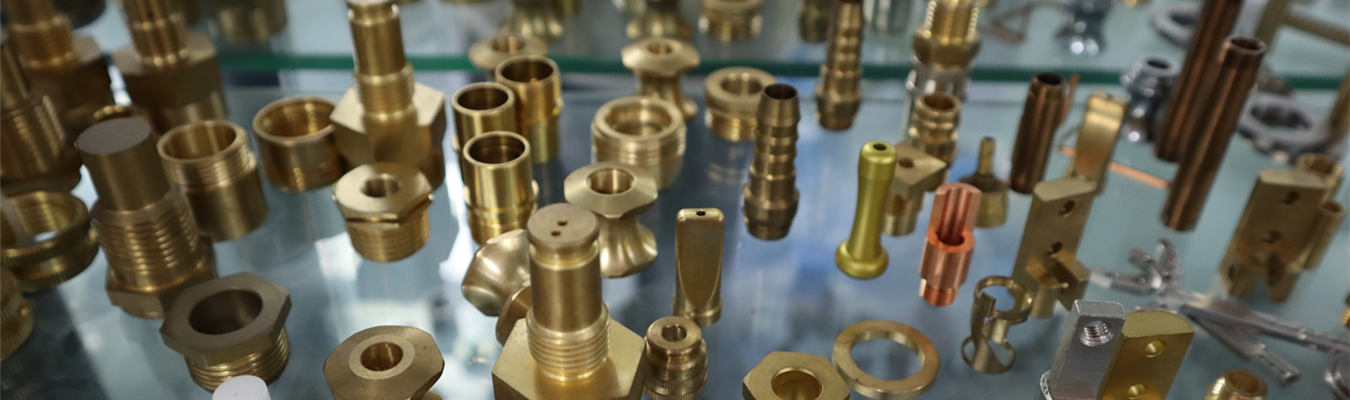
The growing fastener demand reflects a broader shift happening across U.S. manufacturing.
Several macro trends are converging simultaneously:
1. Increased Aerospace Production Recovery
Demand for certified aerospace fasteners will continue to increase due to ongoing growth in commercial air travel (airlines and passengers) and military budget levels from US and around world; the aerospace fastener market is on a steady trajectory through to 2034.
2. Growth in Automation
AI servers, robotic construction systems, and fully automated production and assembly lines all require specialized mini screws and precise fastening devices.
3. Supply Chain Security / Reshoring
Manufacturers in the U.S. and North America will increasingly seek local or traceable suppliers to mitigate the risk of disruption from geopolitical and logistics issues.
4. Requirement for Lightweight Fastening Solutions
Automotive and aerospace companies will increasingly require lightweight yet strong fastening solutions using materials like stainless steel/titanium/special alloys.
Through these trends, CNC (compute numerical controlled machines) advanced manufacturing technology for precision fasteners will have strategic importance for the entire supply chain of American industry.
From an engineering perspective, precision fasteners are deceptively difficult to manufacture consistently at scale.
The biggest challenges include:
Thread accuracy across large production batches
Material deformation during machining
Burr control on miniature parts
Surface finish consistency
Heat-related dimensional variation
Maintaining concentricity in long slender components
These problems become even more critical in:
Aerospace assemblies
Electronics housings
Medical devices
Robotic systems
High-vibration environments
At Falcon CNC Swiss, our CNC and Swiss machining processes are optimized for:
Tight-tolerance threaded components
Small-diameter precision turning
Stainless steel and titanium machining
High-volume production stability
Secondary finishing and inspection workflows
For customers requiring repeatable custom fasteners, process stability is often more important than raw production speed.
That is why many OEM buyers are moving away from generic hardware sourcing toward specialized custom CNC machining solutions with integrated quality control and traceability systems.
For procurement managers and product engineers, the current market trend sends a clear message:
Precision fastening systems are becoming a critical part of manufacturing reliability.
When evaluating fastener suppliers, buyers should now assess:
CNC machining capability
Thread tolerance consistency
Material traceability
Secondary finishing capability
Scalability for production growth
Inspection and QA systems
It is also increasingly important to verify whether suppliers can support both prototyping and high-volume production under one manufacturing workflow.
For applications requiring custom bolts, precision nuts, miniature threaded parts, or specialty fastening systems, working with experienced CNC suppliers can reduce:
Assembly failures
Warranty risk
Scrap rates
Production downtime
Companies seeking scalable precision fastener manufacturing can also benefit from integrated high-volume CNC machining services that combine automation, process consistency, and tight-tolerance production expertise.
Aerospace, medical, robotics, electronics, automotive, industrial automation, and defense industries commonly require precision fasteners.
CNC machining provides tighter tolerances, better repeatability, improved concentricity, and higher-quality surface finishes compared with commodity production methods.
Stainless steel, titanium, brass, aluminum, alloy steel, and specialty aerospace-grade materials are widely used.
Swiss machining is a precision CNC turning method ideal for small-diameter, high-accuracy threaded components and miniature fasteners.