English
  日本語
日本語  한국어
한국어  français
  Deutsch
  Español
  русский
  العربية

Apr
Learn More
17

The first thing people see when they look at your product is the enclosure, and the last thing you want is for the enclosure to fail. The enclosure for your product (whether it is a medical device, battery pack, sensor, or Pi board) will dictate how durable it will be, how well it manages heat, and how well it projects your brand.
The fact is: most engineers will specify more material than they need and less surface finish than they should. The result? You are paying too much for features that are not necessary or, even worse, you get a part that fails in the field due to an incorrect surface finish.
This guide will assist you in making smart and cost-effective choices regarding your new custom enclosure box. We will discuss options for: materials (aluminum machined enclosure; stainless steel machined enclosure; plastic machined enclosure; titanium machined enclosure); surface finishes (anodizing; bead blasting; powder coating; silk screening); and practical methods to save money.
Falcon CNC Swiss builds custom aluminum box enclosure solutions for various industries such as medical devices and consumer electronics. Let us help you do it right!
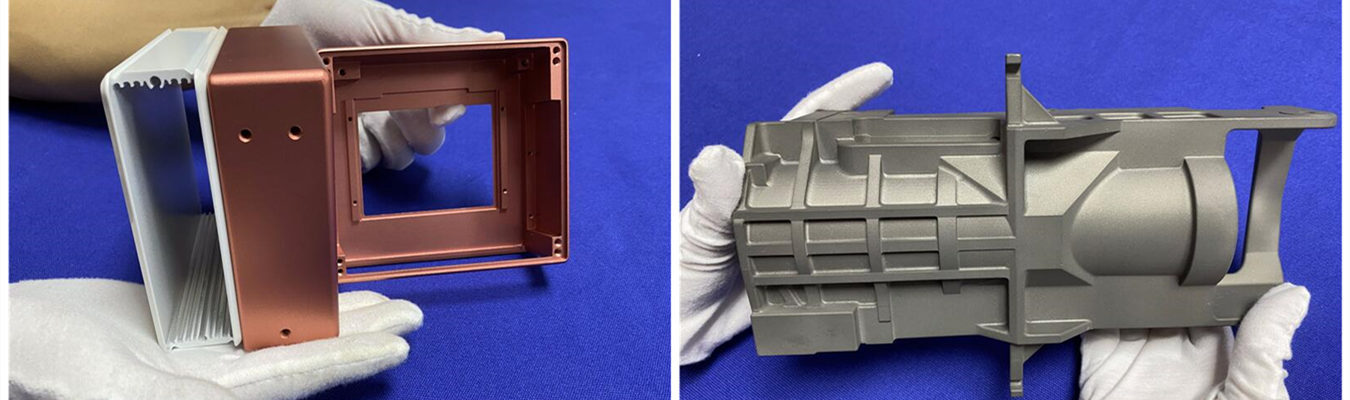
Choosing the right material means balancing strength, weight, cost, and thermal performance. Here is a clear comparison of the five most popular options.
Aluminum is by far the most common material for electronics machined enclosure and sensor machined enclosure applications.
Why? It hits the sweet spot for cost, machinability, and performance.
Cost: $5–15 per kg—affordable for almost any budget
Machinability rating: 4 out of 5 (very easy to machine)
Weight: Very light (density about ⅓ of steel)
Thermal conductivity: Excellent (237 W/m·K)—perfect for heat dissipation
Corrosion resistance: Excellent when anodized
Best for: General electronics, heat sinks, consumer devices, most industrial applications
When your enclosure needs to survive public access, heavy impact, or harsh chemicals, stainless steel machined enclosure is the answer.
Cost: $6–10 per kg—higher machining cost, about 3× more than aluminum
Strength: Tensile strength up to 1300 MPa in certain grades
Weight: Heavy—about 3× denser than aluminum
Thermal conductivity: Poor (15 W/m·K) compared to aluminum
Best for: Public-facing machinery, chemical plants, marine environments, medical sterilization
Plastic Machined Enclosure (Lightweight and Insulating)
Plastic machined enclosure options like ABS, Delrin, and PEEK are gaining popularity for applications where electrical insulation and light weight matter more than strength.
Cost: ABS ($4–8 per kg), Delrin ($6–10 per kg)
Advantages: Non-conductive, extremely lightweight, good machinability
Disadvantages: Poor heat dissipation, lower strength, UV degradation
Best for: Low-power electronics, battery enclosures, prototypes, applications needing electrical isolation
For the most demanding applications—aerospace, high-end medical, or deep-sea equipment—titanium machined enclosure offers unmatched strength-to-weight ratio and biocompatibility.
Cost: $30–100 per kg—very expensive
Machinability: Difficult, requires specialized tools and coolants
Advantages: Exceptional strength with low density, completely corrosion-resistant
Best for: High-performance scenarios where cost is secondary to performance
Brass machined enclosure excels where electrical conductivity and visual appeal matter. Brass is easy to machine and naturally corrosion-resistant.
Cost: $8–12 per kg
Machinability: Excellent—produces smooth finishes with minimal tool wear
Electrical conductivity: Very good
Aesthetic: Warm metallic finish often used for decorative or high-end devices
Best for: RF shielding, decorative housings, electrical fittings, musical equipment
| Material | Cost ($/kg) | Weight | Machinability | Conductivity | Best Application |
| Aluminum 6061 | $5–15 | Light | Excellent | High | General electronics, heat sinks |
| Stainless Steel 304/316 | $6–10 | Heavy | Difficult | Low | Harsh/corrosive environments |
| ABS / Delrin (Plastic) | $4–10 | Very light | Good | Insulating | Low-power devices, prototypes |
| Titanium Grade 5 | $30–100 | Light | Very difficult | Medium | Aerospace, medical implants |
| Brass C360 | $8–12 | Medium | Excellent | High | Decorative, RF, electrical |
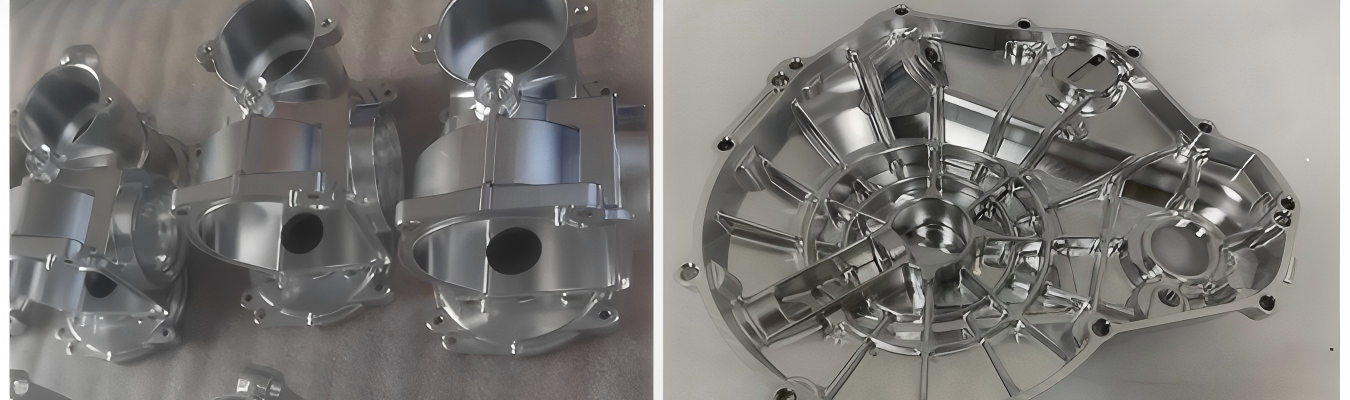
Do you have a heat generating device?
If the answer is yes, then you need an aluminum machined enclosure. The thermal conductivity of aluminum (237 W/m·K) is far superior to that of stainless steel (15 W/m·K) or plastic, which acts as an insulator. Therefore, using plastic or stainless steel on a heat generating device will ultimately cause the components of the device to be ‘cooked’ via heat.
Will the enclosure be exposed to moisture, salty water, or corrosive materials?
In order of preference, if the enclosure is going to be used outdoors, in a marine environment, or when exposed to chemicals, you should use:
Aluminum with Type II or Type III anodizing (low cost, high corrosion resistance)
Stainless Steel 316 (premium choice for extremely harsh environments)
Any standard aluminum without anodizing will eventually corrode; however, in coastal areas, coated aluminum or stainless steel 316 are the preferred materials because uncoated stainless steel can corrode based upon exposure to chloride-rich environments.
What is the most important feature of the enclosure; weight savings or impact resistance?
If you will be carrying the device, or mounting it on a drone, you need to select an enclosure manufactured from aluminum. If the enclosure is going to be impacted from being kicked, thrown, or from public usage, then you need to select an enclosure manufactured from stainless steel. When a load is placed on stainless steel, it maintains its shape well and offers good resistance when impacted repeatedly.
The most common way to drive cost increases is by over specifying the type of material that will be used to manufacture the enclosures. For example, we see our customers requesting titanium for use in situations where the performance of the part could be met using 6061 aluminum. According to one of our vendors, parts manufactured from 7075 are 50% -100% more expensive than parts manufactured from 6061; therefore, if the design requirements are not extreme, there is no requirement to use the more expensive material.
Golden Rule: Always start your enclosure design with 6061 aluminum and only migrate to a higher-priced material when the performance requirements dictate the higher-cost material is required.
Processing your closure through machining only creates the base part; the last step to achieving professional-looking parts, wear-resistance, and environmental longevity through surface finishing.
Anodizing is a treatment that uses an electrochemical method to develop a hard, durable and corrosion resistant ceramic coating on the surface of an aluminum part. This is the typical finish used in custom machine enclosures and custom aluminum box enclosures.
Types of anodizing:
| Type | Thickness | Hardness | Best For |
| Type II (Standard/Color) | 5–25 μm | Moderate | Consumer electronics, visible parts, color options |
| Type III (Hard Coat) | 25–75 μm | Very high | High-wear surfaces, industrial equipment, sliding parts |
Anodizing does not chip or peel because it is a part of the metal itself.
Anodizing can be dyed virtually any color.
Anodizing has excellent corrosion resistance and lasts over 336 hours in a salt spray test if the finish has been sealed properly.
Anodized surfaces still have excellent thermal conductivity.
Anodizing will add 10 - 25 microns (Type II) or 25-75 microns (Type III) to the surface of the metal.
When to NOT Anodize: If your part requires tight tolerances after being finished, then you should specify Type II anodizing with controlled thickness (±.013mm allowance) and/or machine the part slightly undersized before anodizing.
Bead blasting is a mechanical finishing process that involves rapidly shooting fine glass beads at very high speeds onto the surface of the part to produce a clean, consistent matte appearance.
Using Bead Blasting To Finish Parts
There are several advantages to bead blasting (enclosing machined parts) before other processes.
1. Bead blasting hides machining/tooling marks very well.
2. Bead blasting creates an excellent-looking, non-reflective surface.
3. Bead blasting (Finish) prepares a machined part for surface treatment (anodizing and/or powder coating).
4. Bead blasting will remove a very small amount of material (5-15 microns) from the part surface.
5. Bead blasting is the best process for finishing (sensor enclosures for machines and printed circuit boards) that need to avoid glare.
Benefits of Powder Coating:
1. Extremely durable and impact resistant for outdoor/industrial applications
2. Adds considerable thickness (50-100 µm) for protection
3. Available in all colors (including Custom Pantone Colors)
4. Works on all metal materials (aluminium, steel, brass, titanium) When is powder coating better than anodizing? Powder coating is usually superior to anodizing for outdoor chemical plants; heavy machinery; and public access equipment, due to its mechanical toughness and high thickness level.
Cost-effective alternative: For low-volume prototypes, consider laser engraving instead—no setup fees, though results are less vibrant than silk screened ink.
| Finish Type | Thickness Change | Cost Impact | Lead Time | When to Choose |
| None (Mill Finish) | 0 mm | 0% | Immediate | Internal parts, prototyping |
| Type II Anodizing | +0.013–0.025 mm | +15–25% | 3–5 days | Most visible parts + color |
| Type III Hard Anodizing | +0.025–0.076 mm | +50–100% | 5–7 days | High-wear / sliding surfaces |
| Powder Coating | +0.050–0.102 mm | +30–50% | 10–14 days | Outdoor / harsh environments |
| Bead Blasting Only | -0.005–0.015 mm | +10–15% | 2–3 days | Hide tool marks + matte texture |
Electronics machined enclosures safeguard delicate components from thermal effects as well as provide electromagnetic (EMI/RFI) shielding for these components. A metal enclosure functions like a Faraday cage by preventing electromagnetic interference from entering or leaving the enclosure. Due to the high thermal conductivity of aluminum, it is typically used for power electronics where there is a substantial heat generation.
Machined battery enclosures demand materials that resist corrosion, provide thermal management regarding thermal runaway, and offer structural stability. Machined aluminum enclosures with Type III hard anodization are generally used; hard anodization prevents electrical shorts and guards against accidental penetration through the enclosure.
Machined PCB enclosures must contain precisely aligned standoffs, screw bosses, and connector cutouts relative to the printed circuit board. This is where CNC machining is very advantageous; we use CNC machining to create bosses directly into the enclosure sidewalls, eliminating the need for separate hardware.
Machined sensor enclosures that will be used both outdoors and inside industrial buildings frequently experience issues of UV exposure, temperature fluctuations, and moisture. A bead-blasted anodized aluminum enclosure provides superior corrosion resistance and dissipates heat from operational sensors.
The maker movement has welcomed machined Raspberry Pi enclosures. A machined aluminum enclosure can provide passive cooling to the board reducing CPU temperatures by up to 20°C to 25°C without the sound of fans-70; therefore, passive cooling for a 24/7 server is a significant advantage.
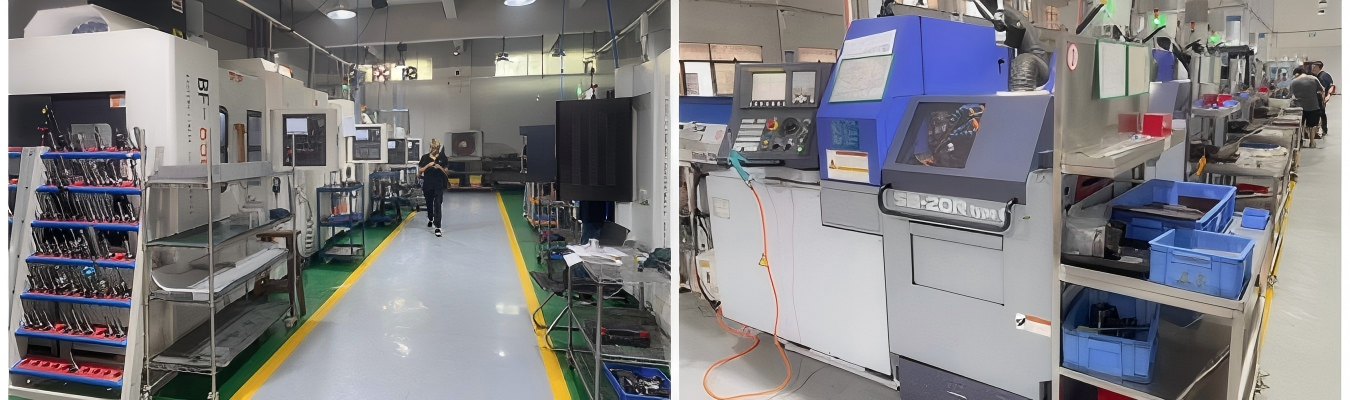
At Falcon CNC Swiss, we take your CAD model and turn it into a finished, ready-to-use enclosure—machining, finishing, and assembly all under one roof.
Our core capabilities for custom enclosures:
Machines we have: 3, 4, and 5 axis CNC mills; Swiss CNC lathes (Citizen, Star, Tsugami)
Materials we work with: Aluminum (6061, 7075, 5052), Stainless steel (303, 304, 316), Brass, Titanium, Engineering plastics (ABS, Delrin, PEEK, Polycarbonate)
Tolerances we can meet: As Tight As ±0.005mm for Precision Fits
In-house surface Finishing: Bead blasting, Type II and Type III anodizing, silk screening, Passivation
Quality: ISO 9001:2015 Certified; Complete CMM Inspection; Full Traceability and Certifying Documents
DFM Engineering Included: Before we quote your job, we will review your design and recommend ways to save you money on your project (adding fillets, adjusting wall thicknesses, reducing non-critical tolerances, etc.)
One Stop Shop: Machining, Finishing and Assembly all done under one roof - No Vendor Coordination Headaches!
Scalable Production: Manufacturing from prototype to 50,000+ parts, there is no Minimum Order Quantity Required.
Learn more about our CNC machined custom enclosures.
Selecting materials and finishes for your custom aluminum enclosure need not be a difficult task! 6061 aluminum is the best choice in most cases, along with Type II anodizing. If your enclosure needs to withstand greater impacts, consider upgrading to stainless steel. If exterior conditions will cause damage to your enclosure, consider upgrading to powder coat finish. Use bead blasting for hiding tool marks and to produce a high-quality matte finish. Use silk screening as a way of establishing your brand.
With Falcon CNC Swiss, we are here to assist in helping you to make smart, not costly decisions. We utilize the DFM review to catch problems prior to costing you money, and we do all finishing in-house so that your enclosure ships out the door ready for use.
Please upload your CAD drawing for a free DFM analysis and cost proposal.
Find out more about our precision CNC machining services.
Call our engineering department to discuss your specific enclosure needs.
A: The best combination of machineability, cost, strength and heat performance is typically 6061 aluminum. Use stainless steel for extreme impact resistance or chemical compatibility; use plastic when electrical insulation is required and heat is minimal.
A: Applications in an outdoor environment require significant protection from corrosion. Powder coating will give an impact-resistant and thick (50-100 μm) barrier. For aluminum, Type III hard anodizing (25–75 μm) would be very effective. For coastal environments, coated aluminum or 316 stainless with passivation are ideal.
A: Yes. Type II anodizing adds roughly 0.013 - 0.025 mm per side (half will grow in and half will grow out); Type III adds 0.025 - 0.076 mm to each side. If your part includes tight threads or critical fits, these must be included in your drawing so we can machine to the necessary undersizes.
A: Bead blasting creates a matte uniform surface from fine glass beads. It successfully conceals marks from machining and fingerprints. Most often it is used before anodizing to create a satin finish, although the beaded surface is very good for aesthetic reasons, you will not receive the color and added thickness provided by powder coating.
A: Yes. We can provide silk screening for durable, professional branding and legend on both metal and plastic enclosures. For low volume, laser engraving is an inexpensive alternative.
A: For orders of less than 1,000 enclosures, CNC machining is substantially less expensive than Injection Molding as there is no additional cost for the tooling of the mold. For orders exceeding 5,000 - 10,000 units, the per-unit cost of Injection Molding may be lower. However, design changes will involve an additional cost for a new injection molding tool. CNC machining provides the flexibility for constantly changing designs with quick prototypes.