English
  日本語
日本語  한국어
한국어  français
  Deutsch
  Español
  русский
  العربية

May
Learn More
19

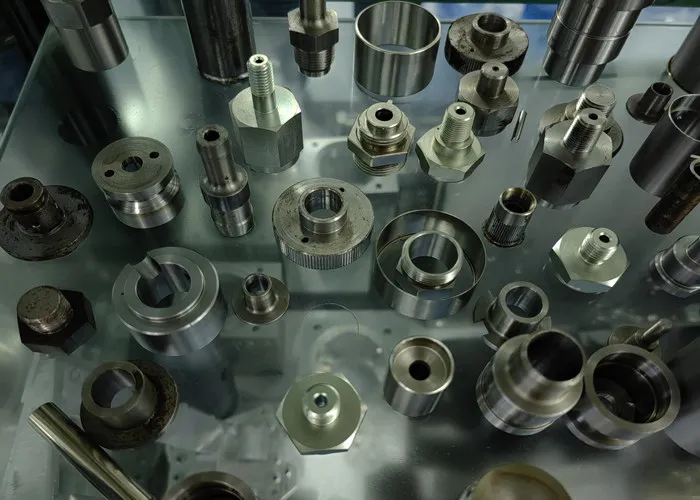
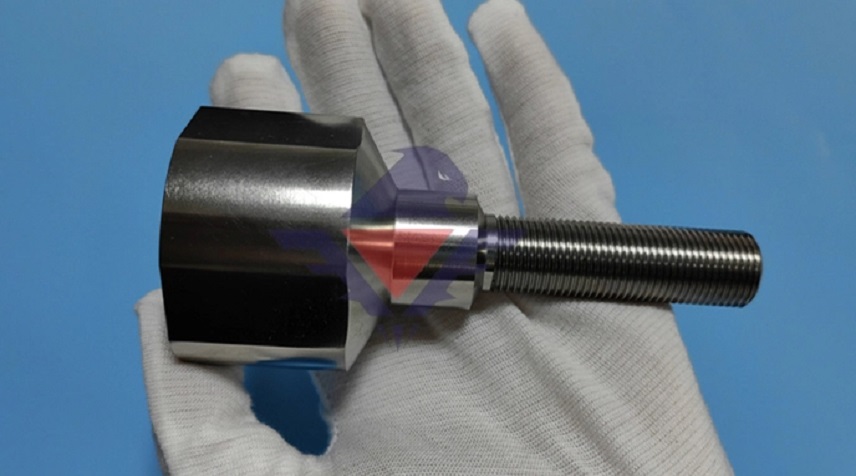
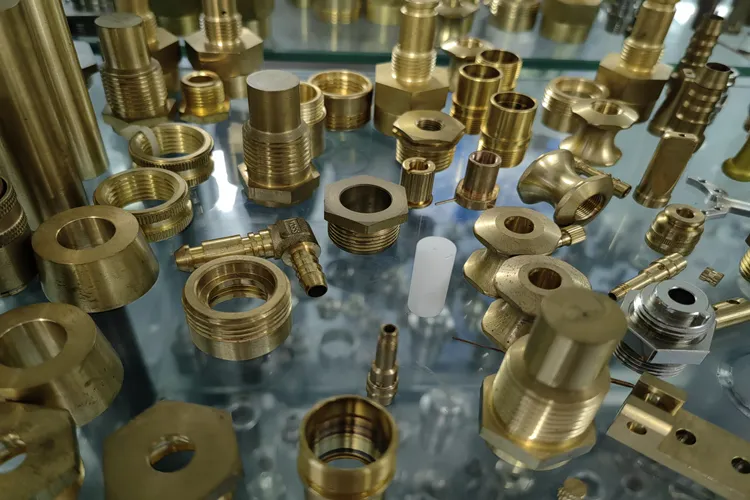
Have you ever asked yourself how mass manufacturers produce such reliable quantities of small metal manufacturing including but not limited to screws, pins, connectors, and bushings? Most likely, the answer is through a method called screw machining. Screw machining has been a staple in manufacturing; relied upon for industrial production for more than a century. However, many engineers and purchasing professionals do not know the full capabilities screw machining offers.
So what is screw machining? To put it simply it is a high speed rotational machining process primarily used to manufacture small cylindrical or rotationally symmetrical components - usually from solid raw bar stock. Additionally, screw machined products will meet exceptional tolerances with regards to the specified design.
The current state of screw machining has evolved beyond what its name implies. Presently, computer numerically controlled Swiss-type lathes and multi-spindle automatic screw machines dominate the screw machining market and provide the production of thousands of parts per hour while utilizing very little operator input to manufacture all types of precisely-made components that will ultimately be used in medical devices, the aerospace industry, and the majority of automotive assembly applications, among others.
This guide will provide you with details on the entire screw machining process, compare screw machining to conventional CNC turning, be able to provide you with typical tolerances and costs associated with screw machined products, as well as how to determine the appropriate manufacturers to work with for your next screw machined project.
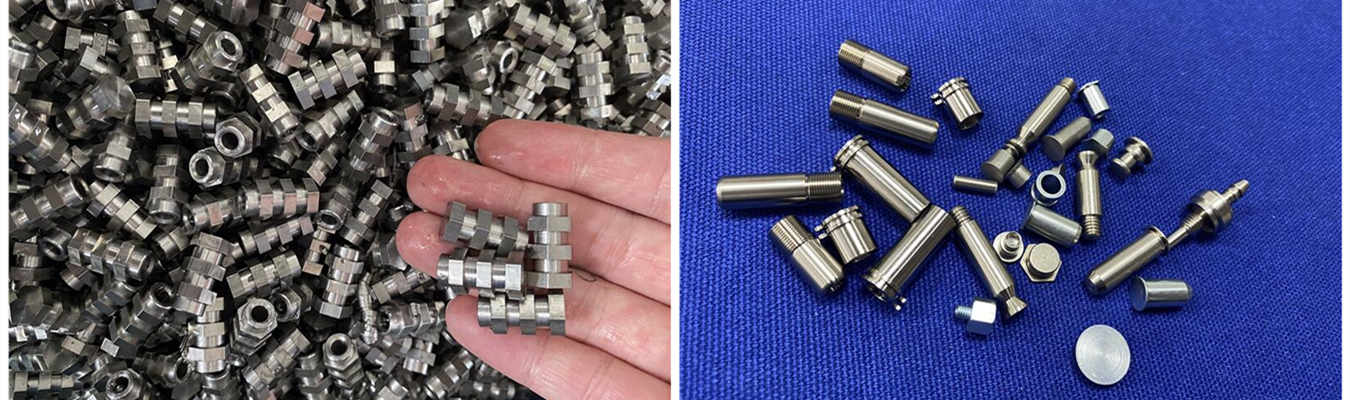
To understand how screw machining works, it helps to visualize the process. Unlike a standard lathe where the workpiece is held in a stationary chuck and cutting tools move along its length, a screw machine is designed for speed and automation.
The process of screw machining begins with a long raw material bar specifically round, hexagonally, or square stocked into the machine by means of a bar magazine.
Below are the steps that take place during this type of manufacturing:
The Bar is fed into through the spindle of the machine with the help of collets. Collets are special cylindrical devices slotted to allow gripping of a bar material of a certain diameter.
As the bar stock spins in the spindle, different types of cutting machines approach from the radial (perpendicular) and axial (parallel) to cut the raw material into finished parts, typical functions of cutting machines would include: turning the outside diameter, drilling holes, boring, treading, knurling and grooving the outside circumference of the bar.
After completing all the front view features from bar stock the cutoff tool will separate the finished piece from the balance of the bar stock by means of cutting the bar stock.
The next cycle begins with an automatically released collet, the advancement of the bar stock, and the continuation of the preceding cycle.
Modern Computer Numerical Controlled (CNC) machines are capable of running for undecided lengths of time in an unattended state; producing multiple identical machined parts numbering in the hundreds or thousands.
As such, screw machining is one method of producing repeatable, small- to medium-sized precision pieces with minimal manual intervention.
Not all screw machines are the same. The term “screw machining” actually covers several distinct machine types, each with different strengths. Which one is right for your project depends on your volume, complexity, and tolerance requirements.
| Machine Type | Key Characteristics | Best For | Typical Cycle Speed |
| CNC lathe (standard turning center) | Single spindle, manual or automatic tool changes, flexible but slower | Low-to-medium volume, prototypes, larger diameters | Moderate |
| CNC Swiss-type lathe | Guide bushing supports bar close to cutting tool; eliminates deflection; live tooling for milling/drilling | Long slender parts, tight tolerances (±0.0002 inch), complex geometries done in one setup | Fast |
| Multi-spindle automatic screw machine | 5, 6, or 8 independent spindles arranged in a drum; workpiece indexed between tools | Very high volume, simple to moderate cylindrical parts, lowest per-unit cost | Very fast (200+ parts/min) |
The way in which workpieces and tools are handled for the operations in question distinguishes CNC turning from screw machining. CNC turning has a workpiece that is mounted in a rotating chuck and requires different tool changes depending on the operation being performed. Conversely, the hardware placement for screw machining has a sliding headstock that feeds the workpiece through a guide bushing and permits the simultaneous performance of several cutting operations without stopping.
In contrast, CNC turning is best suited to the manufacture of low-volume, customer orders, the production of large diameters and the manufacture of highly complex non-cylindrical parts. Additionally, screw machining has a significantly higher level of productivity for high-volume production of small diameter, cylindrical parts and exhibits lower per-unit production costs for volumes in excess of thousands of units.
Swiss-type machines combine the advantages of live tooling with the precision of a guide bushing and a sub-spindle to provide a fully functional operation for turning, milling, drilling and threading. They are often used in the manufacture of complex small parts such as medical bone screws, aerospace fittings and an array of other small components.
Engineers often inquire about attainable tolerances for screw machining based on the types of machines used along with the material being machined, and the geometry of the part.
Swiss-type screw machines are notoriously precise machines because the guide bushing is located a few millimeters from the point at which the tool contacts the bar stock resulting in deflection of the machined part is eliminated, which makes it possible for tolerances to be held to as close as ±0.0002 inches (±0.005 mm) or in some cases even smaller. For reference, a human hair is approximately 0.003 inches wide; thus, Swiss machining can regularly produce parts holding tolerances that are 15 times more precise than a hair-width.
Typically, standard CNC turning centers achieve tolerances of about ±0.005 inch (±0.127 mm) when producing parts under production conditions, while multi-spindle automatic screw machines generally reach about ±0.001 inch (±0.025 mm) tolerances or ±0.0005 inch tolerances for precision parts due to set up and condition of the machine being used.
Explore more details about our Swiss screw machining services.
| Feature Type | Typical Achievable Tolerance |
| Diameters (Swiss CNC) | ±0.005–0.013mm |
| Diameters (CNC turning) | ±0.025–0.127mm |
| Thread sizes | ISO 5g6g or 6H per ISO 965 standard |
| Length tolerances | ±0.010 inch–0.030 inch for most applications |
| Concentricity | 0.0005 inch–0.001 inch TIR |
For mission-critical applications such as aerospace fasteners or orthopedic implants, working with an experienced precision CNC machining service provider ensures that required tolerances are consistently met and documented with full inspection reports.
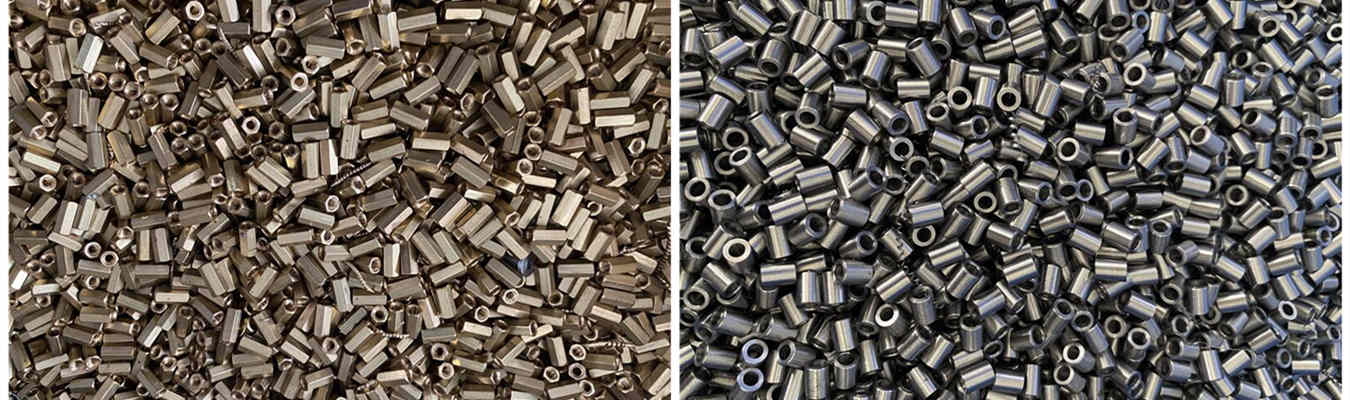
Understanding screw machining cost drivers helps you design parts that are both functional and economical to produce. Several factors influence the final price per part.
| Cost Factor | Impact on Screw Machining Cost | Cost-Saving Tips |
| Material | Aluminum and brass machine quickly, cause low tool wear. Stainless steel and titanium require slower speeds and frequent tool changes. | Select aluminum or brass if performance allows |
| Volume quantity | Setup time spreads across parts; higher volume typically lowers per-unit cost significantly. | Batch orders together |
| Complexity | More operations (turning, milling, drilling, threading) and tighter tolerances increase machine cycle time. | Simplify geometry where possible |
| Tolerance requirements | Tolerances tighter than ±0.001 inch add inspection time and may require slower cutting parameters. | Only tighten tolerances on functional surfaces |
| Material size (bar diameter) | Larger diameters take longer to cut and generate more scrap. | Use smallest bar diameter that accommodates your part |
The table below compares common materials used in the screw machining process:
| Material | Raw Material Cost | Machining Cost Factor | Best Applications |
| Aluminum (6061) | Low | Low | Lightweight housings, general-purpose parts, prototypes |
| Brass (C360) | Medium | Very low | Fittings, connectors, decorative parts, best machinability |
| Stainless steel (303/304) | Medium-high | Medium-high | Medical instruments, food-grade parts, corrosion resistance |
| Titanium (Grade 5) | Very high | Very high | Implants, aerospace fasteners, maximum strength-to-weight |
Brass has a machinability index of 150 (based on free-machining steel = 100), meaning it cuts faster and wears tools less than almost any other metal. Aluminum follows at approximately 90, while stainless steel and titanium index much lower. For buyers seeking cost-sensitive components, selecting a material with high machinability is the single most effective way to reduce screw machining cost.
Screw machining has pros and cons like other production methods. Knowing how it works will help you determine if this method is right for your project.
Efficiency: Multiple spindles on machines make it possible to manufacture upwards of 200 parts per minute when designing simple geometric pieces, which is much faster than manufacturing with a standard CNC lathe.
Low Cost per Unit: The cost of producing high-volume parts is very economical and consistent once the machine is set-up.
Suitable for Small Circular Parts: The process is designed for making parts with diameters less than 1.5 inches and forming symmetrical shapes.
Little to no Operator Involvement: Modern CNC screw machines will operate without the need for operator input, which results in lower costs in terms of labor.
Tolerances: Swiss-style screw machines can produce tolerances that are as precise as those achieved on high-end CNC lathes.
Slower Than Cold Heading: Cold heading produces faster cycle times along with zero scrap, making it a more preferable way of producing fasteners, such as screws and bolts.
Higher Costs Per Unit at Low Volumes: Setup time is the most expensive aspect of producing parts when production quantifies are below 500 pieces, so it will take much longer to recover the cost of setting the machine up.
Material Waste: Because screw machining is a subtractive form of production, material that does not remain on the finished part becomes scrap. Cold heading and other forming methods of production create little to no scrap material.
Limited to Round Parts: Screw machining systems work extremely well at manufacturing parts that are round; however, they are not the best solution to create unique parts that have multiple facets or need to be machined with a 5-axis CNC machine.
If you are producing thousands of small, round, and precise parts (Aluminum, Brass, Stainless Steel), screw machining is the best production method to utilize. If you are producing unique one-offs or very complicated shapes that do not have rotational symmetry, traditional CNC machining will likely be more cost-effective than screw machining.
Screw machining serves critical roles across numerous industries. Its ability to produce small, precise, high-volume components makes it indispensable for:
The medical industry demands extreme precision and biocompatibility. Screw machining produces:
Orthopedic bone screws and spinal implants
Surgical instrument handles and shafts
Catheter connectors and dental abutments
Small pins and fasteners for implantable devices
Swiss-type precision, with tolerances often as tight as ±0.0005 inches (±0.013mm), ensures each implantable component meets strict regulatory requirements.
Modern vehicles contain hundreds of precision-machined small parts:
Brake system components and valve spools
Fuel injector nozzles and sensor housings
Transmission valve bodies and control pins
Steering system fittings and connectors
The scalability of the screw machining process makes it ideal for automotive’s high-volume production demands.
Miniaturization in electronics demands micro-scale precision:
RF connector housings and pins
Battery contacts and terminal posts
Sensor housings and heat sink interfaces
Fiber optic adapter components
Since both processes produce small fasteners, engineers often ask: screw machining vs cold heading—which is better? The answer depends entirely on your requirements.
| Factor | Screw Machining | Cold Heading |
| Process type | Subtractive (cutting material away) | Forming (reshaping without removal) |
| Cycle speed | 5–10 parts/minute for simple parts | ~200 parts/minute |
| Material waste | Scrap generated | Minimal to zero |
| Dimensional precision | Very high—tolerances ±0.0002 inches possible | Moderate—good but not as precise |
| Complexity | Ideal for intricate features, undercuts, threads | Limited to simple shapes |
| Minimum order quantity | Small runs cost-effective | Requires large material coils |
| Exotic material capability | Excellent—machines cut what forming cannot | Limited to formable alloys |
Choose screw machining when: You need tight tolerances, complex features, small batches, or exotic materials that cannot be cold-headed.
Choose cold heading when: You require hundreds of thousands of simple fasteners and per-unit cost is your primary driver.
In many cases, the most economical approach combines both: cold heading for the basic blank, then screw machining to add secondary features such as threads, undercuts, or precision surfaces that forming cannot achieve.
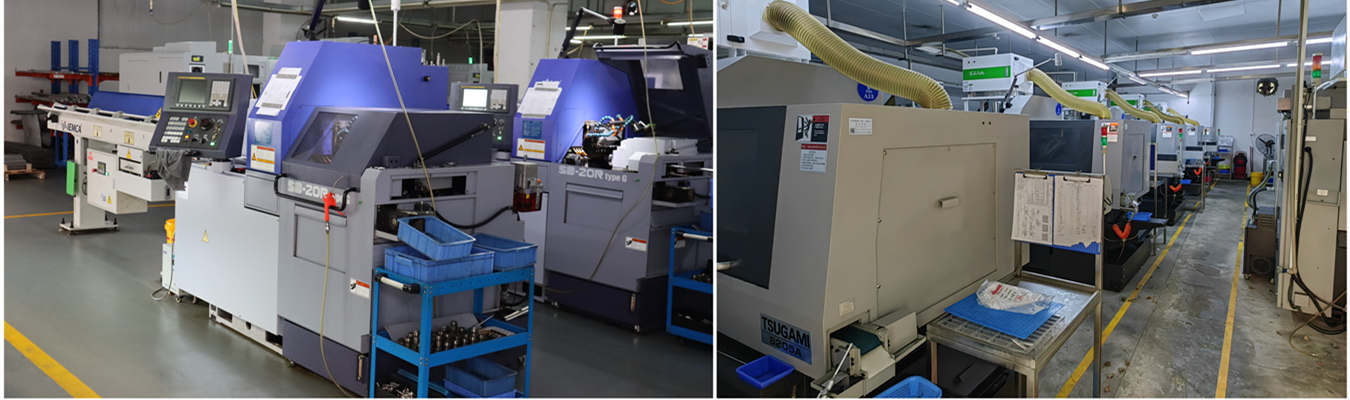
At Falcon CNC Swiss, our Swiss screw machining services are designed for clients who demand consistent precision, scalable volume, and engineering support. We specialize in producing complex, small-diameter components for medical, aerospace, automotive, and electronics industries.
Swiss-type CNC lathes (Citizen, Star, Tsugami): Ideal for long, slender parts and tight tolerances down to ±0.0002 inches
Multi-axis turning with live tooling: Turn, mill, drill, and thread in a single setup to eliminate tolerance stacking
In-house finishing: Passivation, bead blasting, anodizing, and polishing—all under one roof
ISO-certified quality systems (ISO 9001:2015, ISO 13485): Full inspection with CMM and first article reports
Engineering DFM support: Our engineers review your design before quoting and suggest cost-saving changes to material, geometry, or tolerances
Whether you need custom bolts and nuts or complex machined shafts, we deliver parts with precision, consistency, and full traceability. From concept to production, Falcon CNC Swiss is your partner for high-quality, cost-effective screw-machined components.
One of the most effective ways to manufacture small, precision cylindrical components in bulk, by screw machining. Use this process to help you design both functional and commercially viable products for the following industries: medical bone screws; aerospace fittings; custom industrial components.
Falcon CNC Swiss combines cutting-edge Swiss-type CNC technology with engineering DFM assistance and quality testing to produce precision components that exceed your stringent requirements. We will help you develop your components from design through production to delivery and complete your project on time.
Upload your CAD file for a free DFM analysis and quote
Explore our Swiss screw machining services for precision turning and multi-axis capabilities
Contact our engineering team to discuss your specific component requirements
A: A screw machine is an automated lathe designed for the high-speed production of small, cylindrical parts from bar stock. It continuously cuts a number of parts from a single bar, one after another, with minimal operator intervention.
A: The main difference lies in workpiece handling. CNC turning holds the workpiece in a fixed chuck while tools approach. Screw machining uses a sliding headstock that feeds bar stock through a guide bushing, allowing multiple cutting tools to operate simultaneously.
A: Yes. The screw machining process handles virtually any standard and custom thread form through single-point threading, thread milling, or tapping.
A: Aluminum (6061, 7075), brass (C360), stainless steel (303, 304, 316), titanium (Grade 2, Grade 5), and engineering plastics such as PEEK, Delrin, and Ultem.
A: Professional screw machines use high-pressure oil coolant systems that lubricate the cut and flush away chips. Secondary deburring and bead blasting remove any remaining sharp edges for smooth, safe surfaces ready for assembly.
A: Prototypes typically ship within 5 to 10 business days. Production lead times depend on quantity and are confirmed at quoting. Rush services are available for critical timelines.