English
  日本語
日本語  한국어
한국어  français
  Deutsch
  Español
  русский
  العربية

Aug
Learn More
06

Not all vehicles are created equal. A family sedan and a race car have very different needs. Electric vehicles (EVs) demand lightweight efficiency. Racing cars need extreme precision at high RPMs. Heavy-duty trucks require parts that survive years of abuse.
For these high-performance applications, standard CNC machining is not enough. You need 5-axis CNC automotive capabilities, multi-axis machining autos expertise, and sometimes Swiss CNC automotive parts precision.
Why? Because performance vehicles push materials to their limits. Tolerances get tighter. Geometries get more complex. Production volumes vary from single prototypes to tens of thousands of units. And quality can not be optional—it must be built into every part.
In this guide, we’ll break down how advanced CNC machining serves the EV, racing, and truck markets. You will learn about prototype CNC machining cars, high-volume CNC auto production, the role of tight tolerance CNC automotive, and how to choose a partner with ISO certified CNC autos and quality CNC machining vehicles credentials.
Whether you’re building the next electric drivetrain, a championship-winning race car, or a fleet of work trucks, this guide will help you understand what’s possible.
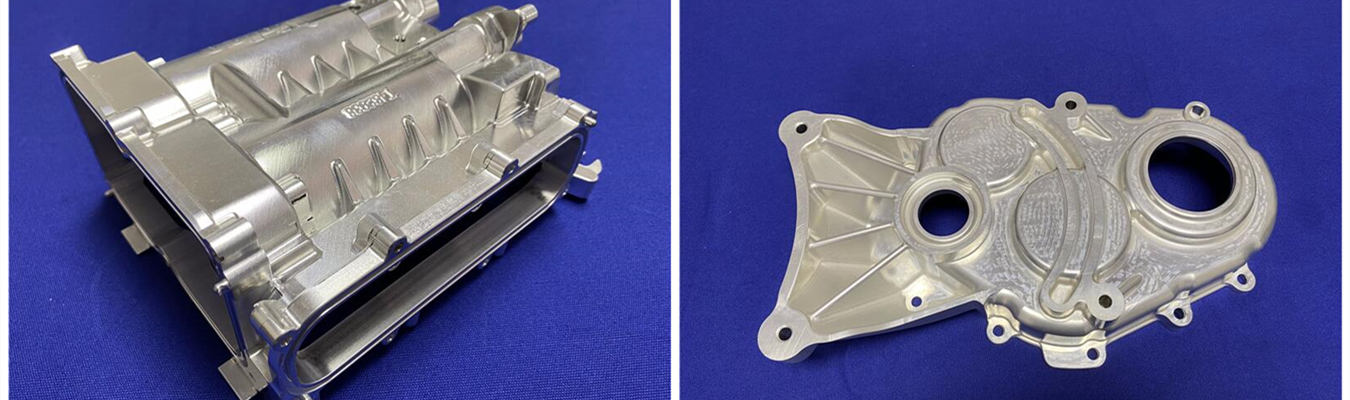
Let’s start with the machines. Each type of advanced CNC has strengths for different automotive applications.
| Machine Type | How It Works | Best For Automotive | Key Advantage |
| 3-Axis Mill | Cuts in X, Y, Z directions only | Simple brackets, flat parts, basic housings | Low cost, easy programming |
| 4-Axis Mill | Adds rotation on one axis (usually A or B) | Parts needing indexing or simple contours | Good for parts with holes on multiple sides |
| 5-Axis Mill | Moves in X, Y, Z plus two rotational axes | Complex shapes: turbo housings, intake manifolds, suspension knuckles | Machine complex parts in one setup – fewer errors |
| Multi-Axis Machining | Combines milling and turning in one machine | Shafts with flats, cross-holes, or contours | Complete parts in one operation |
| Swiss CNC Lathe | Bar stock feeds through guide bushing; tools cut near support point | Small, long, high-precision parts: injector nozzles, sensor pins, valve components | Exceptional accuracy on small diameters |
For EV parts CNC machining, 5-axis and Swiss are often the best choices. EV components tend to be compact, lightweight, and highly engineered—exactly what these machines excel at.
For racing car components CNC, multi-axis machining is common because race parts often combine turning and milling features in one piece.
For truck parts CNC machined, 5-axis can handle large brackets and housings, while heavy-duty turning centers handle axles and shafts.
At Falcon CNC Swiss, we operate all these machine types. This means we can match the process to your part, not the other way around. Explore our precision 5-axis machining service.
Automotive projects often start small and grow. A race team needs 10 custom intake manifolds. An EV startup needs 50 prototype motor housings. A truck manufacturer needs 50,000 suspension brackets.
Both ends of the spectrum matter. Here’s how we handle them.
When you need: 1–100 parts, fast turnaround, design changes likely.
Our approach:
Quick CAM programming – we optimize toolpaths for speed
Flexible fixturing – no expensive dedicated tooling
DFM feedback – we catch issues before cutting metal
Typical lead time: 5–10 business days
Cost considerations:
Setup and programming are the biggest costs
Per-part price is higher, but no tooling fees
Perfect for validation before committing to production
When you need: 1,000–100,000+ parts, consistent quality, cost efficiency.
Our approach:
Automated workholding and bar feeders
Optimized toolpaths for minimum cycle time
In-process probing to maintain tolerances
Statistical process control (SPC) to catch drift early
Typical lead time: 2–5 weeks depending on quantity
Cost considerations:
Setup cost spread across many parts – low per-part impact
Material buying power – we source at competitive rates
Per-part price drops significantly at scale
Whether you need prototype CNC machining cars or high-volume CNC auto production, Falcon CNC Swiss has the systems and experience to deliver. Learn more about our high volume Swiss machining service.
Different vehicle types demand different machining strategies.
Electric vehicles are all about efficiency. Lighter weight, less friction, better thermal management. CNC machining plays a huge role.
Common EV components we machine:
Motor housings – Complex geometries with integrated cooling channels
Battery bus bars – High-precision copper or aluminum conductors
Inverter heat sinks – Fine fins for maximum heat dissipation
Sensor housings – Tight tolerances for position sensors
Connector pins – Small, precise contacts for high-voltage systems
Many of these parts are small and require Swiss CNC automotive parts precision. We’ve delivered thousands of EV connector pins and sensor components with tolerances under ±0.01mm.
Racing is where precision pays off directly in lap times. Every gram saved, every micron of alignment matters.
Common racing components we machine:
Suspension uprights – Lightweight aluminum or magnesium
Brake calipers – High-strength aluminum with complex fluid passages
Intake plenums – Smooth internal surfaces for airflow
Gearbox housings – Rigid, lightweight, with precise bearing bores
Pedal boxes – Custom ergonomics with low weight
For racing car components CNC, we often use 5-axis machining to create complex organic shapes in one setup. This eliminates alignment errors between operations and produces stronger, lighter parts.
Trucks need parts that survive. High loads, vibration, weather, and long service intervals demand robust design and manufacturing.
Common truck components we machine:
Axle housings – Heavy-duty steel, precise bearing fits
Suspension links – Strong, durable, with accurate bushing bores
Turbocharger housings – Heat-resistant alloys, complex internal passages
Hydraulic fittings – Leak-proof threads and sealing surfaces
Engine brackets – Steel or aluminum, structural integrity
For truck parts CNC machined, we prioritize material selection and process stability. These parts are not always the most complex, but they must be right every time.
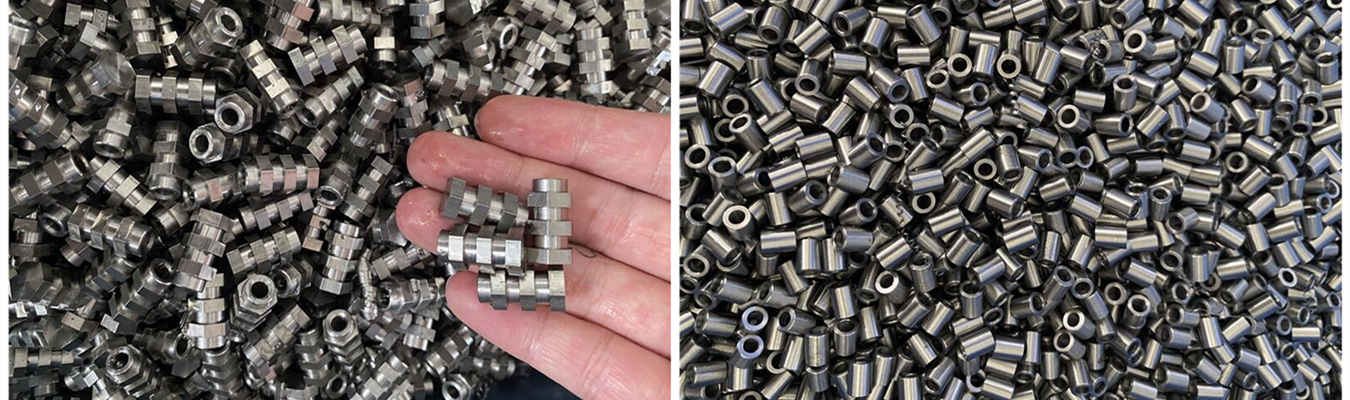
High-performance vehicles often use exotic materials. Here’s what you need to know.
| Material | Applications in Vehicles | Machining Difficulty | Why Use It |
| Titanium (Grade 5) | Connecting rods, valve retainers, exhaust components, fasteners | Very high | Incredible strength-to-weight ratio, corrosion resistant |
| Magnesium Alloy | Transmission cases, steering wheels, wheels | High | Lightest structural metal – great for racing |
| Aluminum 7075 | Suspension arms, chassis brackets, brake components | Moderate | Stronger than 6061, still machinable |
| Stainless Steel 316 | Exhaust flanges, marine truck parts, sensors | Moderate | Corrosion resistance |
| Inconel | Turbocharger wheels, exhaust valves | Extremely high | Withstands extreme heat |
Titanium CNC automotive is a specialty of ours. We have extensive experience with Grade 2, Grade 5 (Ti-6Al-4V), and medical-grade titanium. The key to machining titanium successfully? Rigid machines, sharp tools, high-pressure coolant, and conservative speeds. We’ve dialed in these parameters over thousands of titanium parts.
Magnesium is another material we machine for racing applications. It’s lighter than aluminum but requires careful chip management (magnesium chips are flammable). We follow strict safety protocols.
Performance vehicles don not tolerate sloppy parts. Here’s how we ensure tight tolerance CNC automotive, high accuracy auto machining, and excellent surface finish CNC car parts.
| Feature Type | Typical Tolerance | Measurement Method |
| Hole diameters | ±0.005mm | CMM, bore gauge |
| Shaft diameters | ±0.005mm | Micrometer, CMM |
| Flatness / parallelism | ±0.01mm | CMM, surface plate |
| Positional accuracy | ±0.01mm | CMM |
| Concentricity | ±0.008mm | CMM, runout gauge |
| Finish | Ra Value (μm) | Typical Application |
| As-machined | 1.6 – 3.2 | General surfaces, hidden areas |
| Fine machined | 0.8 – 1.6 | Bearing housings, sealing surfaces |
| Ground | 0.2 – 0.4 | Precision shafts, valve stems |
| Polished | 0.05 – 0.1 | Decorative or low-friction surfaces |
We are ISO certified CNC autos (ISO 9001:2015). Our quality CNC machining vehicles process includes:
First article inspection (FAI) on every new part
In-process checks at defined intervals
CMM verification of critical dimensions
Material certifications and traceability
Inspection reports included with every shipment
When you need tight tolerance CNC automotive parts, you need documentation, not promises. We provide both.
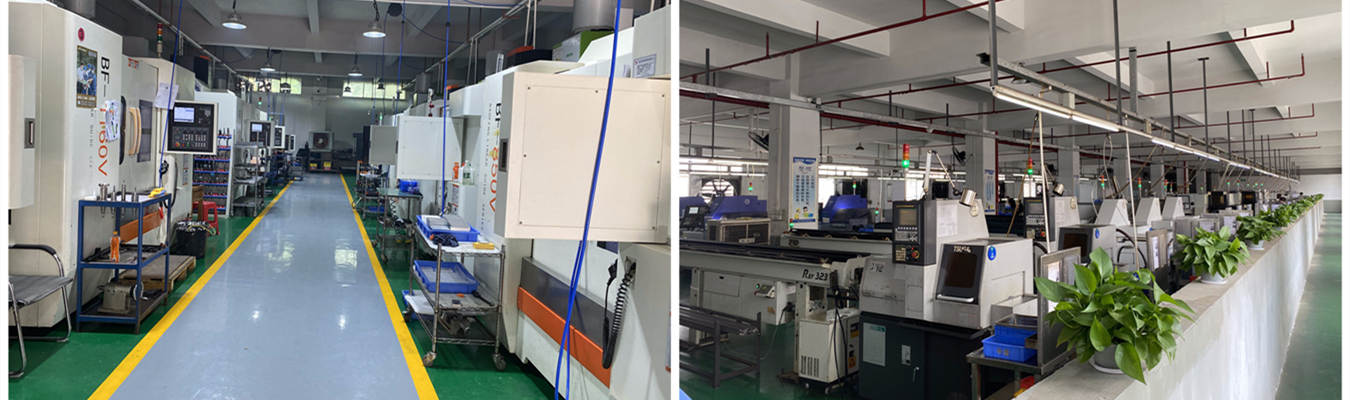
We’ve built our reputation on delivering advanced CNC machining for demanding applications. Here’s what we offer specifically for EV, racing, and truck customers.
| Capability | Detail |
| 5-axis CNC | DMG MORI and similar – complex parts in one setup |
| Multi-axis machining | Turn-mill centers – combine turning and milling |
| Swiss CNC | Citizen and Star – small, long, precise components |
| Materials | Titanium, magnesium, aluminum 7075, stainless, Inconel |
| Tolerances | ±0.005mm on critical features |
| Surface finish | Down to Ra 0.2μm |
| Quality | ISO 9001:2015, CMM inspection, full traceability |
| Volume | 1 prototype to 100,000+ production parts |
Engineering-led approach: Our team reviews your design for manufacturability before quoting. We often find ways to reduce cost or improve performance.
In-house everything: Machining, finishing (anodizing, passivation, plating), inspection – all under one roof. No finger-pointing between vendors.
Fast turnaround: Prototypes in 5–10 days. Production runs scheduled to your timeline.
Global shipping: We serve customers in North America, Europe, and Asia. We handle logistics.
Whether you need EV parts CNC machining, racing car components CNC, or truck parts CNC machined, we have the equipment and experience to deliver.
From electric drivetrains to race-winning suspension to heavy-duty truck components, 5-axis CNC automotive, multi-axis machining autos, and Swiss CNC automotive parts are enabling the next generation of high-performance vehicles.
At Falcon CNC Swiss, we combine these advanced machining capabilities with ISO-certified quality, engineering expertise, and a commitment to getting your parts right.
Whether you need prototype CNC machining cars to test a new design or high-volume CNC auto production for a global launch, we’re ready to partner with you.
Upload your CAD file for a free DFM analysis and 24-hour quote
Explore our Swiss machining services for precision components
Contact our engineering team to discuss EV parts CNC machining, racing car components CNC, or truck parts CNC machined
A: 5-axis machining is best for complex, 3D-shaped parts like turbo housings or suspension knuckles. Swiss CNC is best for small, long, high-precision parts like injector nozzles, valve pins, or sensor shafts. Both are available at Falcon CNC Swiss.
A: Yes. We’re set up for prototype CNC machining cars (fast turnaround, flexible fixturing) and high-volume CNC auto production (automated cells, optimized toolpaths). Many customers start with us at prototype and stay through production.
A: For structural parts, aluminum 7075 is strong and machinable. For ultra-lightweight, magnesium alloy is excellent but requires experience. For extreme strength-to-weight, titanium CNC automotive is the answer. We machine all three.
A: We use in-process probing to check critical dimensions during production. If a tool wears and dimensions drift, the machine adjusts offsets automatically. We also run SPC (Statistical Process Control) charts to catch trends before parts go out of spec.
A: Yes, we are ISO certified CNC autos (ISO 9001:2015, 16949). We provide full inspection reports and material certifications.
A: Yes. Anodizing (including hard coat), passivation for stainless, bead blasting, and plating. All done in-house.
A: Upload your CAD file (STEP preferred) and 2D drawing to our website. We’ll provide a detailed quote and DFM feedback within 24 hours.