English
  日本語
日本語  한국어
한국어  français
  Deutsch
  Español
  русский
  العربية

May
Learn More
26

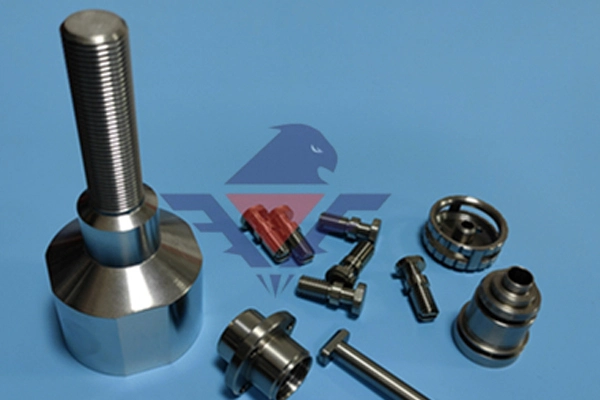
If you ride a motorcycle, you’ve felt the difference that precision parts make. Crisp shifting, solid braking, and vibration-free handlebars all come from well-machined components.
The same is true for custom cars. Whether you’re building a resto-mod, a track day special, or a one-off show car, off-the-shelf parts often don’t fit or perform the way you want. That’s where CNC machining motorcycle parts and custom auto components come in.
CNC machining gives you total control over design, material, and quality. You’re not stuck with what’s on the shelf. You can create exactly what you need—lighter, stronger, better looking.
In this guide, we’ll cover the most common CNC machined motorcycle parts, the materials you should consider (steel, plastic, magnesium), and how to choose a reliable partner among CNC auto parts manufacturers. We’ll also help you decide between local CNC machining automotive and global CNC auto services to balance cost, quality, and lead time.
Whether you’re a motorcycle brand, a custom shop, or an automotive engineer, this guide will help you get the precision parts you need.
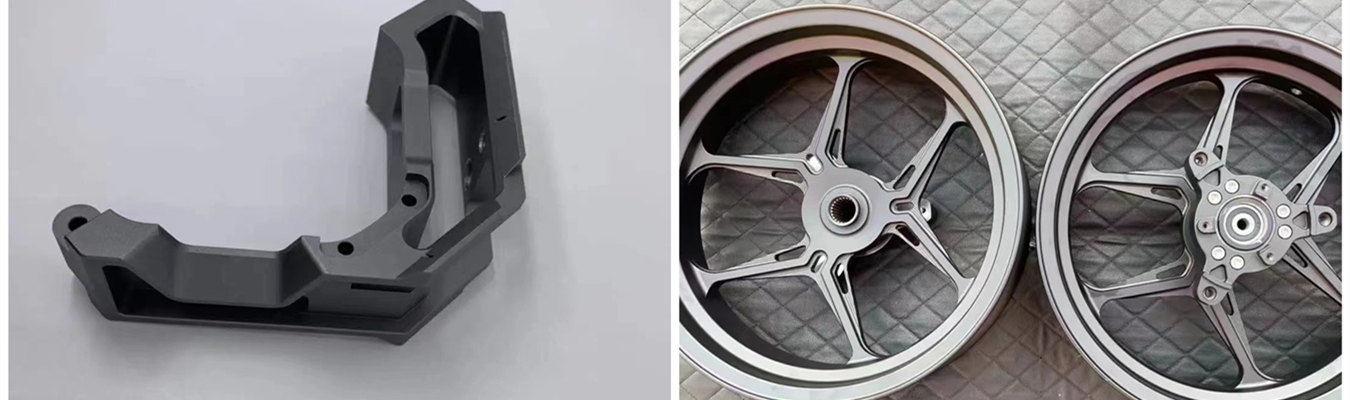
Almost every metal part on a motorcycle can be CNC machined. But some components benefit more than others.
| Component | Material Typically Used | Why CNC Machining? |
| Triple trees (yokes) | Aluminum 6061 or 7075 | Precise steering stem bore, fork tube alignment, custom offsets |
| Foot pegs and controls | Aluminum, stainless steel | Complex shapes, grippy surfaces, anodized finishes |
| Brake and clutch levers | Aluminum, magnesium | Ergonomic shapes, light weight, folding mechanisms |
| Sprockets | Steel, aluminum | Exact tooth profile, balanced weight reduction |
| Engine covers (clutch, stator) | Aluminum, magnesium, plastic | Custom graphics, heat dissipation, lightweight |
| Handlebar risers and clamps | Aluminum | Perfect fit for aftermarket bars, vibration reduction |
| Wheel spacers and axles | Steel, aluminum | Concentricity, surface finish, corrosion resistance |
| Caliper brackets | Aluminum, steel | Exact positioning for brake rotor alignment |
For many riders and builders, motorcycle CNC machining is the difference between a bike that looks custom and one that actually performs better.
When you work with a shop that offers CNC machine motorcycle parts, you can also get one-off parts that aren’t available anywhere else. That bent shift lever? We can make a stronger one. Those ugly stock handlebar clamps? We’ll machine something beautiful.
Choosing the right material affects weight, strength, cost, and appearance. Here’s what you need to know.
Steel is the go-to for structural components that see high stress or wear.
| Steel Type | Best For | Pros | Cons |
| Mild steel (1018) | Brackets, spacers, simple mounts | Cheap, easy to machine, weldable | Heavy, rusts without coating |
| Alloy steel (4140) | Axles, spindles, linkage parts | Strong, tough, heat-treatable | Harder to machine, more expensive |
| Stainless steel (303, 304) | Brake components, fasteners, exhaust hangers | Corrosion resistant, looks great | Harder to machine, costlier |
For steel auto parts CNC, we often recommend 4140 pre-hard for high-strength applications, and 303 stainless for parts that need corrosion resistance without extra coating.
Plastics are underrated in automotive and motorcycle applications. They’re light, non-conductive, and can be machined to tight tolerances.
| Plastic | Best For | Pros | Cons |
| Delrin (Acetal) | Bushings, spacers, guide blocks | Low friction, stable, easy to machine | Lower strength than metal |
| Nylon 6/6 | Gears, wear pads, cable guides | Tough, abrasion resistant | Absorbs moisture, less stable |
| PEEK | High-heat or chemical-resistant parts | Incredibly strong, temp resistant | Very expensive, hard to machine |
| ABS | Prototype housings, covers | Cheap, easy to machine, paintable | Lower strength, not for structural |
Plastic CNC machining cars is ideal for prototype parts, lightweight brackets, electrical insulators, and low-friction components. Many racing teams use Delrin suspension bushings for consistent handling.
Magnesium is 33% lighter than aluminum and 75% lighter than steel. For racing and high-performance applications, every gram saved matters.
| Magnesium Alloy | Best For | Pros | Cons |
| AZ31B | General structural parts | Good strength, weldable, machinable | Flammable chips, corrosion sensitive |
| AZ91D | Die-cast conversions, housings | High purity, good corrosion resistance | More brittle, harder to machine |
Magnesium alloy auto machining requires experience. The chips are flammable, so we use specific coolants and chip management systems. But the weight savings are undeniable. We’ve machined magnesium clutch covers, transmission cases, and steering wheels for racing customers. Explore our auto part CNC machining services.
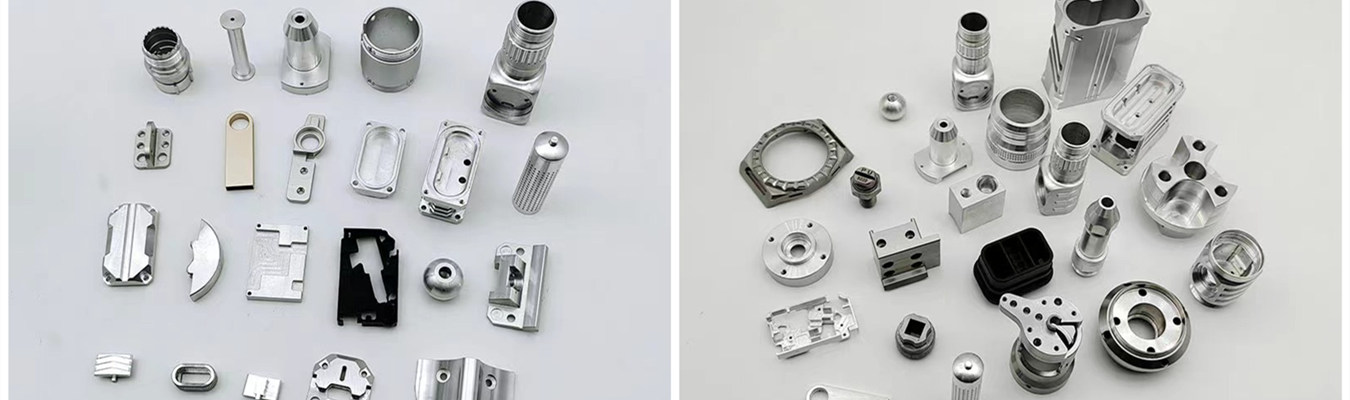
Not all CNC auto parts manufacturers are the same. Here’s a checklist to help you evaluate potential partners.
| Criterion | What to Look For |
| Experience with your part type | Have they made motorcycle or custom auto parts before? Ask for examples. |
| Material capabilities | Can they machine steel, plastic, magnesium, aluminum, titanium? |
| Equipment | Do they have Swiss lathes for small parts? 5-axis for complex shapes? |
| Quality system | ISO 9001 certified? Do they provide inspection reports? |
| Finishing in-house | Anodizing, passivation, plating – or do they outsource? |
| Lead time | Prototype turnaround? Production scheduling flexibility? |
| Communication | Do they offer DFM feedback? Responsive to questions? |
When you find a manufacturer that checks all these boxes, you’ve found a partner you can trust.
One of the biggest decisions is whether to source from local CNC machining automotive shops near you or from global CNC auto services based in countries like China.
Advantages:
Faster shipping (days vs. weeks)
Easier communication (same time zone, no language barrier)
Lower minimum quantities often accepted
Easier to visit the shop
Disadvantages:
Higher hourly rates ($60–$120/hr vs. $25–$50/hr in China)
Longer lead times for large production runs
May lack specialized equipment (Swiss, 5-axis)
Advantages:
Significantly lower hourly rates (40–60% less)
High-end equipment (Citizen, Star, DMG MORI) often available
Scalable for high-volume production
Many offer ISO certification and English communication
Disadvantages:
Longer shipping times (2–4 weeks by sea)
Communication requires careful coordination
Quality varies – need to vet suppliers carefully
We’re a China-based global CNC auto services provider with Western-style quality systems. You get the cost advantage of Asian manufacturing combined with:
ISO 9001:2015, 16949 certification
English-speaking project managers
Citizen and Star Swiss lathes, 5-axis mills
In-house finishing (anodizing, passivation, plating)
Full inspection reports and material certifications
Many of our customers in the USA and Europe started with local CNC machining automotive for prototyping, then moved production to us for volume. Others trust us from day one. Find more information about Falcon precision CNC machining service.
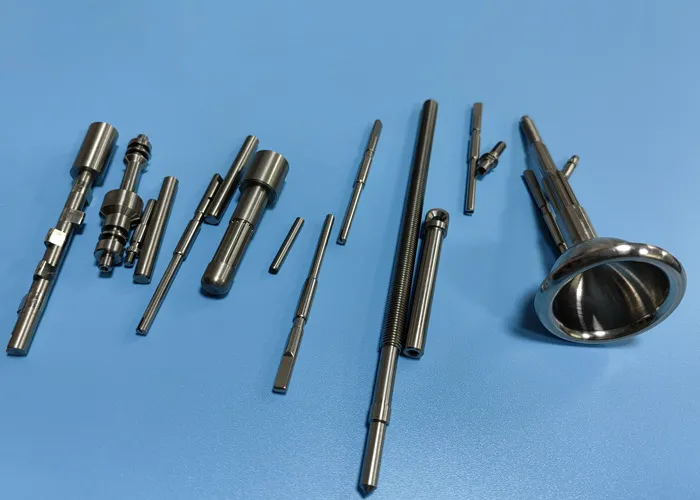
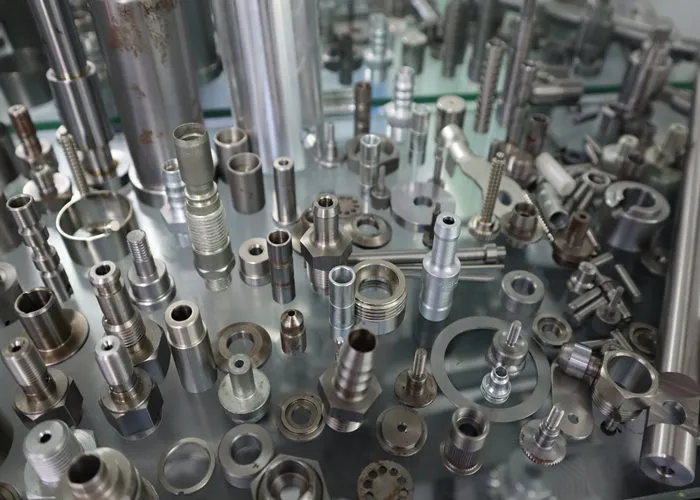
We’ve been machining precision components for motorcycles and custom cars for years. Here’s what we offer specifically for this market.
Our Capabilities for Motorcycle and Auto Parts
| Capability | Detail |
| CNC Turning | Shafts, axles, spacers, pins – up to Ø200mm |
| CNC Milling | 3, 4, and 5-axis for complex brackets, covers, and housings |
| Swiss CNC | Small, long parts like valve stems, sensor pins, injector components |
| Materials | Steel, stainless, aluminum, magnesium, brass, plastics (Delrin, Nylon, PEEK) |
| Finishing | Anodizing, passivation, bead blasting, plating – all in-house |
| Quality | ISO 9001:2015, CMM inspection, material certs, full traceability |
| Volume | 1 prototype to 10,000+ production parts |
Engineering support: We review your design and suggest cost-saving changes. Often we can reduce machining time by 20–30% without changing function.
Material expertise: We know when to recommend steel, plastic, or magnesium for your application.
Fast quotes: Upload your CAD file. Get a quote and DFM feedback in 24 hours.
No hidden fees: Our quotes include material, machining, finishing, and inspection.
Global shipping: We ship to USA, Europe, Australia, and beyond.
Whether you need a single prototype foot peg or 5,000 production sprockets, we have the equipment and experience to deliver.
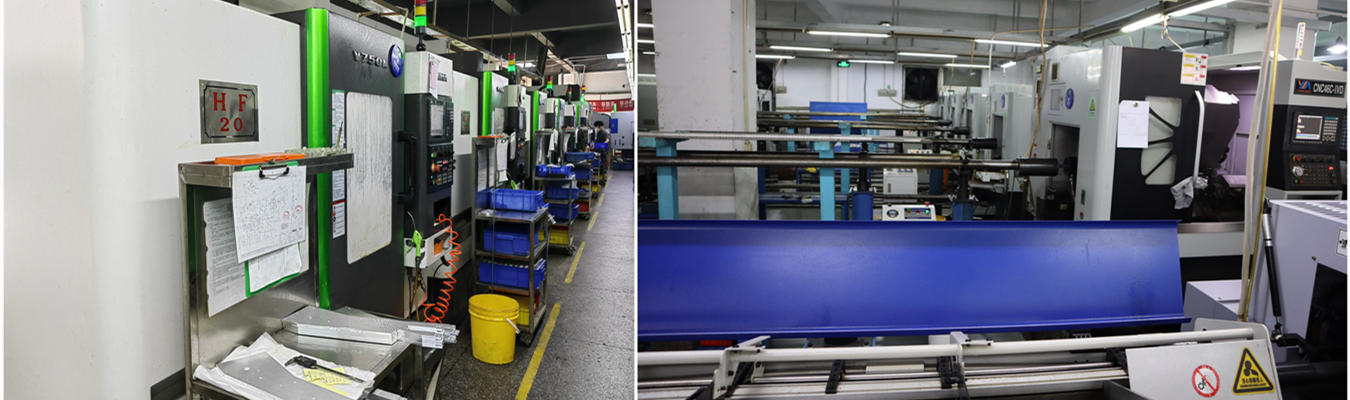
From CNC machining motorcycle parts like triple trees and foot pegs to steel auto parts CNC, plastic CNC machining cars, and even magnesium alloy auto machining, Falcon CNC Swiss has the equipment and expertise to deliver.
We combine advanced CNC turning, milling, and Swiss machining with in-house finishing and ISO-certified quality. Whether you need a single prototype or high-volume production, we’re ready to help.
Our global customers trust us because we communicate clearly, deliver on time, and stand behind every part we make.
Upload your CAD file for a free DFM analysis and 24-hour quote
Explore our Swiss machining services for precision components
Contact our engineering team to discuss your CNC machined motorcycle parts or custom auto components
A: Absolutely. We specialize in low-volume and prototype work. Send us a sketch or CAD file, and we’ll quote it. No minimum order quantity.
A: Aluminum 7075 is strong and machinable. For ultimate weight savings, magnesium is even lighter, but it’s more expensive and requires special handling. We machine both.
Q: Do you offer anodizing for colored parts?
A: Yes. We do clear, black, and custom colors (red, blue, gold, etc.) in-house. Anodizing adds corrosion resistance and a professional finish.
A: Upload your CAD file (STEP or IGES) and a 2D drawing with tolerances and material specs to our website. We’ll respond within 24 hours.
A: Yes, ISO 9001:2015, 16949. We provide inspection reports and material certifications with every order.
A: Local shops (USA/Europe) offer faster shipping and easier communication but higher cost. Global shops (like us in China) offer lower cost and often the same or better equipment, but longer shipping. We help you balance both.
A: Yes. We machine Delrin, Nylon, PEEK, ABS, and other engineering plastics. They’re great for bushings, insulators, and lightweight brackets.