English
  日本語
日本語  한국어
한국어  français
  Deutsch
  Español
  русский
  العربية


Jun
09
Engineering Guide: Precision CNC Turning – Machining Brass vs Aluminum for Optimized Swiss Machining
Learn More

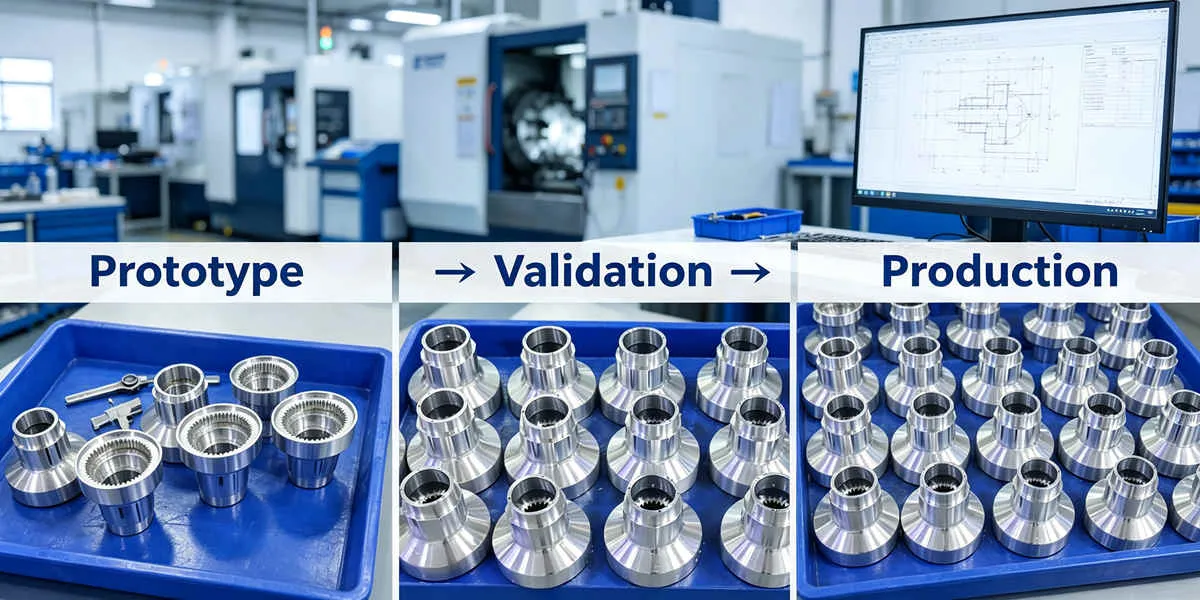
This case study showcases the process underpinning manufacturing of a custom aluminum cylinder from CNC machining of the prototype to serial fabrication. The cylinder has a complex internal shape and a thin structure along with an important inner serration profile that requires precision machining.
Using aluminum as the material, the project used aluminum prototype to production manufacturing with inner contouring operations for making the prototypes and series products. Throughout the entire process Falcon CNC Swiss offered services such as DFM advice, prototype machining, dimensional evaluation, and production preparation.
The procedure followed for manufacturing was determined on the basis of required customer drawings which helped in utilizing CMM and dimensional inspection for checking vital features. CNC finishing and anodizing were implemented in accordance with the specified surface finish.
This case shows how CNC prototype to production can give a sensible way of manufacturing complex aluminum components while keeping the consistency with model verification and production process. Falcon Aluminum Precision Machining allows for supporting clients through the entire process starting with the initial model and continuing with the consecutive re-productions.
This aluminum CNC machining project involved designing a cylindrical part from the prototype stage to a series of production runs. The part was produced from aircraft grade aluminum alloy and it needed a combination of external turning and internal profiling to form its functional shape.
Among the various shape features of the part, the most complex feature was the internal serration that needed to be produced inside a long cavity which has relatively thin walls. The design required detailed planning in order to ensure that the dimensions would remain stable and meet the requirements of the customer specification.
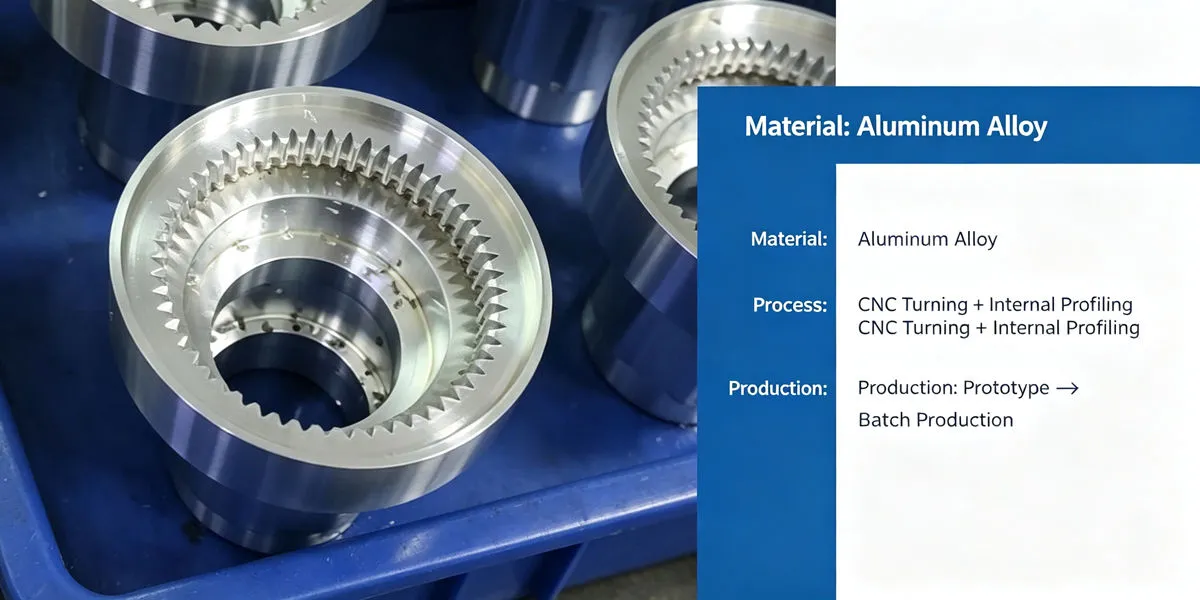
The project followed an aluminum prototype to production model:
Prototype → Validation → Batch Production
The prototype stage was used to verify the component’s geometry, critical internal features, and overall fit before moving into repeat production. CMM and dimensional inspection were used during validation to confirm the machined results.
| Project Parameter | Specification |
| Part | Custom Aluminum Cylindrical Component |
| Material | Aluminum Alloy |
| Prototype | CNC Machined Aluminum Prototype |
| Production | Prototype → Validation → Batch Production |
| Process | CNC Turning + Internal Profiling |
| Critical Feature | Internal Serrated Profile |
| Geometry | Deep Cavity / Thin Wall |
| Inspection | CMM & Dimensional Inspection |
This project demonstrates how a CNC machined aluminum prototype can be developed into a repeatable production component through structured engineering and manufacturing support.
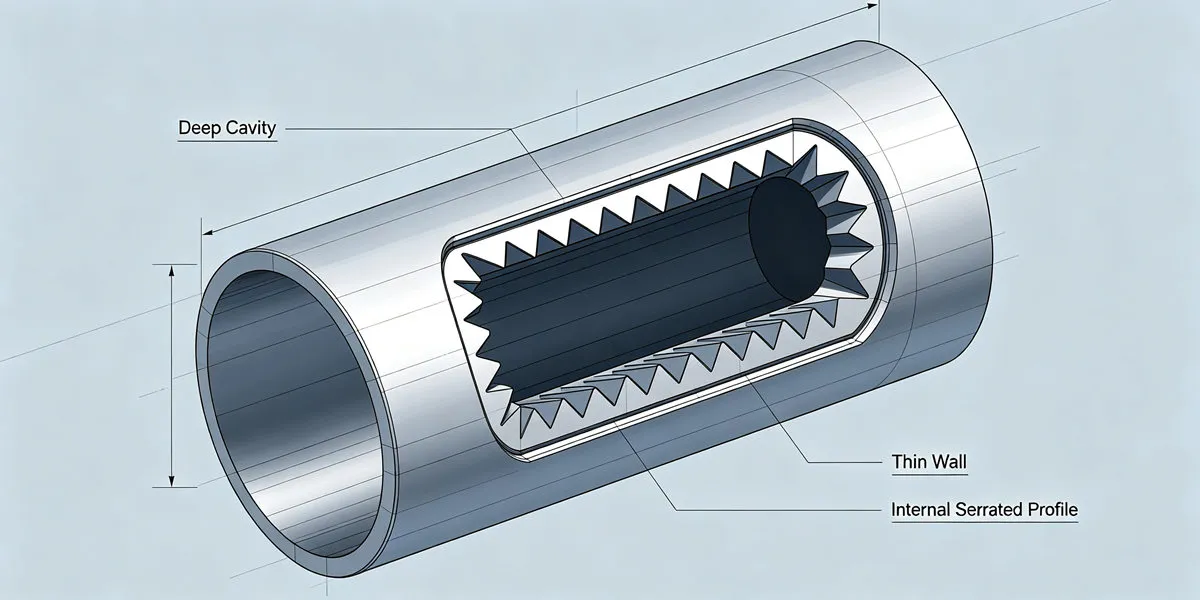
The greatest difficulty with this aluminum CNC machining project was creating the complicated internal profile while ensuring the structural integrity of the cylindrical part. The client requested the production of a cavity, walls that are thin, and a critical internal serration design all in the same product.
Key Manufacturing Challenges
| Challenge | Manufacturing Consideration |
| Deep Cavity | Required controlled internal machining and suitable tool access |
| Thin Wall | Needed careful machining to minimize deformation |
| Internal Serrated Profile | Required accurate internal profiling to meet the drawing requirements |
| Dimensional Accuracy | Critical features needed controlled inspection |
| Prototype to Production | The process needed to remain suitable for repeat batch production |
Another important demand was the internal serrated profile of the prototype. Being located inside the component, this feature required consideration of access conditions and stability of the process when developing the production process. The goal was not just to create a working prototype but to derive a usable machining solution. This required balancing precision aluminum machining, internal feature accuracy, and production repeatability.
Prior to executing a machining process for the initial prototype, Falcon assessed the CAD model and drawings of the customer to determine any manufacturing risks. The aluminum prototype design for manufacturing (DFM) optimization was concentrated on the deep cavity, thin wall structure, internal serrated profile, and specifications that will impact mass production.
The engineering review considered:
Machining accessibility: Internal features were evaluated to determine suitable tool access and machining sequences.
Wall stability: The thin-wall structure required controlled cutting conditions to reduce the risk of deformation.
Internal profile: The serrated profile was reviewed as a critical feature requiring consistent dimensional control.
Production repeatability: The machining approach needed to remain practical when moving from prototype to batch production.
These points are of great importance when it comes to applying DFM for aluminum parts to precision components. The aim in this case was not to modify the component’s main function; rather, the goal was to find potential machining issues at the earliest stage and create an improved manufacturing process.
The DFM analysis has helped to determine the right combination of CNC turning and internal profiling of the component. This way, it was possible to manufacture the prototype with the client’s requirements taken into consideration and prepare the process for further production.
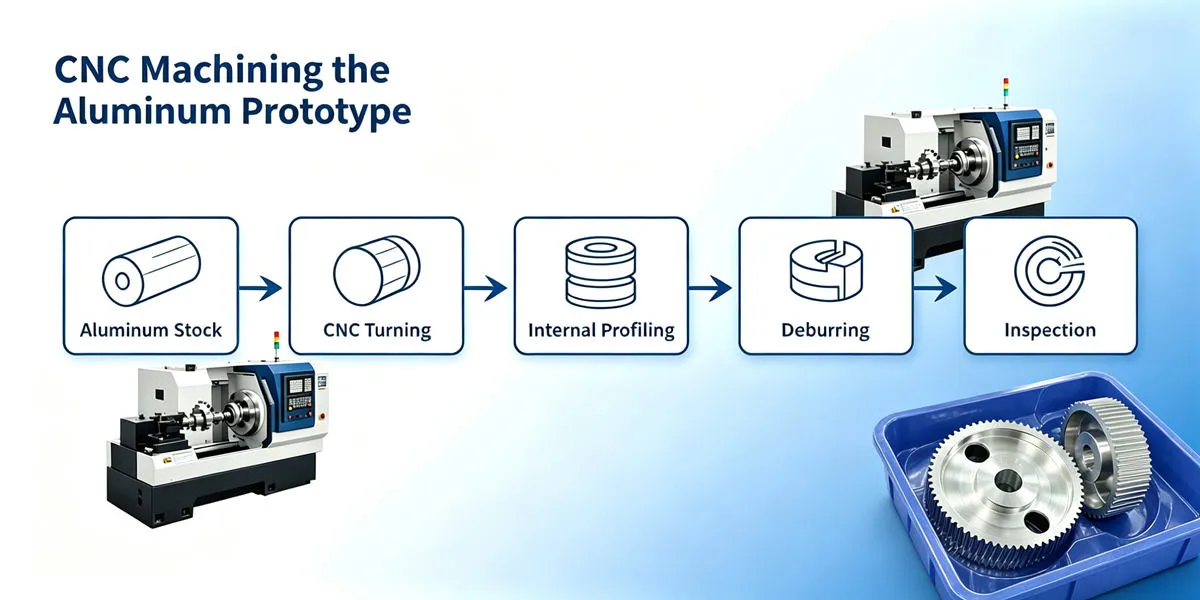
Following the engineering assessment, Falcon created a prototype case study piece from aluminum through CNC turning and internal profiling. The method allowed for the shape of the piece and access to deep internal cavities and grooved profiles.
The prototype machining sequence included:
CNC Turning – The external cylindrical geometry was machined to the required dimensions.
Internal Machining – The deep cavity was produced while maintaining appropriate wall stability.
Internal Profiling – The critical serrated profile was machined inside the component according to the customer drawing.
Finishing Operations – Edges and machined surfaces were prepared for inspection and subsequent finishing requirements.
For the CNC machined aluminum prototype, element stability played a critical role due to presence of deep chambers and thin walls. For this reason, the working conditions and operations were monitored to curb excessive cutting forces and preserve the component design.
At this stage, the aluminum prototype was prepared for checkups and measurements that were to take place before entering the subsequent production phase. This enabled the production team to confirm the essential specifications and take a look at possible corrections. The convergence of the two manufacturing techniques – CNC turning aluminum part and internal profiling – worked out well in terms of cost-effectiveness and ease of production of the cylindrical object in question.
After CNC machining, the prototype underwent aluminum prototype inspection to verify the critical dimensions and internal features against the customer drawing. Because of the presence of a deep cavity, thin wall as well as a reentrant profile, it was essential to carry out dimension checks before commencing mass production.
Falcon employed CMM inspection techniques for aluminum parts to ensure the integrity of the critical parameters of the prototype.
| Inspection Item | Inspection Focus |
| External Dimensions | Overall cylindrical geometry |
| Internal Cavity | Depth and dimensional accuracy |
| Serrated Profile | Profile and feature accuracy |
| Wall Geometry | Dimensional consistency |
| Critical Dimensions | Customer drawing requirements |
The CNC machining quality inspection system gave engineering input prior to any production happening. If changes needed to be implemented, the machining operation could be optimized and reviewed to be able to go on to the next production step.
This verification step ensured the confidence level in the process of production and offered a smooth transition from the prototype machining to batch production. It also created a reference point for aluminum prototype quality control in the future production stages.
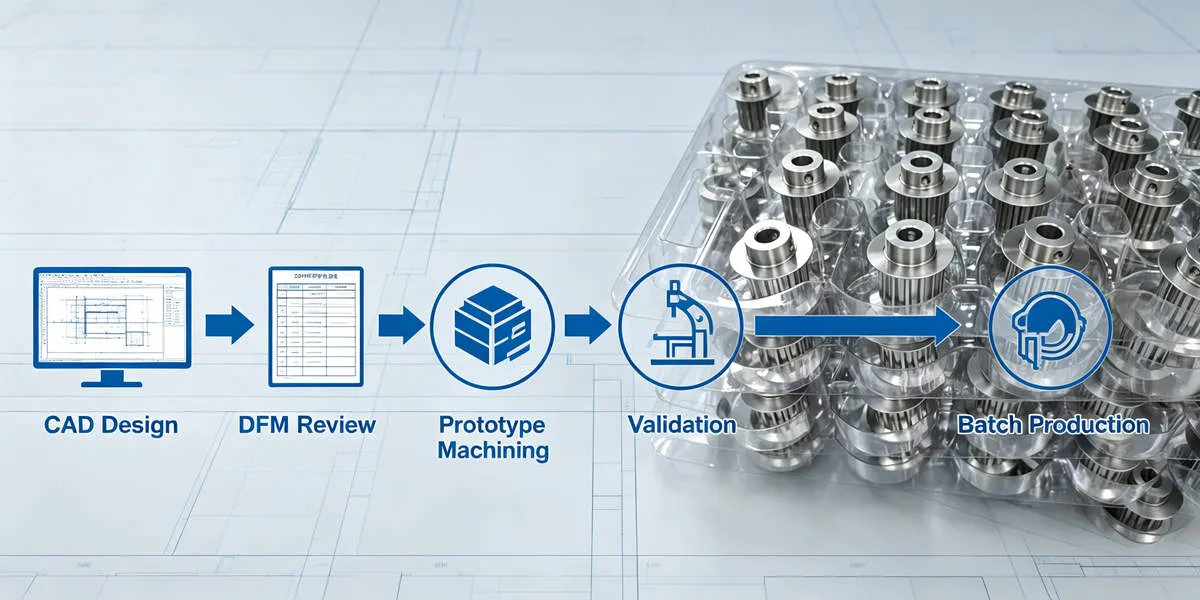
When transitioning from using aluminum prototypes to production, what needs to happen is not just increasing the order size. In this case, a validated prototype should have been used as a reference point to create a reproducible batch production process.
After carrying out the prototype's inspection, the manufacturing methodology was reviewed to make sure that the proposed CNC turning and internal profiling methods will be applied consistently to metals used in the future.
This process allows for a decrease in chances of dimensional variations occurring when transitioning from prototype machining to production. Still, the internal profile and thin wall geometries remain important characteristics and require proper process control throughout the process.
The benefits of early-stage validation can also be used for CNC prototype to production projects. Such products benefit from a possibility to see problems before the amount of manufactured goods increases, which allows to develop plans for a process based on the outcomes of the prototyping stage, rather than only on CAD systems or drawings. The above-mentioned principles can also be applied when manufacturing high volume aluminum production and at speed.
The prototype that has been validated was used as a reliable basis in scaling CNC production and further manufacturing in bulk. After the relevant measurements were verified and the interior sawtooth profile was confirmed, Falcon was ready to repeat the previous production.
| Production Metric | Result |
| Prototype Quantity | [5] pcs |
| Batch Production | [500] pcs |
| Critical Tolerance | ±[0.01] mm |
| Minimum Wall Thickness | [1.5] mm |
| Internal Profile Tolerance | ±[0.01] mm |
| First-Pass Yield | [98.5]% |
| Inspection Method | CMM + Dimensional Inspection |
The use of CNC machining process optimization while transferring from the prototype to mass production stage is proven by the project. The incorporation of engineering notes from the prototype into the production process allowed consistent aluminum production. The verification of aluminum production prior to scaling up has minimized the risk of any dimensional discrepancies in the process.
CNC prototype to production was chosen for this project as the required part required internal complex geometry, industrial controllability and manufacturability. The design being cylindrical, having deep cavity, thin wall and internal serrations could be produced in aluminum without the need of casting molds.
Why CNC Machining proved the best choice
Flexible prototyping: any part changes in the design can be done without the creation of the new molds.
Complex internal details: CNC turning and internal profiling allowed for the control over the manufacturing process.
Precision: CNC machining allowed the manufacturing of precision details according to customers' specifications.
Scalability: the prototype process can be further adapted for the mass production stage.
Material efficiency: the part can be produced from an aluminum block without any changes to the initial design.
Thus, for this case CNC machining made sense between prototyping and mass production. The same process could be applied for production as volumes of parts produced would be increasing which allows scaling production process. This flexibility is particularly useful for precision aluminum machining projects where the design may require validation before production quantities are increased.
This project shows how prototype to production machining can minimize production risks, when a complicated aluminum component is moving into batch manufacturing. The prototype stage allowed for testing of the deep cavity, thin wall geometry, and internal serrated profile prior to production.
Several points were important for aluminum production scaling:
Review critical features early: Internal profiles and thin-wall areas should be identified during the initial engineering review.
Validate before scaling: Prototype inspection provides useful feedback before larger production runs begin.
Optimize the machining process: The validated CNC turning and internal profiling process can be refined for repeat production.
Maintain inspection standards: Critical dimensions should remain controlled throughout subsequent production batches.
This project also shows the benefit of aluminum CNC machining optimization before the actual production begins. The engineering decisions made throughout the prototyping phase can affect issues such as the stability of the machining process as well as inspection efficiency and repeatability.
For future repeat production aluminum parts, adhering to the previously validated process and inspection requirements will allow for a more predictable production process. In addition, companies that are planning for larger production volumes can take advantage of the review of process capability and production requirements before the scaling of production begins.
If you want to get more information on production planning, see the article titled High Volume Aluminum Production.
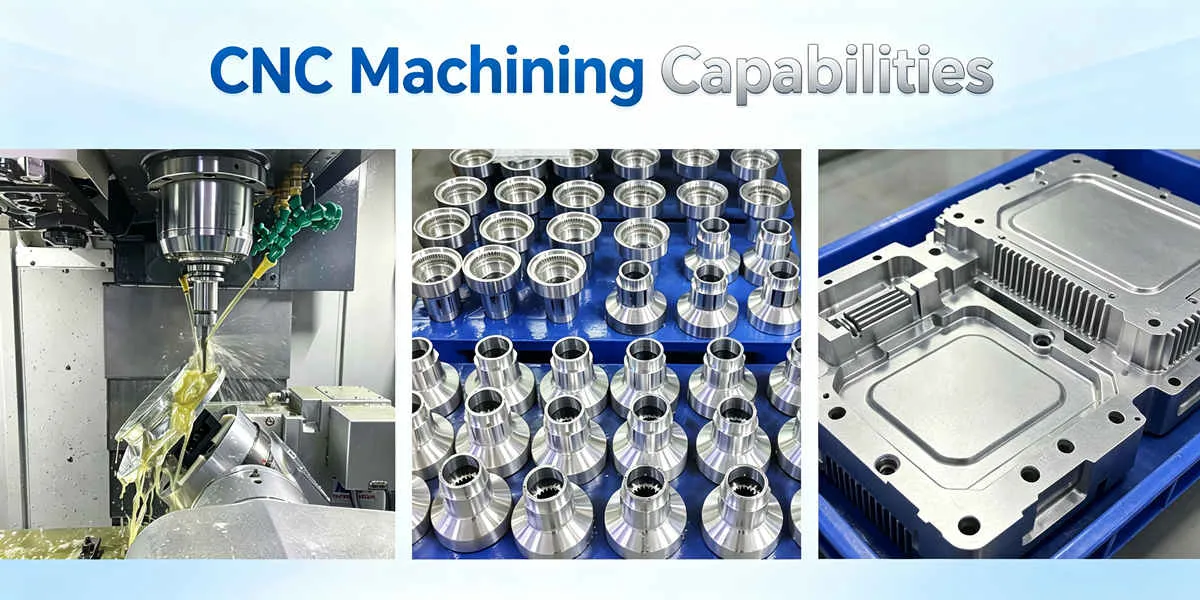
With the help of integrated engineering and CNC manufacturing capability, Falcon CNC Swiss works on aluminum prototype and production projects. Customers thus get to work with one manufacturer all throughout the different processes of order manufacturing.
When working on aluminum components there can be significant assistance from our side, such as:
DFM review in advance
CNC prototyping for the purposes of design verification
CNC turning and milling for the preparation of necessary parts
CMM and dimensional inspection
Surface treatment including anodizing
Optimization of the production process
With the support of the aluminum precision machining, we provide components that require controlled dimensions, complicated features, and consistent quality of production. From the developmental stage to mass production or any possible contracts for the manufacturing we help customers to launch successful manufacturing process with CNC contract manufacturing.
Have an aluminum prototype ready for production?
Send us your drawings or CAD files for a manufacturing review and quotation.