English
  日本語
日本語  한국어
한국어  français
  Deutsch
  Español
  русский
  العربية
Apr
Learn More
08

Copper is a very adaptable metal that CAN be machined into many different types of parts in the manufacture of precision components. The high electrical and thermal conductivity of copper, combined with its corrosion resistance and attractive appearance, makes copper a requirement for many different industries from electrical connectors to heat sinks and from medical devices to aerospace components. However, when machining copper, the engineer/ machinist will encounter many challenges attributable to the properties of copper. The ductility of copper that allows it to be formed into different shapes also contributes to copper being gummy, thereby causing it to stick to cutting tools. Understanding the machinability of copper (from the machinability of copper alloy to copper machining speeds and feeds) is imperative to producing high-quality, low-cost products.
This engineering guide will discuss the entire range of CNC machining processes for copper including C101 and C110 pure copper grades, C145 tellurium free machining copper alloys, C147 sulfur free machining copper alloys as well as the advanced precision machining capabilities of Falcon CNC Swiss for these grades/manufacturing processes. The information contained within this guide on copper machining (whether machining Feeds and Speeds by lathe or optimizing copper machining Feeds and Speeds by milling) will provide you with the technical information and knowledge that you will require to machine the copper that you will require for your application.
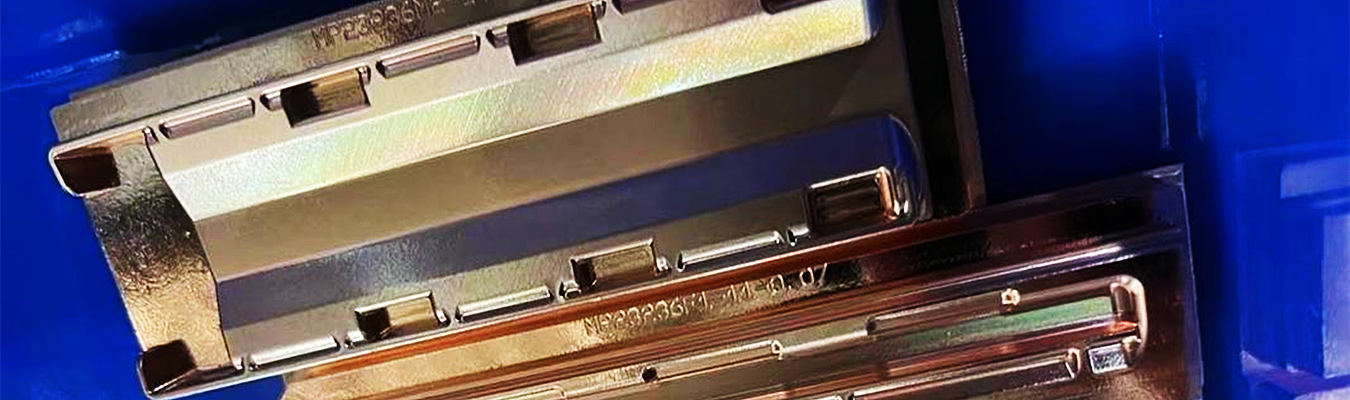
Machinability refers to the ease with which a given material can be sliced into a final desired form and finish. Because of this relationship, machinability is typically rated as a percentage, with free-cutting brass (C36000) acting as the industry standard (i.e., 100%). The machinability of copper is highly variable, and can be influenced by the alloy types and/or by microstructures that exist within those alloys.
Pure copper (examples: C10100 and C11000) has a conductivity value for electricity (up to 100% IACS) and for heat (approximately 380-400 W/m·K) and is therefore considered to exhibit a high machinability due to how well pure copper dissipates heat while cutting. Unfortunately, the same properties that provide those characteristics in pure copper also make it difficult to machine. The softness and ductility of pure copper cause it to smear or adhere to cutting tools, which creates built-up edge (BUE), poor surface finishes, and the premature failure of cutting tools.
Falcon CNC Swiss has extensive experience machining copper, and has found that C11000 has a machinability rating around 20%, making it one of the more challenging materials to machine. C10100 has similar machining challenges, and therefore, engineers typically opt for free machining copper alloys (i.e., alloys that have been developed to break chips efficiently and to extend the life of tool bits while maintaining the desirable properties of copper).
Copper alloy has many different machine workings. When choosing an appropriate copper alloy, you consider its machining ability and compare that to electrical conductivity, strength, and cost. The chart below lists major types of copper along with their machining abilities based on CNC Swiss Falcon manufacturers' years of experience in producing these alloys.
| Alloy | Type | Machinability Rating | Key Properties | Typical Applications |
| C11000 | Electrolytic Tough Pitch Copper | ~20% | 100% IACS conductivity; soft and gummy | Busbars, conductors, wiring, heat sinks |
| C10100 | Oxygen-Free Electronic (OFE) Copper | ~20% | Highest purity; excellent conductivity | Ultra-sensitive electronics, RF components |
| C14500 | Tellurium Copper (Free-Machining) | 85% | Tellurium acts as chip breaker; ~90% IACS | Precision connectors, terminals, high-volume turned parts |
| C14700 | Sulfur Copper (Free-Machining) | 85% | Sulfur forms Cu₂S chip breakers; excellent conductivity | High-speed screw machine parts, electrical components |
| C17200 | Beryllium Copper | 40–60% | Highest strength; heat-treatable; non-magnetic | Aerospace, mold tooling, downhole tools, springs |
| C36000 | Free-Cutting Brass (benchmark) | 100% | Lead acts as lubricant; excellent chip formation | Fittings, valves, decorative hardware, gears |
According to the table, the highest quality copper to machine for pure machinability is actually not pure copper (i.e. free-machining alloys, such as C145 tellurium copper and/or C147 sulphur copper). These types of copper (freely machineable) rate approximately 85% machinability, virtually match the machinability of free-cut brass products and maintain an approximate IACS conductivity of 90%. The addition of tellurium or sulphur creates copper telluride or copper sulphide inclusions in the copper. These inclusions break up chips leading to short chips that can be easily removed and drastically reduce tool wear.
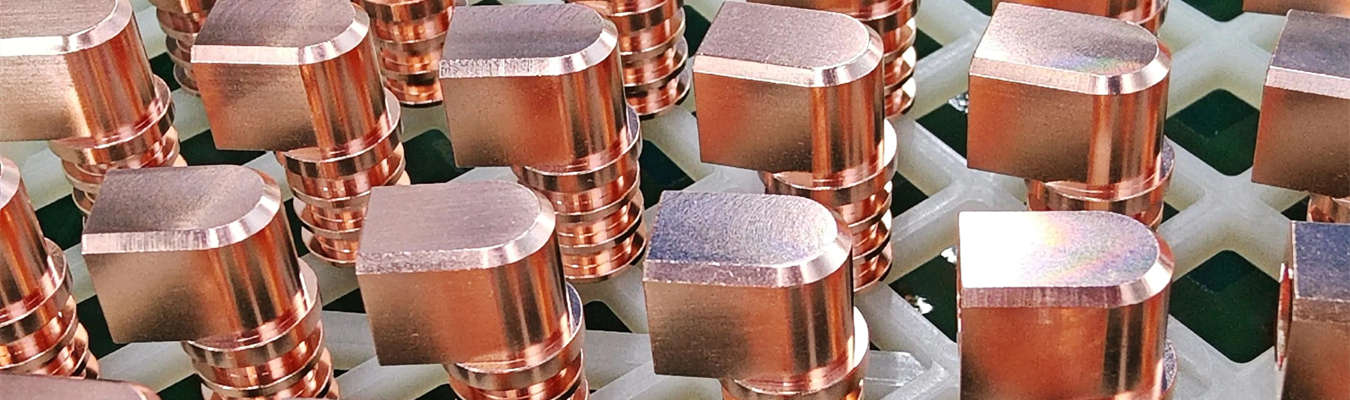
Whether you are machining copper on a lathe or performing CNC milling operations, optimizing machining copper speeds and feeds is critical. The recommended parameters vary significantly between pure copper and free-machining alloys.
The alloy type and the material of the tool will influence the cutting speed for copper. Pure copper grades (C101, C110), extremely gummy and soft, can be very conservative in regards to cutting speed due to concerns over tool welding and built-up edge. A starting cutting speed of 200-300 Surface Feet per Minute (SFM) would usually apply to carbide tooling in turning operations of copper. With the proper feed rate and tool size, this range will also apply in milling copper.
Free machining grades of copper, such as C145 and C147, can have cutting speeds that are much higher than those for pure copper. The addition of tellurium or sulfur to the pure copper allows for the cutting speed for copper to reach speeds ranging from 600-800 SFM when using carbide tooling. This allows for well over 3-5 times the productivity compared to pure copper. In our own production environment, we have experienced the C145 tellurium copper being cut at 5 times the speed of pure copper resulting in faster cycle times and longer tool life.
Generally, high-speed steel (HSS) tools will require a 40-50% speed reduction compared to carbide tools. A good rule of thumb is to state that carbide speed is 2-2.5 times higher than HSS for similar materials.
The table below provides recommended starting parameters for common copper alloys in CNC turning and milling operations, derived from Falcon CNC Swiss's in-house process data. These values should be adjusted based on machine rigidity, tool geometry, and specific part requirements.
| Alloy | Operation | Cutting Speed (SFM) | Feed Rate (IPR / IPT) | Depth of Cut (in) | Tool Material |
| C110 / C101 | Turning | 200–300 | 0.002–0.006 IPR | 0.010–0.050 | Carbide (sharp, positive rake) |
| C110 / C101 | Milling | 150–250 | 0.001–0.003 IPT | 0.010–0.040 | Carbide (2–3 flute, high helix) |
| C145 / C147 | Turning | 600–800 | 0.004–0.010 IPR | 0.020–0.080 | Carbide (coated recommended) |
| C145 / C147 | Milling | 500–700 | 0.002–0.005 IPT | 0.015–0.060 | Carbide (DLC or AlTiN coated) |
| C172 (Beryllium Copper) | Turning | 250–400 | 0.002–0.005 IPR | 0.010–0.040 | Carbide (sharp edge) |
Note: IPR = inches per revolution (turning); IPT = inches per tooth (milling). Parameters are starting recommendations; always validate with test cuts.
For machining copper on a lathe, setting the cutting tool edge angle between 70° and 95° helps manage chip flow and reduce cutting forces. In milling operations, climb milling is generally preferred to reduce tool deflection and improve surface finish.
Tool selection is perhaps the single most important factor in successful copper machining. Copper machining tips consistently emphasize the following, based on Falcon CNC Swiss's extensive shop-floor experience:
Choose carbide tools with sharp edges. Sharp blade edges will help cut at a lower force and less likely for copper to weld or smear onto the tool. Polished or diamond coated carbide inserts are highly recommended for machining pure copper in order to avoid material welding to the tool.
Consider using tool coatings. Coatings such as AlTiN (Aluminum Titanium Nitride) and DLC (Diamond Like Carbon) provide excellent wear resistance and reduce friction; therefore, prolonging tool life, when machining copper 101 or other pure copper grades.
Optimize tool geometry. Using tools with large helix angles (35°-45°) and chip breaking geometries will improve the evacuation of chips and help to reduce the likelihood of chip recutting.
For free machining copper (C145, C147), standard carbide tooling with moderate rake angle will work well due to the chips breaking properties of the materials themselves.
High-speed steel (HSS) tools can be used for copper but will wear faster than carbide, particularly at higher production volumes. For high-volume production of free cutting copper components, carbide or diamond-coated tooling is the preferred choice.
Copper's excellent thermal conductivity (380-400 W/m·K) contributes to efficient dissipation of heat created in the cutting zone during the machining process; however, the addition of lubricants is critical. When machining pure copper, the use of high pressure (500-1,000 PSI) coolant directed directly at the point of the cutting edge will help to ensure that there is no welding of the chip onto the cutting tool and also improve the finished surface quality. In the case of the machinable copper alloys, generally a flood or high-pressure mist will provide adequate lubrication; however, some operations will benefit through the use of minimal quantity lubrication (MQL) in order to cut fluid costs.
Select a lubricating coolant compatible with copper to avoid causing damage to the finish or causing corrosion. Water-soluble coolants with extreme pressure (EP) additives are commonly used; however always check with your supplier to make sure your choice of lubricant is compatible with your intended use of copper.
Engineers who are looking to strike a balance between machining performance and electrical conductivity can rely on free machining copper alloy grades. In particular, tellurium copper (C145) and sulfur copper (C147) are considered the highest quality of free cutting copper alloy available on the market today. C145 and C147 have 85% machinability ratings compared to 20% for pure copper.
C14500 tellurium copper has 0.4–0.7% tellurium, which creates inclusions in the alloy that act as chip breakers. With approximately 90% IACS conductivity, this alloy provides electrical conductivity for applications where some electrical conductivity can be sacrificed for machinability. C145 can be found in applications such as precision connectors, terminal lugs, cable glands, fasteners, soldering iron tips, and soldering torch tips.
C14700 sulfur copper utilizes the addition of sulfur to create Cu₂S copper sulfide chip breakers. Like C145, C147 has an 85% machinability rating and good electrical conductivity. In addition, the addition of phosphorus during manufacturing gives C147 protection from hydride embrittlement. C147 is often specified for high-speed screw machine work and applications that require free machining copper products.
Both alloys have significantly increased cutting speeds when machining copper, 600–800 SFPM using carbide tooling, as well as significantly increased tool life compared to pure copper. Free machining copper is an economical option for producing high-volume, cnc-turned copper parts.
Drawing from our decades of precision machining experience, Falcon CNC Swiss recommends the following copper machining tips for engineers and machinists:
Match the alloy to the application. If conductivity is paramount and volumes are low, pure copper (C101, C110) may be acceptable despite its poor machinability. For high-volume production or complex geometries, specify free machining copper (C145, C147) to reduce cycle times and tooling costs.
Use sharp, high-quality carbide tooling. Dull tools exacerbate copper's tendency to smear and weld. Replace or regrind tools regularly to maintain consistent performance.
Optimize chip evacuation. For pure copper, consider using chip-breaking tool geometries or high-pressure coolant to prevent chip recutting. For free machining copper, the material's inherent chip-breaking properties simplify this challenge.
Monitor tool wear closely. Copper's abrasiveness can accelerate flank wear. Implement in-process tool monitoring or regular inspection intervals to catch wear before it affects part quality.
Consider workholding carefully. Copper's softness means it can deform under excessive clamping force. Use precision vises or custom fixturing with controlled clamping pressure.
For machining copper on a lathe, set the cutting tool edge angle between 70° and 95° to optimize chip flow and reduce cutting forces.
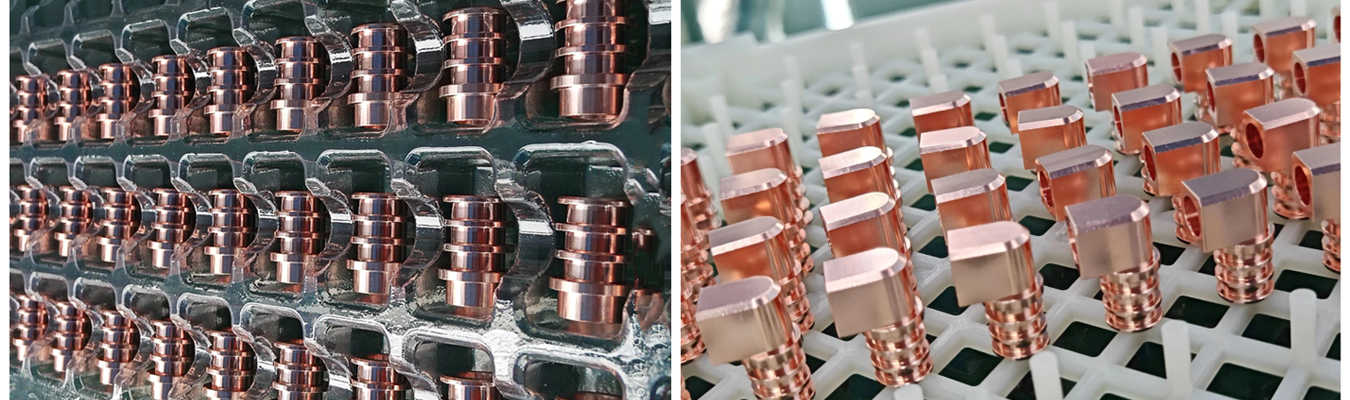
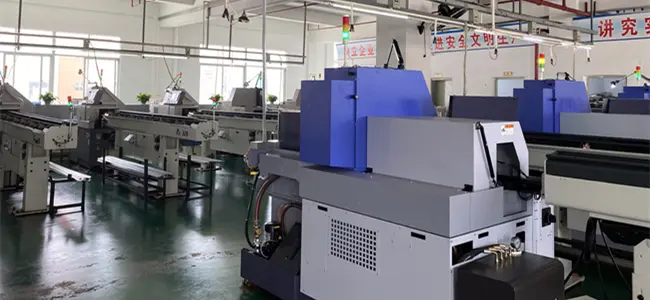
At Falcon CNC Swiss, our name reflects our dedication to precision machining excellence. We operate a fleet of advanced Citizen and Tsugami Swiss-type CNC lathes and machining centers, capable of handling the full spectrum of copper alloys—from pure copper (C101, C110) to free machining copper (C145, C147) and high-strength beryllium copper (C172).
Our precision machining capabilities for copper include:
Swiss-type turning – Multi-axis turning with live tooling for complex copper components down to 0.5 mm diameter
High-speed CNC milling – 3, 4, and 5-axis milling with spindle speeds up to 20,000 RPM
Automated production – LNS bar feeders and pallet systems for high-volume, lights-out manufacturing
In-process inspection – Zeiss CMM and optical comparator verification for ±0.0002 inch tolerances
Material expertise – Decades of experience with copper machining properties, from machining copper 101 to advanced copper alloys
Explore our core capabilities:
Precision CNC Machining Service – Comprehensive milling and turning solutions for copper, brass, aluminum, and exotic alloys
Swiss Machining Services – High-volume Swiss-type turning and milling for small, complex copper and brass components
Brass & Copper Machining – Specialized expertise in machining copper alloys, brass, and free-machining materials
Falcon CNC Swiss was approached by a major electronics manufacturer to provide 200,000 precision copper connector housings for the 5G infrastructure. The original design called for use of C110 pure copper; however, during prototyping it became clear that the tool life, surface finish and the cycle time per part (over 120 seconds) were unacceptable.
Our engineering team then recommended a switch from C110 copper to C145 tellurium copper (free machining copper), which maintains over 90% of the conductivity but is much easier to machine. After optimizing the speeds and feeds for machining copper (increasing the cutting speed from 250 surface feet per minute (SFM) to 650 SFM), we reduced the cycle time to just 45 seconds for each part - a 62% improvement. Additionally, the tool life increased from 500 parts per insert to over 8,000 parts per insert and the surface finish improved from 1.6 µm Ra to 0.6 µm Ra.
The result was that we completed the project on time, saw a 40% reduction in per-part costs, and had a defect rate of less than 0.1%. This case highlights the importance of choosing the right copper material for machining at a particular application.
Copper machinability varies dramatically by alloy—from ~20% for pure copper (C110) to 85% for free machining copper (C145, C147).
For high-volume production or complex geometries, specify free cutting copper alloys to reduce cycle times, extend tool life, and improve surface finish.
The cutting speed for copper with carbide tooling ranges from 200–300 SFM for pure copper to 600–800 SFM for free-machining grades.
Sharp, positive-rake carbide tools with appropriate coatings (DLC, AlTiN) are essential for successful copper machining.
Copper machining tips include optimizing chip evacuation, using high-pressure coolant for pure copper, and monitoring tool wear regularly.
Falcon CNC Swiss provides ISO-certified precision machining for copper components at any volume—from prototypes to high-volume production runs.
At Falcon CNC Swiss, we are committed to delivering precision, consistency, and value for every copper component we produce. Our team of experienced engineers is available to review your CAD models, recommend optimal copper alloys, and optimize machining copper speeds and feeds for your specific application requirements.
Contact Falcon CNC Swiss today for a design-for-manufacturability review and competitive quote. Whether you need machining copper 101 for prototypes or high-volume free machining copper production, we have the expertise and equipment to deliver exceptional results.
This engineering guide was authored by the technical team at Falcon CNC Swiss—a leader in precision machining, Swiss-type manufacturing, and copper alloy machining for global industries.