English
  日本語
日本語  한국어
한국어  français
  Deutsch
  Español
  русский
  العربية

Apr
Learn More
07

Spline shafts are integral components of today's machinery by providing a means of mechanically transferring torque from the engine to a transmission, connecting PTO systems on farm machinery, and driving gearboxes of industrial machines. Unless a spline shaft is malfunctioning, it is very much a “background” component and is seldom considered. When it does fail to perform properly, the entire machinery system will stop.
CNC spline shafts are one of the most demanding components to fabricate with precision. Machining parts such as spline shafts with tight tolerances is often very challenging because the spline teeth must be precisely spaced, the diameters must be concentric, and the components will have a tendency to twist, bend, or deform after heat treating, which is necessary to provide the required strength.
In this guide, we explain how to produce and verify tight tolerance CNC splines. This guide covers the most common causes of distortion during heat treating, as well as practical methods to control them, and what you should look for when sourcing custom CNC spline shafts from a supplier.
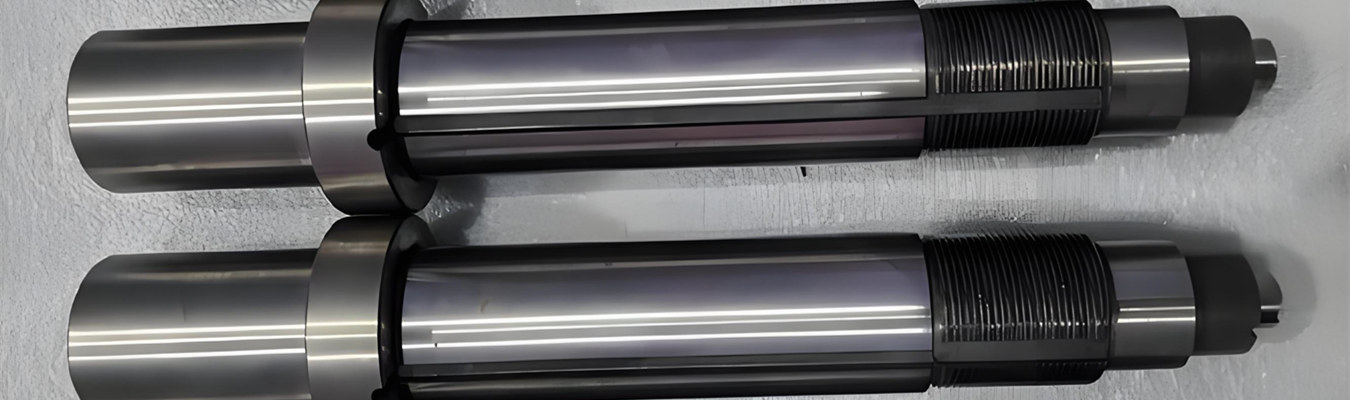
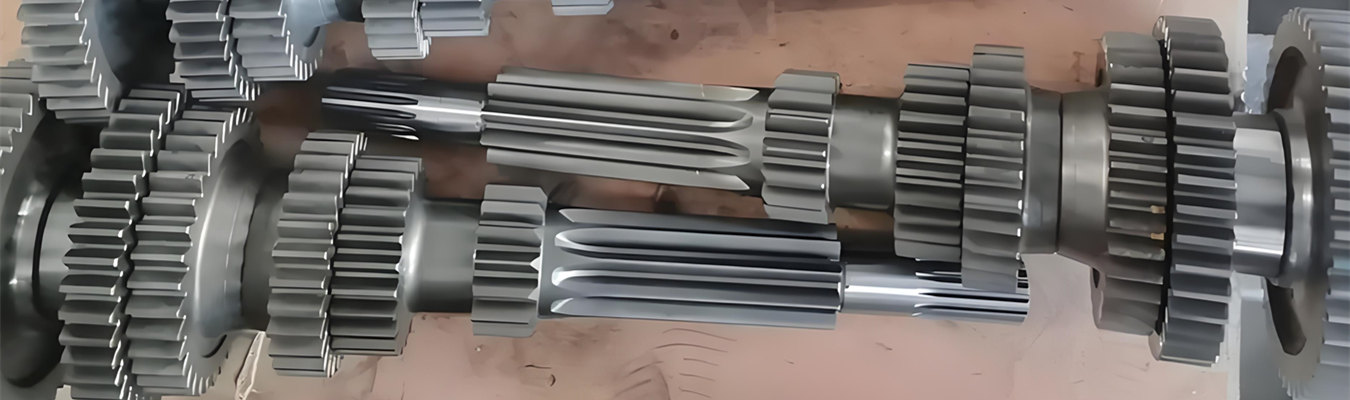
A spline shaft is a type of mechanical part made with a number of splines/ridges running along its length. A series of matching vanes in the mating part (usually a gear, coupling, or other similar device) engage with these splines/ridges and are interlocked together. Unlike other types of shafts (e.g., keyed), which rely on a single point of contact, splined shafts help distribute load between multiple teeth. By allowing more contact areas, splined shafts have a higher load-carrying capacity and provide greater alignment and can allow for axial travel while transferring torque.
There are various standard styles of spline shafts that exist today; however, the most widely used types today are involute splines (governed by various standards such as ANSI B92.1 and DIN 5480). Straight-sided splines (DIN ISO 14) are also reasonably common; however, they tend to be simpler and mostly used in agricultural machinery and general industrial drive applications. Specialised spline applications, such as helical splines used in the automotive aftermarket or crowned splines used for applications where smooth engagement is desired or to tolerate misalignment, also exist.
For critical applications—automotive spline shafts CNC machined for transmissions, PTO spline shafts machined for agricultural equipment, and gearbox spline shafts for industrial drives—precision is non-negotiable.
Achieving high accuracy on precision CNC splines requires attention at every step of the process.
International specifications govern manufacture of most spline shafts. They conform primarily to: DIN 5480 for involute splines, ANSI B92.1 and ISO 14 for straight splines. Each of these standards defines tolerances for tooth pitch, profile, and concentricity. A manufacturer of precision spline shafts of good reputation will expressly state which standard they produce and will provide inspection results showing compliance to those standards.
The industry recommends tolerance classification of IT6 to IT8 as general tolerance classes. More stringent tolerance classes will be required for harsher conditions, such as spline shafts in transmissions that need to operate without noise at high speeds.
For any high precision spline shaft, three tolerance parameters matter most:
Tooth spacing: The distance between adjacent spline teeth. Inconsistent spacing creates backlash and noise under load.
Concentricity: The relationship between the spline axis and the mounting diameters. Poor concentricity causes vibration and uneven wear.
Surface finish: Smooth spline surfaces reduce friction and extend component life. Target Ra 0.4μm or better for sliding spline applications.
At Falcon CNC , we provide the fabrication of custom CNC spline shafts using Swiss-type lathes and multi-axis turn-mill centers. The principal benefit of CNC machining from a Swiss perspective is the existence of a guide bushing which supports the workpiece right at the cutting edge when spline cutting, hence eliminating deflection when making splines. This becomes particularly important when the workpiece is long with multiple step diameters.
For high tolerance CNC splines we typically finish the spline cutting in the same setup as all of the other features (shoulders, undercuts, keyways and thread forms). Single set up production reduces the potential for repositioning errors as each additional feature has gone through the same referencing datum.
Different materials respond differently to cutting forces and heat. Common materials for spline shafts include:
Steel CNC spline shafts: Most common for high-load industrial and automotive applications. Requires careful heat treatment planning.
Stainless steel spline shafts: Used in corrosive environments like marine equipment and food processing machinery.
Aluminum machined splines: Lightweight options for robotics and low-torque applications. Easier to machine but lower strength.
Titanium CNC splines: Aerospace and high-performance applications where weight and strength both matter. Difficult to machine due to work hardening.
Brass spline shaft machining: Low-load applications like measurement devices or light actuation mechanisms.
Each material requires its own tooling, speed, and feed parameters. Experience with a wide range of materials is one of the most important factors when evaluating a supplier.
Spline shafts that need to resist high torque and wear must have heat treatment applied to them. Heat treatment of spline shafts hardens the material, improves resistance to fatigue, and increases the life of the spline shafts. However, heat treatment can create problems in the way of distortion.
When a spline shaft is heated, then quenched, the rate of cooling for every section of the shaft is not equal. Because of this, internal stresses created during the cooling process will twist the shaft, bend the axis of the splines, or change the tooth pattern on the splines.
Traditional oil quenching can cause problems, in that it leads to inconsistent levels of cooling and unpredictable changes in shape. In the case of a spline shaft, it can lead to distortion, which can surpass the allowable tolerance limits of the spline shaft. Therefore, if the splines are distorted, the spline shaft and the hub will not mate properly. Additionally, the amount of distortion experienced by each spline shaft in a given production batch will differ, hence making any green machining (machining prior to heat treatment) unreliable, since it is not possible to predict the amount of distortion each spline shaft will experience.
For internal splines, the distortion caused by heat treatment after the internal splines have been machined can have an even greater effect. The internal splines will not fit when a plug gauge is used, leading to the internal splines being scrapped.
Once a spline shaft has been heat treated, it becomes significantly harder—often 45–60 HRC or higher. Machining hardened materials is slow, expensive, and requires specialized equipment and tooling.
However, in many cases, post-heat treatment finishing is unavoidable. If the spline teeth themselves distort beyond tolerance, you must correct them.
There are various hard-fine machining processes that can help correct hardening distortion.
Several hard-fine machining processes can correct hardening distortion:
Spline grinding is the traditional solution for hardened splines. Grinding uses abrasive wheels to remove small amounts of material, correcting tooth profile errors and improving surface finish. It can achieve IT6 tolerances or better, but it is slow and expensive.
Hard skiving is a newer process that offers a cost-effective alternative to grinding for many applications. Based on gear skiving kinematics, hard skiving works well for internal and external splines where grinding would be difficult or unproductive. It can compensate for heat treat distortion and deliver acceptable surface quality for most industrial applications.
Hard turning is an option for external splines with relatively simple geometries. It requires machine tools with extreme rigidity and ceramic or CBN (cubic boron nitride) cutting tools.
Explore our precision CNC machining service for spline shafts manufacturing.
The best way to avoid expensive hard finishing is to prevent distortion in the first place. Advanced heat treatment methods are available that dramatically reduce dimensional changes.
Low-pressure carburizing (LPC) combined with high-pressure gas quenching (HPGQ) provides much more uniform cooling than traditional oil quenching. The gas quench medium distributes evenly around the part, reducing thermal gradients. Some systems add 4D quenching, where the part rotates during quenching to ensure even cooling on all surfaces.
This approach can reduce helix angle distortion by up to 60%. Many gearbox and transmission spline shafts treated with LPC and HPGQ remain within acceptable geometry without any hard finishing after treatment.
Another proven method for controlling distortion involves a specific sequence: stabilizing tempering, surface normalizing, and high-frequency current hardening of the spline cogs. This approach has been shown to avoid rejection by eliminating distortion of the spline geometric parameters.
Good machining practice before heat treatment reduces residual stresses and stress concentrators that can later cause distortion. Techniques include:
Using collet-style chucks or soft jaws that clamp uniformly without inducing stress
Following a rough → semi-finish → finish toolpath sequence to manage material removal stresses
Monitoring tool wear and replacing tools proactively to avoid fluctuating cutting forces
Proper fixturing is especially important for splined shafts. Collet-style fixturing ensures uniform grip and reduces the risk of distortion during finishing operations.
The table below summarizes the most common materials used for spline shafts, their typical applications, machining difficulty, and heat treatment considerations.
| Material | Best For | Machining Difficulty | Heat Treatment Considerations |
| Aluminum (6061, 7075) | Lightweight industrial drive splines, robotics | Moderate — machines well but prone to deformation | Usually not heat treated |
| Steel (C45, 4140) | Automotive spline shafts, transmission spline shafts, PTO shafts | Moderate — good balance of machinability and strength | Requires carburizing or induction hardening; distortion risk moderate |
| Stainless steel (303, 304, 316) | Marine equipment, food processing, corrosive environments | High — work hardens quickly | Minimal heat treatment required for corrosion resistance |
| Titanium (Grade 5) | Aerospace splines, high-performance racing components | Very high — work hardens; poor thermal conductivity | Requires specialized heat treatment; distortion can be significant |
| Brass | Low-torque applications, measurement equipment, decorative components | Low — excellent machinability | Rarely heat treated |
For high precision spline shafts carrying heavy loads in demanding environments, high-strength steel with controlled heat treatment is usually the best choice. For weight-sensitive applications like aerospace or robotics, titanium may be worth the extra machining cost.
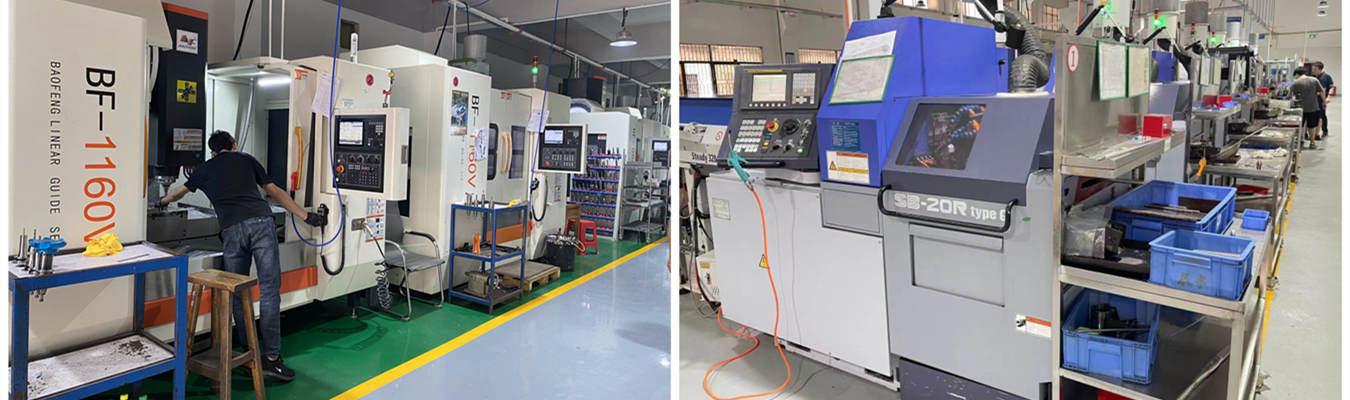
At Falcon CNC Swiss, we manufacture custom machined splines for clients across automotive, industrial, and aerospace sectors. Our approach is built on three principles: precision from the start, process control throughout, and documented verification at the end.
Our facility is equipped with advanced Swiss-type CNC lathes and multi-axis turning centers. For spline cutting, we use milling, hobbing, and broaching processes as appropriate for the application. In many cases, we complete the spline feature in the same turn-mill setup as all other shaft features, eliminating accumulated error from multiple setups.
We produce steel CNC spline shafts (C45, 4140, 17-4 PH), stainless steel spline shafts (303, 304, 316), aluminum machined splines (6061, 7075), titanium CNC splines (Grade 5, Grade 23), and brass spline shaft machining for appropriate applications.
Our standard tolerance for critical spline features is ±0.005mm to ±0.01mm. We follow three-stage quality verification:
First Article Inspection: The first part off the machine is fully measured against your print.
In-Process Probing: Touch probes verify critical dimensions during the production run.
Final CMM Inspection: Every batch is measured on a coordinate measuring machine, with full inspection reports available upon request.
We also provide full material traceability and can supply certification documentation for every production lot.
We have experience manufacturing automotive spline shafts CNC machined for transmissions and drivetrains, PTO spline shafts machined for agricultural equipment, gearbox spline shafts for industrial machinery, and industrial drive spline shafts for pumps, compressors, and actuators.
Spline shafts, which are part of CNC machining, can be very complex. Achieving the required tolerances requires an appropriate machine with precision manufacturing processes coupled with a high level of inspection to ensure all the parts have the necessary form factor. Creating CNC spline shafts also requires special machining after the heating process to account for the changes that occur due to heat treatment and/or other machining issues.
At Falcon CNC Swiss, we utilize our combination of Swiss-style precision machining, multi-axis machining, and strict quality systems in order to manufacture custom CNC spline shafts that will perform properly. We can help you either prototype spline shafts CNC machined for a new design or produce full-volume spline shafts for use in an OEM program.
Upload your CAD file for a free DFM analysis and competitive quote.
Explore our full precision spline shaft CNC machining to see our complete capabilities.
Contact our engineering team to discuss your custom spline shaft requirements.
A: Coordinate measuring machines (CMM) are utilized for checking parameters such as tooth spacing and profile geometry (in conjunction with a tooth gauge), and measuring concentricity. When running high volumes of production, a specialized spline gauge is used to determine if all parts of a spline shaft will properly connect to their corresponding parts within proper tolerance parameters.
A: For industrial spline shafts, the tolerance is generally between IT6 and IT8. For high-performance applications such as high-speed transmissions, our tight tolerance, precision CNC machined splines are typically made to a tolerance of ±0.005 mm for critical dimensions.
A: Yes. We can produce your prototype spline shafts using CNC machining with leads times as low as 3-5 days, depending on the complexity of the design. We recommend prototyping prior to proceeding with your high-volume production requirements.
A: Spline shafts can be found in applications throughout the automotive industry (drivetra), industrial gearbox, agricultural PTO (Power Take-off) system, aerospace actuation, marine propulsion, robotics, and medical devices.
A: For critical applications where distortion must be minimized, we specify that LPC + HPGQ will be implemented. This will allow for uniform cooling of parts while reducing the need for expensive finishing processes after heat treatment has been done.