English
  日本語
日本語  한국어
한국어  français
  Deutsch
  Español
  русский
  العربية


Jun
Learn More
02

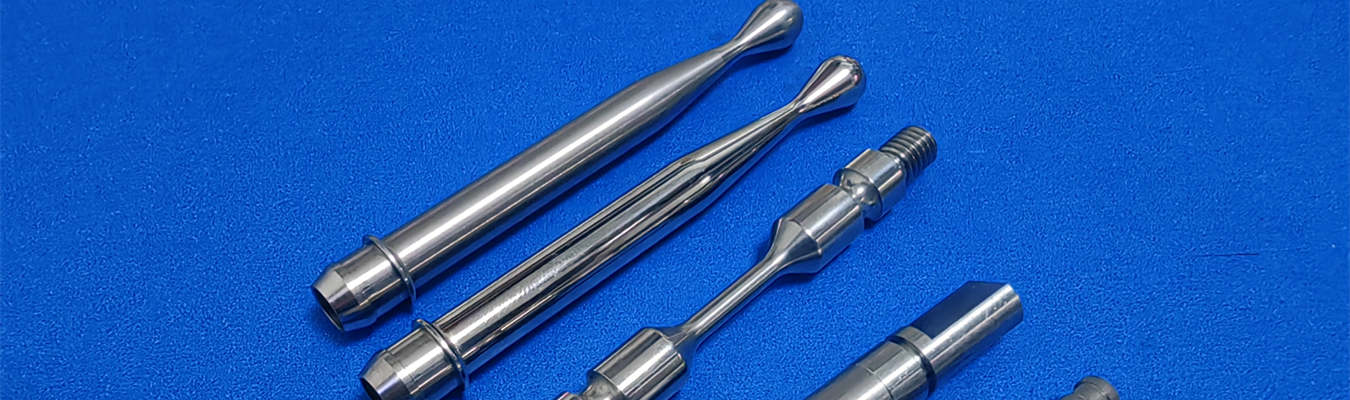
Precision pin manufacturers rely on Swiss screw machining to produce connector pins with micron-level tolerances, high conductivity, and repeatable quality. Whether you need gold plated connector pins for medical devices, beryllium copper pins for high-current automotive connectors, or stainless steel connector pins for industrial sensors, Falcon CNC Swiss delivers from prototype to full-scale production.
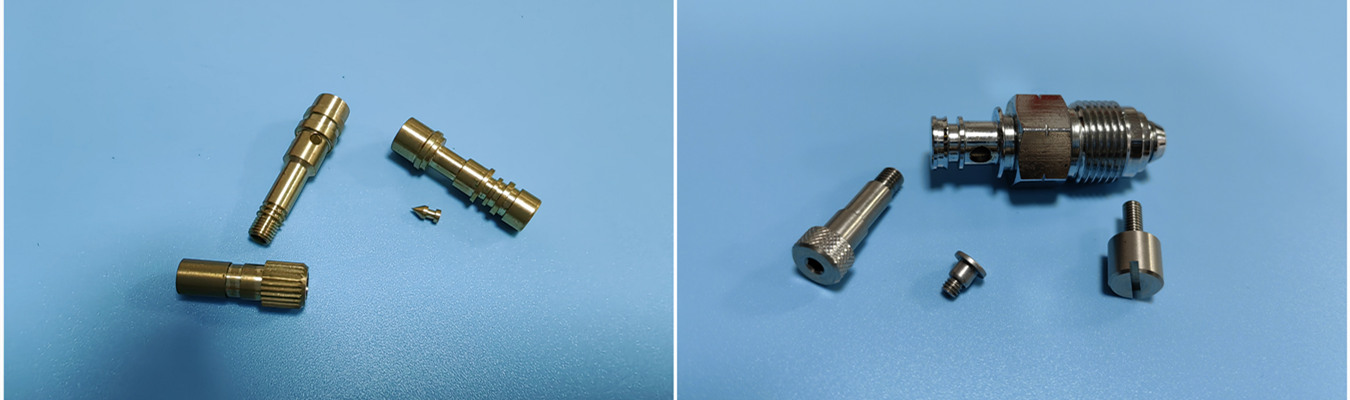
Whether you are a design or manufacturing engineer, you will understand the importance of a pin connector extends beyond a mere metal post; it is the essential connection for carrying signals, power or data between PCBs, wire harnesses and modular assemblies. Ultimately, the whole system (be it a car battery module, patient monitor, 5G base station etc.) is only as reliable as the geometric profile, surface finish and material integrity of each individual pin.
As such, the gold-standard in producing connector pins is Swiss-type automatic lathes, also known as Swiss screw machines. Swiss machining is able to support workpieces so close to the cutting tool compared with conventional CNC turning operations, which allows for virtually no cutting tool vibration and make it possible to achieve length to diameter ratios greater than 20:1. Falcon CNC Swiss uses 12+ years of experience with in-house metrology, combined with ISO 9001:2015 quality assurance protocols to provide custom fabricated connector pins for runs from 100 pieces to over 500,000.
This technical guide will provide a comprehensive answer to most engineering-related questions regarding connector pins, such as, What is a pin connector? What are the different types of connector pins? And how to properly select materials, platings and manufacturing partners for mission-critical applications?
A pin connector (or contact pin) is a male or female conductive terminal designed to establish a separable electrical connection. In most applications, the male and female connector pins mate to form a low-resistance path that can be disconnected for service or reconfiguration.
Key characteristics include:
Current rating – from milliamps (signal pins) to hundreds of amps (power pins)
Contact resistance – typically 10 mΩ for gold-plated contacts
Mating cycles – 500 to 10,000 cycles depending on plating and spring design
Environmental sealing – IP67/IP69K when combined with housings
As an electrical connector pin supplier, Falcon CNC Swiss manufactures pins for virtually every connector family: circular, rectangular, board-to-board, wire-to-board, and high-voltage EV connectors.
Engineers must select the right pin type based on assembly method, mechanical stress, and electrical requirements.
Below is a comprehensive overview of common pin types and their applications:
| Pin Type | Typical Material | Mating Style | Primary Applications |
|---|---|---|---|
| Male pin (solid) | Brass, phosphor bronze, Cu alloy | Solder or press-fit to PCB | Header pins, automotive connectors |
| Female socket contact | Beryllium copper, stainless steel | Tuning fork or hyperboloid | High-reliability industrial and military |
| Spring-loaded pogo pins | Steel barrel + gold-plated plunger | Spring force, no soldering | Battery contacts, test jigs, consumer electronics |
| Press fit connector pins | Copper alloy, tin-plated | Compliant eye-of-needle | PCB connector pin production (no solder) |
| Turned pin (machined) | Brass, CuSn6, CuNiSi | Solder cup or wire crimp | D-sub connectors, circular MIL-spec |
| Header pins (straight/right angle) | Copper alloy, gold or tin plating | Through-hole or SMT | Motherboard, Arduino, industrial controls |
| High temperature connector pins | Ni alloy, BeCu aged | Press-fit or welded | Underhood automotive, furnace sensors |
| Corrosion resistant pins | 316 stainless steel, gold-plated | Any | Marine, chemical, outdoor telecom |
For specialized needs, we also manufacture beryllium copper pins where spring force is critical (e.g., battery contacts in handheld devices) and nickel plated connector pins for environments requiring diffusion barriers against corrosion.
Explore more precision Swiss machined pins and shafts components.
Selecting the right base alloy and surface finish directly impacts contact resistance, wear life, solderability, and cost. Below are the most common combinations we use at Falcon CNC Swiss.
| Alloy | Conductivity (% IACS) | Tensile Strength (MPa) | Best Use Case |
|---|---|---|---|
| C11000 (ETP copper) | 100 | 220-260 | High conductivity, copper alloy connector pins for power |
| C17200 (beryllium copper) | 22-28 | 1000-1300 | Spring contacts, beryllium copper pins |
| C36000 (free-cutting brass) | 26 | 340-450 | Low-cost header pins manufacturer commodity pins |
| C19400 (iron copper) | 65 | 400-480 | Automotive terminals, high strength |
| 303/304 stainless steel | ~2.5 | 500-700 | Corrosion resistant pins, medical instruments |
| C15100 (zirconium copper) | 92 | 350-420 | High-temp battery pins, welding tips |
Plating is not cosmetic. It determines fretting corrosion, insertion force, and environmental durability.
Gold plated connector pins – Gold plated with Nickel, 0.5 to 2.5μm gold is suitable for low voltage signals, high mating cycles and preventing oxidation. Typical use would be medical devices including test equipment, telecom networks and associated devices.
Silver contact pins – Silver plated, 2-10μm silver is the highest conductivity (lowest contact resistance) but can corrode if exposed to sulfur. Typical uses include high power switches and busbars.
Nickel plated connector pins – 2-5μm. Very hard; corrosion-resistant; diffusion barrier. Commonly used in industrial connectors.
Tin plating – 3-8μm of matte tin to provide cost-effective contacts for consumer electronics; ideal for applications where there are low numbers (<50) of mating cycles.
For OEM connector pin production, we often recommend selective plating: only the contact area is gold-plated, while the solder tail is tin-plated. This reduces cost without sacrificing performance.
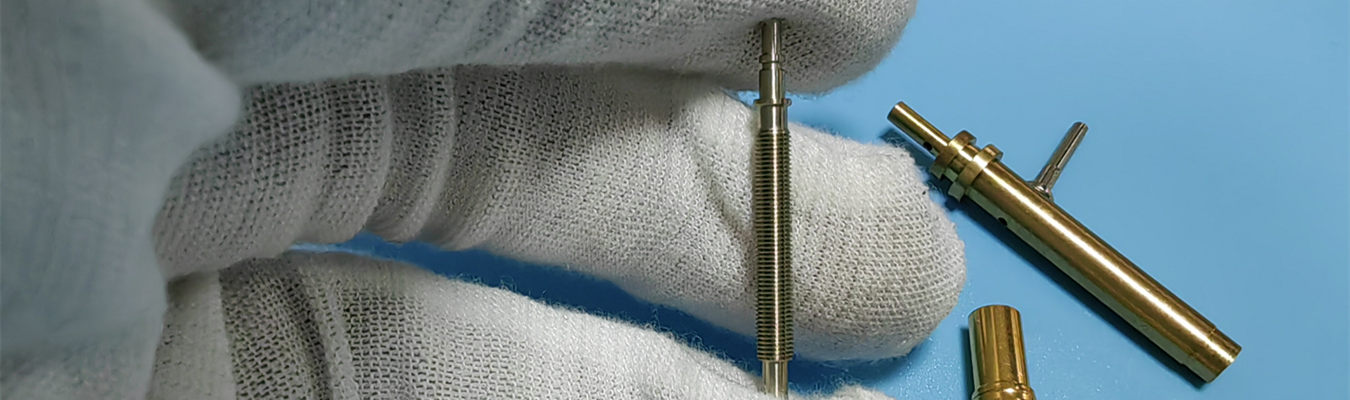
Many precision pin manufacturers use progressive stamping or cold heading for high-volume, simple geometries.
However, Swiss screw machining is superior when you need:
Complex 3D shapes – stepped diameters, undercuts, threads, cross-holes, slots, and radii
Tight tolerances – ±0.005 mm (0.0002″) on diameter, ±0.02 mm on length
Small to medium volumes – 100 to 100,000 pieces with no hard tooling fees
Fast lead time pin manufacturers – prototypes in 5-7 days, production in 2-3 weeks
Micro precision turning – diameters from 0.3 mm to 32 mm, lengths up to 300 mm
Products manufactured with our Citizen and Tsugami CNC Swiss machines are manufactured 24 hours per day, seven days per week using automatic bar feeders, automatic part removal, in process probing methods and processes. We do offer secondary services like cross drilling, tapping, knurling, burnishing and even assembling spring loaded pogo pins with captive springs!
Find out more information on our high-volume CNC Swiss machining services!
Have a drawing for custom connector pin fabrication? Our engineers review DFM within 24 hours. We offer low volume connector pin runs (100-2000 pcs) without punishing setup charges. Request your prototype quote →
Different industries impose unique mechanical, electrical, and regulatory requirements.
Falcon CNC Swiss has deep experience across five key sectors:
As a leading automotive connector pin supplier, we produce pins for engine control units, battery management systems, charging inlets, and lighting modules. Typical materials: C19400, C15100, and stainless steel. Platings: tin (cost) or gold (signals). We comply with IATF 16949 process standards and perform 100% dimensional inspection on critical features. Learn more about automotive precision machining →
Medical grade connector pins require ISO 13485-compliant processes, passivation (for stainless steel), and often gold plating for low signal noise. We manufacture pins for ECG cables, surgical robotics, implantable device programmers, and diagnostic equipment. Materials: 303/304/316 stainless, titanium, and BeCu.
For 5G base stations, fiber optic closures, and RF connectors, telecommunications connector pins must maintain impedance control and survive outdoor environments. We produce corrosion resistant pins with electroless nickel + hard gold, meeting Telcordia GR-1217 requirements. See our consumer and telecom machining capabilities →
PCB connector pin production requires absolute perpendicularity and coplanarity. Our Swiss machines produce press fit connector pins with compliant eye-of-needle geometry and header pins manufacturer arrays (single or dual row). We can also assemble pins into plastic strips or reels for automated insertion.
From smartphone charging ports to laptop battery contacts, consumer electronics contact pins demand sub-0.01 mm concentricity and excellent solderability. We produce millions of pins annually in C36000 brass with selective gold or tin plating. Explore our pins and shafts production →
We are an ISO certified connector pin factory (ISO 9001:2015) with a dedicated quality lab including CMM, optical comparator, laser micrometer, and XRF plating thickness analyzer.
Our typical capabilities:
| Capability | Falcon CNC Swiss Standard |
|---|---|
| Min pin diameter | 0.3 mm |
| Max pin length | 300 mm |
| Typical tolerance (diameter) | ±0.005 mm |
| Surface finish (Ra) | 0.2 μm |
| Max L/D ratio | 25:1 (with guide bushing) |
| Materials in stock | Cu alloys, brass, BeCu, 303/304/316 SS, Ti, Inconel |
| Plating onsite partners | Au, Ag, Ni, Sn, PdNi – selective or full |
| Prototype lead time | 5-7 days for connector pin prototypes |
| Production lead time | 2-4 weeks for fast lead time pin manufacturers require |
Another service we provide is value-added services, such as pin alignment in plastic carriers, tape and reel packaging, and automated insertion testing; these value-added costs are included in your OEM connector pin production as we can set up to lock in prices for 12-24 months with annual volume agreements.
Ready to move forward?
Upload your 2D/3D CAD file for custom connector pin quotes. We will provide a detailed design-for-manufacturing analysis, recommended material/plating, and a firm price within 48 hours. Submit your RFQ now →
A. A pin connector is a separable electrical connection created using either male or female (polarized) conductive terminals. They create the building blocks to the vast majority of electrical and electronic interconnect systems.
A. Common types include solid male pins, female socket contacts, spring-loaded pogo pins, press-fit pins, turned pins, header pins, high-temperature pins and corrosion-resistant pins. The type of connector pin selected is dependent upon the assembly method used as well as the current and environment in which the connector will be utilized.
A. Connector pins with high-precision tolerances are typically manufactured by using either Swiss screw machining, stamping sheet metal or cold heading bar stock. Swiss screw machining produces the highest tolerances and can produce the most complex geometries.
A. For gold plated connector pins the most commonly used base materials consist of beryllium copper (for spring force) or brass (to reduce the cost). Generally the under plate is nickel (2-5 μm) followed by hard gold (0.5-2.5 μm).
A. Yes. Falcon CNC Swiss specializes in low volume connector pin runs between 100-5,000 parts with no tooling costs. We also offer connector pin prototypes in 5-7 days.
A. Yes, we are ISO 9001:2015 certified and are compliant with IATF 16949 (automotive) to guarantee the quality of our manufacturing processes. Third party inspections are completed on an annual basis.
Whether you are looking for silver contact pins (like for high-voltage disconnection), spring-loaded pogo pins (to be used as battery testers), or header pins (to connect your IoT devices), your choice of manufacturing partner affects how quickly you can bring the product to market and how dependable it will be in the field. The combination of precision machining using Falcon CNC Swiss and the experience of working as a team, with custom engineering services that OEMs have confidence in, provide both repeatability and expertise in material science.
Don’t let long lead times or questionable quality delay your next launch. Contact our engineering team for a no-obligation review of your connector pin specifications. We speak GD&T, IPC, and automotive standards.