English
  日本語
日本語  한국어
한국어  français
  Deutsch
  Español
  русский
  العربية


Jun
Learn More
01

Custom-made robot components are what make modern-day robotics successful in whatever it is they do. This includes everything from surgical robots that can tie a knot in a cherry stem, to full-sized humanoids with a hip joint that transfers torque as every step is taken.
When you are designing a brand-new service or humanoid (or a specialized drone, or an industrial automation arm, or even custom parts for service robots), every gram and every micron of material affects how your project will turn out. A simple misalignment of a couple of microns in the joint of an assembled part could lead to unintended and awkward movement, early wear-and-tear on the parts, or an overall system failure.
This guide gives you a general overview of how to create high-performance custom robot parts from start to finish, including the steps involved in creating or purchasing custom-made robot part(s), principles for joint design, considerations for materials, advanced manufacturing techniques and finally quality gates. By the end of this book, you will have enough information to prepare information and ask the appropriate questions when you buy custom robot parts (or partner with an expert for custom robot part fabrication).
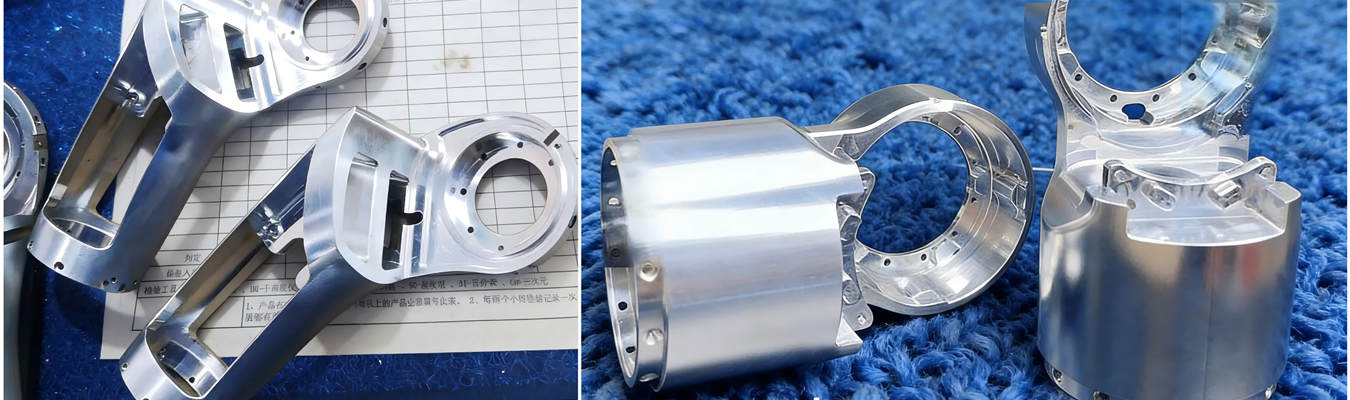
If the robot is a body, then its joints are the moving points that determine agility, precision, and lifespan. Poor joint design is the single biggest reason why promising robots fail in field deployment.
When designing humanoid or industrial robot joints, focus on three interconnected areas:
1.Concentricity and Fit Requirement:
The internal bore of the load bearing component of a joint must be designed with perfect concentricity, such that the external housing is perfectly concentric with it, in order to provide for smooth rotation of the load bearing element within it. For joints subject to high loads (hips/knees), +/-0.01 mm tolerance and a roundness of less than or equal to 0.008 mm is recommended.
2.Distribution of Load and Fillet Radius:
Each sharp inside corner has the potential for crack initiation due to repeated cyclic loading. It is best to include adequate sized fillet radii (≥1mm) in the CAD file in order to accommodate the distribution of load and to prevent premature failure of the joint due to fatiguing type failures.
3. Friction Surface Finish:
The surface finish on any component that is in contact with other components will effect the performance of the joint. Machining the finish of components to a surface finish of less than or equal to Ra=0.4μm, greatly reduces the amount of heat generation from friction, prolongs the life of the joint and keeps the motion of the components of the joint accurate over a period of millions of cycles.
Material selection has a huge impact on performance, machinability, and cost. Here is how the four most common material groups compare for custom metal robot parts and custom plastic robot parts.
| Material Group | Key Advantages | Best Applications | Machining Difficulty | Relative Cost |
| Aluminum (6061-T6, 7075-T6) | Lightweight (40% lighter than steel), excellent machinability, good thermal conductivity | Drone frames, robot chassis, heat sinks, mid-size structural brackets | Easy – high-speed cutting | Low to moderate |
| Titanium (Grade 5 / Ti-6Al-4V) | Exceptional strength-to-weight ratio (880 MPa), biocompatible, corrosion-resistant | High-load joints (humanoid hips/knees), surgical robot parts, aerospace-grade structural frames | Difficult – low thermal conductivity, high tool wear | High |
| Stainless Steel (304, 316, 17-4 PH) | High strength, wear-resistant, sterilizable | Transmission shafts, surgical tools, high-wear surfaces | Moderate | Moderate |
| Carbon Fiber Reinforced Polymer (CFRP) | Ultra-rigid, extremely lightweight, minimal thermal expansion | High-speed arm segments, lightweight joint shells, drone propellers | Difficult – requires low-speed layered cutting to prevent delamination | High |
| PEEK / Delrin (Engineering Plastics) | Self-lubricating, lightweight (50% density of aluminum), chemical-resistant | Gears, bushings, insulating components, wear sleeves | Easy – requires careful heat control | Moderate |
Aluminum 7075 is the go-to for most custom robot frames and arm links. It is strong enough for dynamic loads, easy to machine, and cost-effective for large production runs.
Titanium CNC custom robot parts should be reserved for mission-critical high-load components where weight savings and corrosion resistance justify the added machining complexity and cost.
PEEK custom robot parts excel in applications requiring low friction, electrical insulation, and wear resistance—such as bushings, gears, and sensor housings.
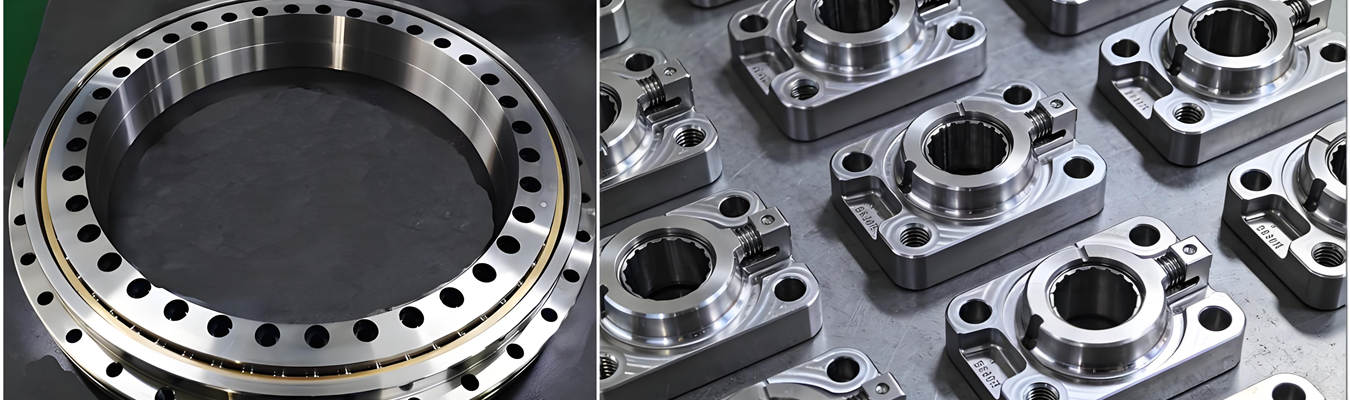
There are many ways to build custom parts. Here is a quick comparison of the most relevant methods for robotics:
| Process | How It Works | Best For | Limitations |
| CNC Machining | Subtractive process using rotating tools to cut from solid blocks. Supports metals and plastics with precision down to ±0.003–0.01mm. | Functional load-bearing parts (gears, joints, structural frames); both prototyping and production | More expensive for very high volumes (50,000 parts) |
| 3D Printing (Additive) | Builds parts layer by layer from CAD data. No tooling needed. | Rapid concept models, complex internal lattices, early-stage custom robot parts prototyping | Lower accuracy and surface finish; limited material strength |
| Injection Molding | Injects molten plastic into metal molds. High setup cost, very low per-unit cost. | Large-scale production (50,000+ units) of plastic housings, connectors, and covers | High upfront tooling cost; not suitable for metals or small batches |
| Laser Cutting | Uses focused laser beam to cut through sheet materials. | Thin metal or plastic plates, flat brackets, and robot chassis panels | Limited to 2D shapes; no complex 3D geometries |
For most robotics developers, the optimal workflow combines CNC machining for structural and functional parts plus 3D printing for rapid iteration of non-load-bearing covers, leading to injection molded robot parts only after final design freeze.
Learn more about Falcon CNC Swiss precision machining capabilities for custom robot parts.
A part that looks perfect to the naked eye can still be out of tolerance and cause assembly failure.
Standard Tolerances for Robot Components
| Component Type | Dimensional Tolerance | Surface Finish | Comments |
| General structural frames and brackets | ±0.02mm – ±0.05mm | Ra 1.6μm | Standard precision for robot chassis and non-moving parts |
| Motion-critical joints and bearing seats | ±0.005mm – ±0.01mm | Ra ≤0.4μm | Essential for smooth articulation and long joint life |
| Surgical robot and medical-grade parts | ±0.005mm | Ra ≤0.2μm | Requires ISO 13485 certification |
In-process probing with touch triggers measures critical dimensions mid-run on the machine, allowing automatic offset compensation before parts drift out of spec.
First Article Inspection (FAI) runs a complete dimensional check on the first part of every batch against the engineering drawing, with full documentation.
CMM (Coordinate Measuring Machine) inspection verifies complex 3D geometries, bores, and hole patterns to ±0.0015mm accuracy.
Surface roughness testing ensures all motion-contact surfaces meet Ra ≤0.4μm requirements.
At Falcon CNC Swiss, we rely on advanced manufacturing systems, rigorous quality processes, and decades of hands-on machining experience to produce reliable custom robot parts.
| Capability | Specification |
| Equipment | 5-axis CNC mills, Swiss-type CNC lathes (Citizen, Star, Tsugami), multi-axis turning centers, EDM |
| Precision | Tolerances down to ±0.005mm; surface finishes to Ra 0.2μm |
| Materials | Aluminum (6061, 7075), titanium (Ti-6Al-4V), stainless steel, PEEK, Delrin, Ultem, carbon fiber composites |
| In-House Finishing | Anodizing (clear, black, custom colors), passivation, bead blasting, polishing, silk-screening |
| Quality System | ISO 9001:2015 certified; full CMM inspection; material traceability |
| Volume Flexibility | From 1 prototype to 100,000+ units per month; no MOQ for prototyping |
Custom robot arm assemblies and articulated links
Custom robot joint housings and actuator bodies
Custom robot gripper fingers and end-of-arm tooling
Custom robot frame structural components
Custom robot leg structures for humanoids and quadruped robots
Custom robot sensor mounting brackets and enclosures
Custom robot motor housings and transmission components
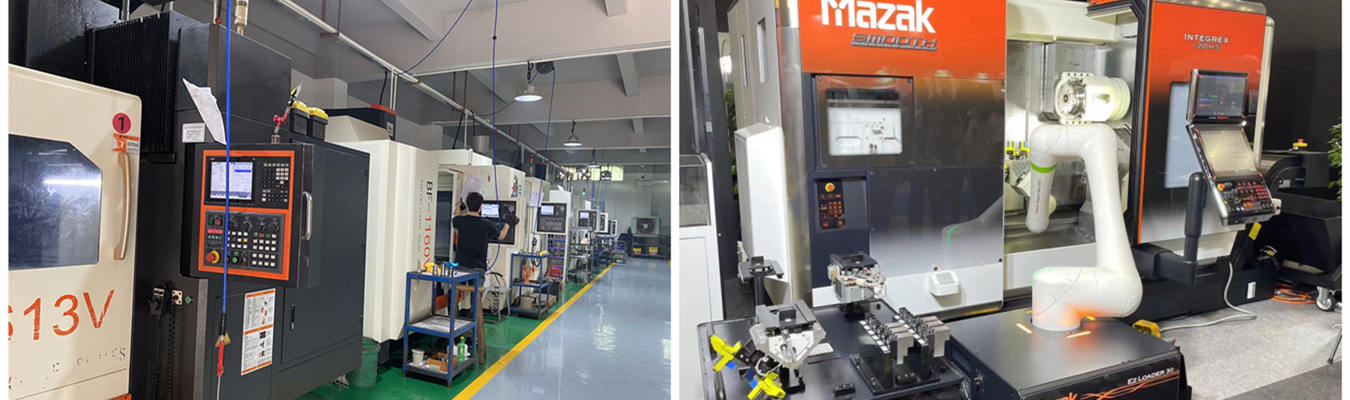
When you are ready to move from design to production, finding the right manufacturing partner is critical.
How to Choose the Right Supplier
| Selection Criteria | What to Look For |
| Experience with robotics | Have they produced robot joints, frames, or custom actuator housings before? |
| Equipment depth | 5-axis machining and Swiss-type lathes are essential for complex geometries. |
| Material versatility | Can they handle titanium, aluminum, PEEK, and carbon fiber? |
| Quality certification | ISO 9001 is a baseline; ISO 13485 is required for medical robotics. |
| DFM support | Will they review your CAD design for manufacturability before quoting? |
| Scalability | Can they handle both low-volume prototyping and high-volume production? |
At Falcon CNC Swiss, we act as a one-stop shop for custom robot parts: machining, finishing, and inspection are all done in-house. This eliminates coordination headaches between multiple vendors and ensures full quality accountability.
When you need custom robot parts wholesale for large-scale production, our automated production cells scale efficiently while maintaining consistent tolerances across every batch. Explore Falcon CNC Swiss CNC machined humanoid robot parts manufacturing.
Attaining high-grade custom robot components necessitates careful deliberation about the design of the joints; selection of the materials; and the precision of manufacture. The performance and overall costs of the robot component are influenced by every decision made regarding the design and manufacture of the component whether you are creating a humanoid shoulder joint from a 7075 aluminium or a titanim surgical instrument.
Falcon CNC Swiss combines ISO-certified manufacturing quality systems and superior 5-axis and Swiss-type machining with hands-on engineering assistance. We perform all operational duties, including design for manufacture (DFM) analysis to finishing, in one location.
Upload a CAD file for a free DFM review and competitive quote.
Explore additional capabilities of our precision CNC machining robot parts.
Contact our engineers to discuss your robotics project further.
A. There are two fast methods of prototyping those components with CNC Machining and 3D printing. When you want functional prototype parts that are able to withstand a high level of force during usage, CNC machining is the most reliable method because you’ll produce metal or plastic parts that meet production-grade specifications. When creating prototypes of customized robotic components and parts, 3D printing will provide you with lower startup costs and a quicker turnaround from initial design to actual working prototype allowing for multiple design iterations very quickly.
A: Look for a robotic parts supplier with flexible minimum order quantities (MOE). For example; Falcon CNC Swiss has the capacity to manufacture your customized robotic parts with a minimum order quantity (MQQ) range between 1 unit to 10,000+ units. Therefore, Falcon CNC Swiss is a good resource for both prototype production as well as low-volume production levels. Purchase your customized robotic components directly from Falcon CNC Swiss by submitting your drawings and requests for quotes through our quoting platform.
A: There are many guidelines you’ll want to follow when designing custom robotic components and parts for CNC machining. Avoid designing sharp corners; use a radius of at least 1 mm; maintain constant wall thickness of at least 3 mm (for load structural) or; use radius corners with tapered edges to reduce risk of damaging your material. Be sure to use appropriate datums in your design. You should specify tolerances only if required, and, at the DFM stage share your CAD file so we can identify cost saving modifications at that time.
A: The best materials for producing lightweight, structurally sound robotic arms are Aluminium 7075 or Carbon Fiber Composites. Of the two materials, Aluminium is a good option for cost-effective lightweight robotic arms; however, Carbon Fibre is lighter and stiffer than Aluminium, but Carbon Fibre has more limited machining options.
A: Yes, titanium is also an excellent material for custom gripper end-use applications wherein high strength, low weight, and corrosion-resistant materials are required. However, titanium is difficult to machine. Titanium requires 5-axis rigid equipment, sharp-carbide tools, and high-pressure coolant to produce precision manufactured custom robotic fingers. Falcon CNC Swiss specializes in titanium sheet metal manufacturing for robotic finger assembly; therefore, recommend you submit your specification drawings to Falcon CNC Swiss for all robotic finger applications using titanium.
A: The general lead time for producing robotic prototype components or parts is typically between 3 and 10 days after the design-for-manufacturing (DFM) and produced prototypes will depend upon complexity and quantity. An order consisting of 500 aluminum brackets will typically take between 15 – 20 days for machining production. Where-as, an order consisting of 10,000 components will typically take between 4 – 6 Weeks for machining production.
A. Yes! All finishing services (e.g., anodizing—clear, black, custom colors; bead blasting; stainless steel passivation; polishing; and silk screening for logos or labels) are processed in-house. All in-house finishing operations provide your company with a single-source supply chain for all your robotic component and part-hardware with simplified accountability.