English
  日本語
日本語  한국어
한국어  français
  Deutsch
  Español
  русский
  العربية

Aug
Learn More
08

The automotive industry is undergoing its most profound transformation in a century. From the shift to electric vehicles (EVs) and autonomous driving systems to the relentless pursuit of lightweighting and fuel efficiency, every major trend places unprecedented demands on precision manufacturing. At the heart of this revolution is CNC machining—the technology that enables automakers and Tier 1 suppliers to produce components with micron-level accuracy, complex geometries, and consistent repeatability at scale.
This engineering guide explores how CNC machining for automotive industries is driving innovation across vehicle systems—from powertrain and engine components to EV battery enclosures, suspension parts, and autonomous sensor housings. Drawing on the expertise of Falcon CNC Swiss, a leader in precision automotive parts machining and Swiss machining, we examine the technologies, materials, and cost considerations that define modern automotive CNC machining solutions.
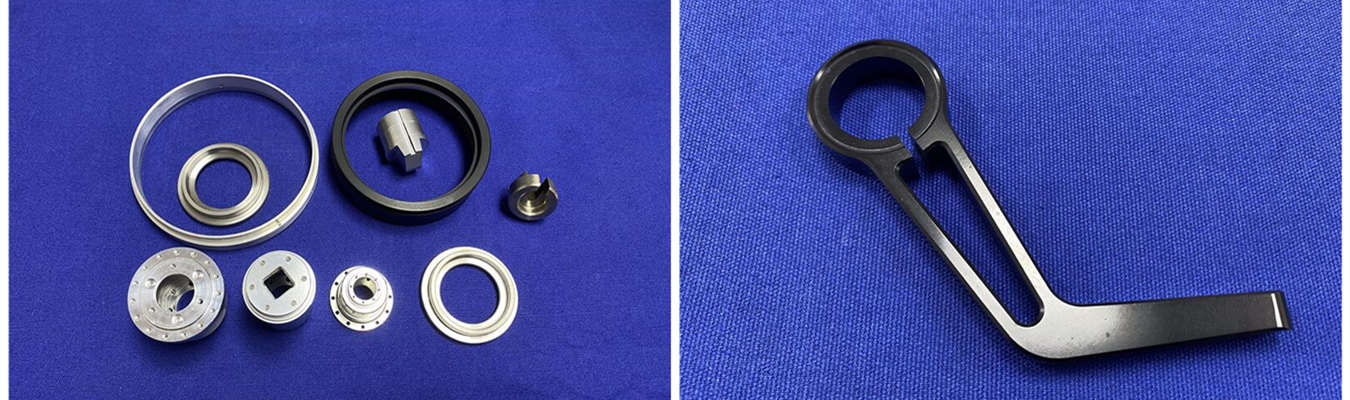
Today's vehicles are, in essence, computers on wheels. Advanced driver-assistance systems (ADAS), electric vehicle powertrains, and sophisticated engine management systems all depend on components manufactured to exacting specifications. Even the slightest misalignment of an automotive sensor housing or a defect within a drivetrain component can lead to performance issues, safety risks, and expensive recalls.
Precision CNC machining addresses these challenges by delivering:
Tight tolerances – Achieving ±0.0002 inches (0.005 mm) or better on critical features
Complex geometries – Producing intricate shapes that would be impossible with conventional machining
Superior surface finishes – Reducing friction, increasing durability, and improving assembly fits
Repeatability at scale – Ensuring every part, whether the first or the ten-thousandth, meets specifications
For automotive engineers and procurement professionals, partnering with a capable CNC precision machining manufacturer is no longer optional—it is a strategic necessity.
CNC machining in the automotive industry spans virtually every vehicle system. The table below summarizes key applications and the machining technologies typically employed.
| Vehicle System | Typical Components | Machining Technologies | Key Requirements |
| Powertrain / Engine | Pistons, cylinder heads, crankshafts, camshafts, fuel injectors, fuel rails | 5-axis CNC milling, CNC turning, Swiss machining | Micron-level tolerances, thermal stability, high-strength materials |
| Electric Vehicle (EV) | Battery enclosures, motor housings, rotor shafts, busbars, heat sinks, high-voltage connectors | Multi-axis CNC machining, Swiss machining, cryogenic machining | Lightweighting, thermal management, electrical conductivity, ±0.005mm tolerances |
| Chassis, Braking & Safety | ABS components, steering knuckles, suspension arms, airbag sensor housings, brake system components | 4-axis and 5-axis CNC machining, precision turning | Structural integrity, dimensional control, safety-critical reliability |
| Autonomous Sensors (ADAS) | LiDAR housings, radar waveguides, camera mounts, sensor probes | 5-axis Swiss machining, micro-drilling, precision milling | Ra≤0.2μm surface finish, 15:1 aspect ratio micro-drilling, signal integrity |
| Fuel Systems & Fluid Power | Fuel injector nozzles, hydraulic fittings, transmission control components, valve bodies | Swiss machining, CNC turning, multi-axis milling | Corrosion resistance, leak-tight seals, high-pressure integrity |
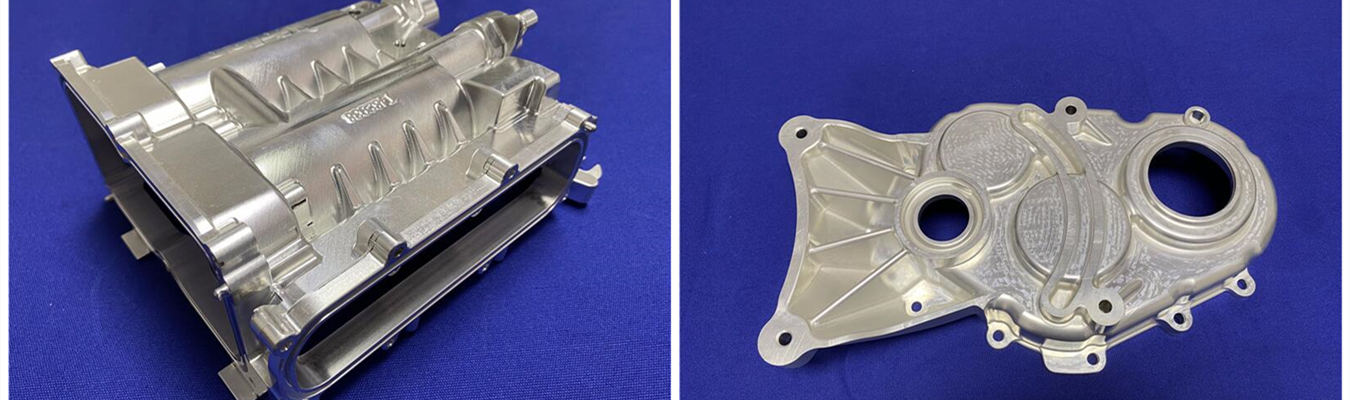
Modern automotive CNC machining solutions leverage a range of advanced technologies to meet the industry's demanding requirements.
Multi-axis CNC machining for automotive components has become the standard for producing complex parts with minimal setups. 4-axis CNC machining with high precision adds a rotational axis to the traditional X, Y, and Z movements, enabling the machining of multiple sides of a part in a single clamping. Precision 5-axis CNC machining services take this further by adding two rotational axes, allowing the cutting tool to approach the workpiece from virtually any angle.
The advantages of 5-axis car lathe parts CNC machining are particularly significant in automotive manufacturing:
Reduced setups – Complex parts can be completed in a single clamping, improving accuracy and reducing handling time
Complex geometries – Multi-angled surfaces, contoured profiles, and tight-tolerance features are achievable
Improved surface finish – Continuous 5-axis motion allows for optimal tool orientation, reducing tool marks
Faster cycle times – Simultaneous machining operations significantly improve throughput
For machining of automotive engine parts such as cylinder heads, turbocharger impellers, and engine blocks, 5-axis CNC machining enables the production of complex internal cooling passages and intricate port geometries that optimize engine performance.
High precision CNC Swiss machining services have become indispensable in automotive manufacturing, particularly for small, complex components that demand exceptional accuracy. Swiss machining originated in the Swiss watchmaking industry and has evolved into a cornerstone of modern precision manufacturing.
Key advantages of Swiss machining for machined parts for automotive applications include:
Exceptional tolerances – ±0.0002 inches (0.005 mm) or better, batch after batch
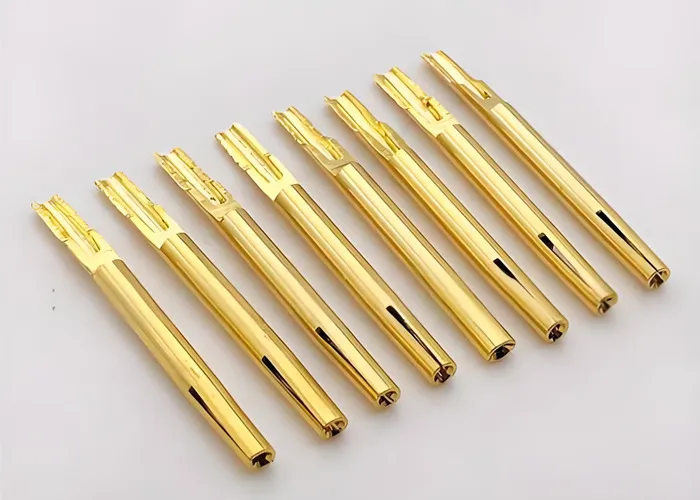
Ideal for long, slender parts – The guide bushing system minimizes deflection, making Swiss machining perfect for fuel injector nozzles, transmission shafts, and sensor probes
High-volume capability – Swiss machines are equally suited for prototyping and production runs of thousands or millions of parts
Multi-operation machining – Turning, milling, drilling, and threading can be performed simultaneously in a single setup
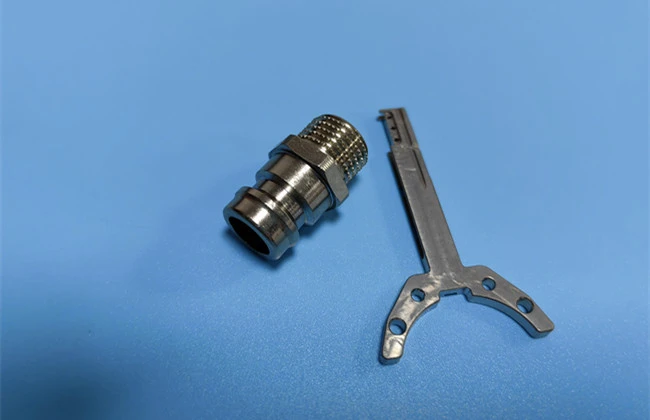
At Falcon CNC Swiss, Citizen L32 and L20 Swiss-type lathes achieve ±0.002mm runout on motor shafts using liquid-cooled spindles with 20°C±0.5°C temperature stability. Our screw machining automotive parts capabilities include fuel injector components, ABS brake system parts, high-voltage battery connectors, transmission control components, turbocharger inserts, and motor shafts for EVs.
CNC turning remains a cornerstone of automotive CNC machining solutions. CNC lathe machines for precision are used extensively for producing rotationally symmetric components such as shafts, pins, bushings, and fasteners. A slant bed CNC lathe for precision machining offers enhanced rigidity and chip evacuation, making it ideal for high-precision turning applications.
Modern precision CNC lathe machining service providers integrate live tooling, enabling milling, drilling, and tapping operations without removing the workpiece from the lathe. This reduces setup time and improves part accuracy—particularly valuable for complex parts that require both turning and milling operations.
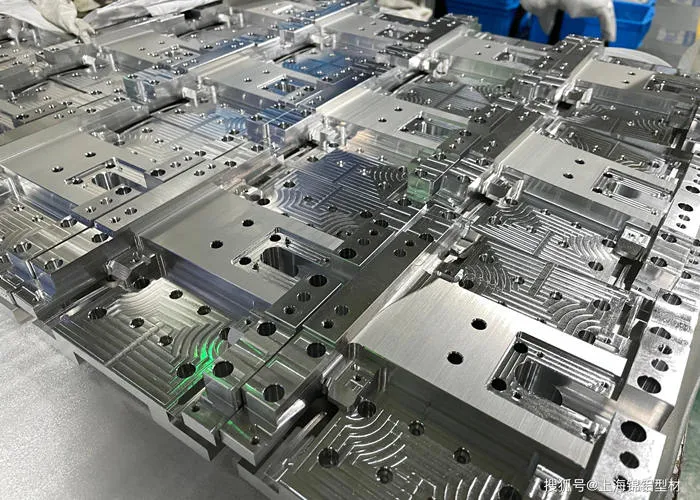
CNC milling is essential for producing machined precision parts automotive with complex geometries. CNC milling brass and aluminum components are common in automotive applications, from engine blocks and transmission housings to suspension components and electronic enclosures. Modern machining centers equipped with precision 5-axis CNC machining services can produce intricate molds, dies, and fixtures with geometries that would be impossible with 3-axis machines.
CNC machining for automotive suspension parts requires exceptional precision and strength. Suspension components such as control arms, tie rods, ball joints, steering knuckles, and wheel hubs must withstand substantial loads while maintaining dimensional accuracy to ensure ride stability and handling. Multi-axis CNC machining for automotive components enables the creation of complex geometries needed for lightweight yet strong suspension designs.
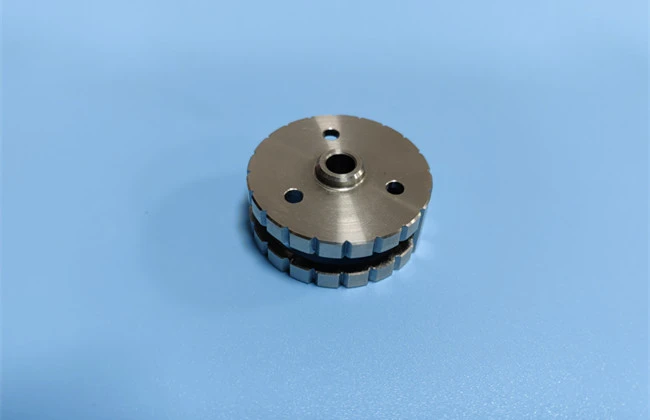
Machining of automotive engine parts demands the highest levels of precision. Engine components operate under extreme temperatures and pressures, and even minor dimensional deviations can affect performance, efficiency, and reliability. High precision CNC machining produces engine parts with accurate geometries, proper surface finishes, and tight dimensional tolerances.
Understanding automotive machine shop pricing is critical for engineers and procurement professionals seeking cost-effective CNC machining solutions for the automotive industry. The cost of CNC machining is influenced by several factors:
Machine type and complexity – 3-axis CNC machining typically costs $35–$55 per hour, while 5-axis CNC machining ranges from $75–$150 per hour
Part geometry and complexity – More complex parts require longer cycle times and more sophisticated toolpaths
Material selection – Automotive-grade materials such as aluminum, steel, titanium, and specialty alloys each have different machining characteristics and costs
Volume and production scale – High-volume production significantly reduces per-unit costs through economies of scale
Quality and tolerance requirements – Tighter tolerances typically require slower machining speeds and more rigorous inspection
For automotive machine shop supply decisions, it is important to consider the total cost of ownership, including tooling, setup time, inspection, and scrap rates. A comparison of Swiss machining versus traditional CNC for automotive components illustrates the potential savings:
| Metric | Swiss Machining | Traditional CNC |
| Per-Part Cost | $14.20 | $18.50 |
| Lead Time | 11 Days | 6 Weeks |
| Scrap Rate | 0.50% | 8% |
As the table demonstrates, Swiss machining offers significant advantages in cost, speed, and quality for suitable automotive applications.
At Falcon CNC Swiss, we are a leading CNC precision machining manufacturer serving the automotive industry with advanced precision machining and Swiss machining capabilities. Our automotive practice is built on decades of experience and a commitment to quality that meets the most demanding industry standards.
Our key advantages for automotive CNC machined parts include:
IATF 16949 Certification – Full compliance with the automotive industry's quality management standard
Multi-Axis Synchronized Machining – Citizen L32 and L20 Swiss-type lathes achieving ±0.002mm runout on critical components
475+ Material Portfolio – Including aluminum, steel, titanium, copper alloys, and specialty metals
AI-Driven Adaptive Machining – Reducing scrap rates and optimizing production efficiency
In-Process SPC Monitoring – Keyence inspection systems ensuring first-pass yields exceeding 99.98%
Explore our automotive capabilities:
Precision CNC Machining Service – Comprehensive machining solutions for automotive and industrial applications
Swiss Machining Services – High-precision Swiss-type machining for small, complex automotive components
Automotive Precision Machining – Specialized solutions for the automotive industry and EV innovation
Swiss Machine Shop – Advanced Swiss machining capabilities for precision automotive parts
Swiss Machined Components – High-quality Swiss-machined components for mission-critical applications
Falcon CNC Swiss has partnered with numerous Tier 1 and Tier 2 automotive suppliers, manufacturing components that meet OEM specifications for fuel systems, braking systems, transmission controls, and EV powertrains.
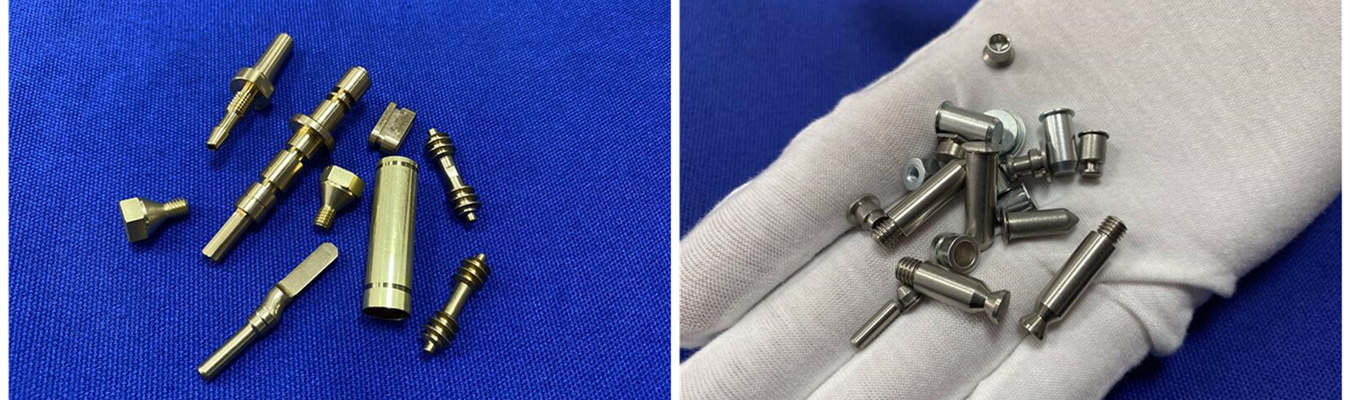
A Tier 1 automotive supplier approached Falcon CNC Swiss with a challenge: their EV battery connector production was experiencing a 12% scrap rate due to inconsistent tolerances and tool wear when machining copper alloy busbars. Traditional CNC machining struggled with rapid tool degradation—over 40% per batch—leading to high costs and production delays.
Falcon CNC Swiss implemented multi-axis synchronized machining on Citizen L32 machines with liquid-cooled spindles and AI-driven adaptive toolpath optimization. The results were transformative: scrap rates dropped from 12% to 0.8%, saving the customer $220,000 annually. This case demonstrates the power of combining advanced CNC machining solutions for automotive industry with data-driven process optimization.
CNC machining for automotive industries is essential for producing components with the precision, complexity, and repeatability required by modern vehicles
Multi-axis CNC machining for automotive components (4-axis and 5-axis) reduces setups, improves accuracy, and enables complex geometries
Swiss machining is ideal for small, slender, complex automotive parts such as fuel injector nozzles, transmission shafts, and sensor probes
Automotive machine shop pricing is influenced by machine type, part complexity, material selection, volume, and tolerance requirements
Precision automotive parts machining spans powertrain, EV, chassis, braking, and autonomous sensor systems
Falcon CNC Swiss delivers IATF 16949-certified precision machining and Swiss machining solutions for the automotive industry, with proven results in cost reduction and quality improvement
As the automotive industry continues its transformation—toward electrification, autonomy, and sustainability—the demand for precision CNC machining will only grow. Manufacturers that invest in advanced automotive CNC machining solutions and partner with capable CNC precision machining manufacturers will be best positioned to compete in this rapidly evolving landscape.
Contact Falcon CNC Swiss today for a design-for-manufacturability review and competitive quote.
The following references provide additional technical information on CNC machining for the automotive industry: